 英语
英语 西班牙语
西班牙语 德语
德语 法语
法语 俄语
俄语
 Electric Pallet Truck
 Electric Stacker
 Order Picker
 Narrow Aisle Truck
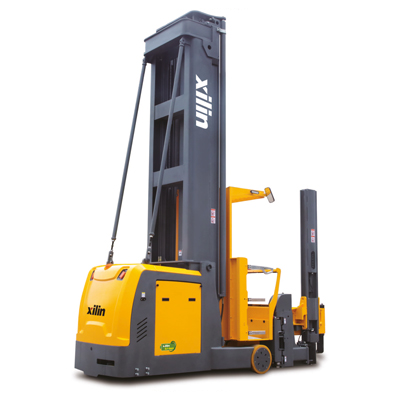 VNA Tri-Lateral Stacker
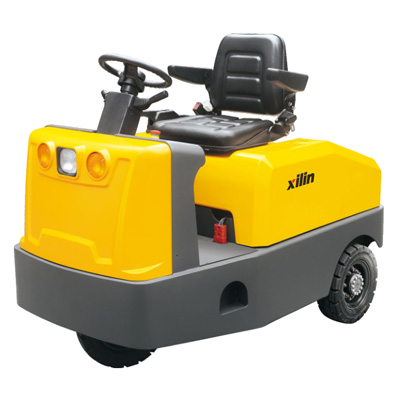 Tow Tractor
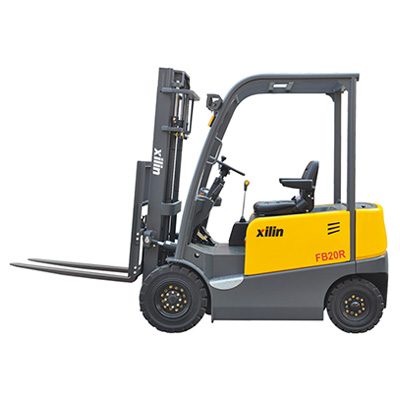 Electric Forklift
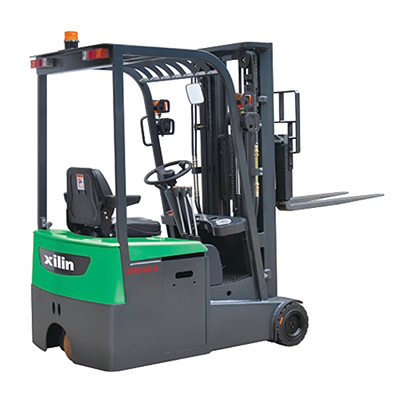 Lithium-ion Truck
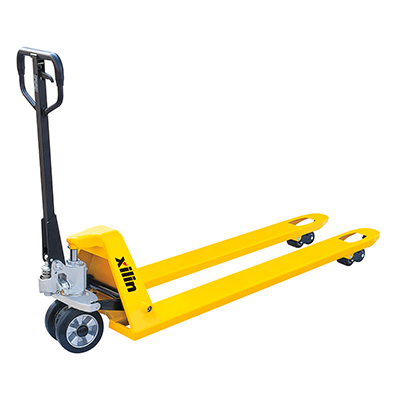 Hand Pallet Truck
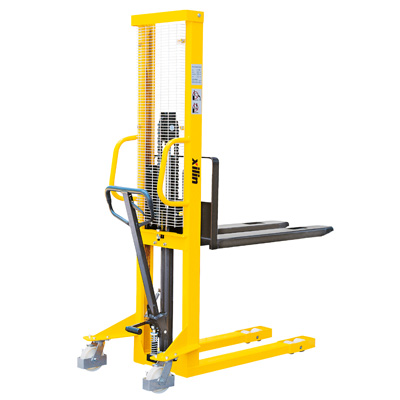 Manual Stacker
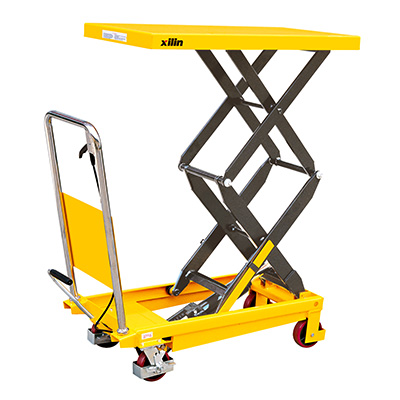 Lift Table
Content
- 1 What Makes a Tugger Train Automated
- 2 Where a Tugger Train Replaces Forklift Traffic
- 3 The Numbers That Decide the Project
- 4 Trailers Decide Whether the Train Works
- 5 Safety, Stopping Distance and Standards
- 6 Power, Charging and Shift Coverage
- 7 A Rollout Sequence That Survives Contact With Production
- 8 Procurement Questions Worth Asking Early
An automated tugger train rarely beats a forklift on speed. It beats it on trips. One driverless tow tractor pulling three standard carts on a fixed milk run can absorb five or six separate forklift journeys an hour, so the number that decides the business case is not travel time but how many vehicle movements you take out of a shared aisle. What follows is about the constraints that make or break that plan: route length, total train mass, drawbar pull, coupling height, turning geometry, stopping distance and charging strategy.
What Makes a Tugger Train Automated
A tugger train is a tow tractor pulling one or more trailers, normally carts or roll containers, along a repeating route with several stops. In a manual train, a driver handles the whole loop. Automation splits that job. In a semi automated version, the operator still loads and unloads the carts while the vehicle drives itself between stations. In a fully automated version, call buttons or a warehouse management system trigger the trip, and carts are exchanged at fixed stations, sometimes with automatic coupling.
The practical consequence is that anything a driver used to compensate for becomes a fixed engineering constraint. A driver notices a cart with a stiff caster, a pallet sitting proud of the deck, a wet patch on the floor, or a truck parked in the cross aisle. Remove the driver and each of those items has to be designed out, detected by sensors, or excluded by rule. Pilots that stall usually stall here, not in the vehicle's navigation software.
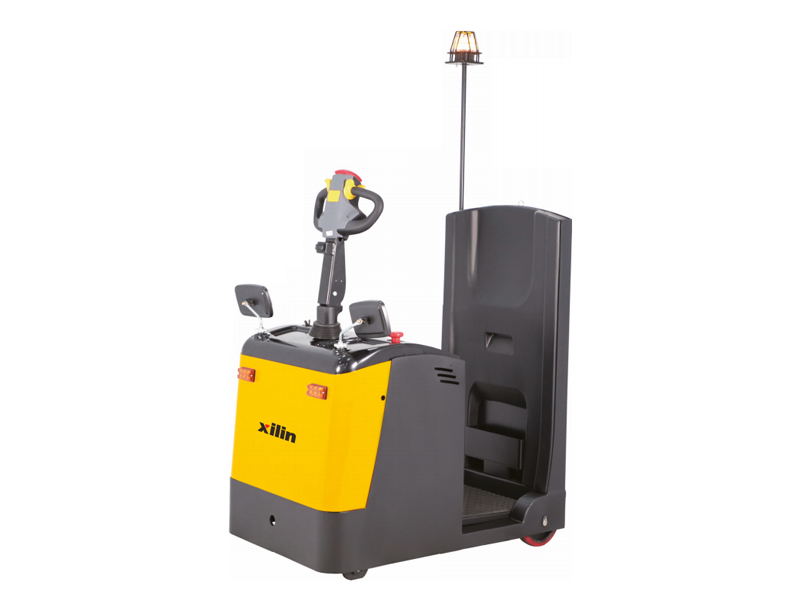 Electric Standing-Operator Tow Tractor QDD20H/QDD30HFor routes where the worst metres and heaviest train set the requirement, this electric tow tractor offers 2,000-3,000 kg capacity.View Product →
That is why the first specification question is not about navigation technology. It is about the worst ten metres of your route and the heaviest train you intend to run over it.
Where a Tugger Train Replaces Forklift Traffic
Tugger trains pay back best on routes of roughly 80 m to 300 m with three to five stops, a steady and repeatable load unit, and enough traffic to justify a schedule. They pay back poorly on long hauls above 500 m, on loads that change shape every trip, and in aisles that already struggle with two way forklift traffic.
| Factor | Counterbalance forklift | Manual tugger train | Automated tugger train |
|---|---|---|---|
| Load units per trip | One pallet | Three to five carts | Three to five carts |
| Operator time per trip | Whole trip | Whole trip | Loading and unloading only |
| Aisle demand | Wide, frequent reversing | Moderate, predictable path | Moderate, fixed path |
| Traffic exposure | Many movements, high blind corner risk | Fewer movements, driver judgement | Fewest movements, rule based behaviour |
| Route change effort | None | None | Route re mapping and verification |
| Best fit | Mixed, unpredictable loads | Steady routes with variable timing | Steady routes with fixed timing |
Note what the table does not claim. The train is not faster per metre. It reduces the number of movements, and every movement removed from a shared aisle reduces waiting, near misses and floor damage. If your loads are genuinely unpredictable, a forklift remains the correct tool and no amount of automation will fix that mismatch.
The Numbers That Decide the Project
Drawbar pull, not motor rating
Drawbar pull is the force the tractor can apply at the coupling. It must exceed the resistance of the whole train at the worst point of the route, which is usually a ramp, a damaged floor joint or a tight turn taken slowly. Here is a worked example you can repeat with your own figures.
Train mass: a 700 kg tractor plus three carts at 800 kg gross each equals 3,100 kg. Rolling resistance: use a coefficient between 0.02 and 0.04 depending on floor condition and caster quality, so 3,100 x 9.81 x 0.03 is about 912 N. A two percent floor slope adds 3,100 x 9.81 x 0.02, roughly 608 N. The total requirement is about 1,520 N, or 1.5 kN.
Now ask the supplier for continuous drawbar pull, not peak. Peak figures are often quoted for short bursts, and a warm motor on a ramp is exactly the condition where the continuous rating governs. Floor condition matters more than most buyers expect, because debris, expansion joints and worn casters all push the resistance coefficient upward. A train that starts easily on a new floor can stall on an older one at the same load.
Turning geometry and cut-in
A three cart train cuts inside the tractor's path through every turn, and the last cart tracks closer to the corner than the first. Request a swept path diagram drawn with the actual number of carts and their wheelbase, then add 200 to 300 mm of clearance for caster wander and load overhang. If the diagram shows only the tractor, it is not a layout plan.
Coupling height and cart tolerance
Automatic coupling only works when deck and coupling heights repeat within a tight tolerance, generally within about 10 mm across the fleet. Measure your existing carts before you choose the tractor, not after. A mixed fleet bought over several years will rarely meet that tolerance, and retrofitting carts is a real cost that belongs in the budget from the start.
| Parameter | Why it decides the project | What to ask for |
|---|---|---|
| Drawbar pull | Determines whether the train starts on a grade | Continuous drawbar pull at the worst grade with full train mass |
| Trailer payload and deck | Sets the number of trips per shift | Rated load per cart with the caster configuration you will use |
| Turning radius and swept path | Sets the aisle and station layout | Diagram with the planned number of carts attached |
| Coupling type and height tolerance | Sets whether automatic coupling is feasible | Tolerance range and repeatability data across the fleet |
| Speed and stopping distance | Sets the safety scanner configuration | Braking distance at full train mass and maximum speed |
| Battery and charging | Sets shift coverage and floor space | Energy per shift and the available charging window |
| Fleet interface | Sets the level of automation you can reach | Call button, warehouse or production system integration options |
Trailers Decide Whether the Train Works
The tractor is the visible part of the purchase. The carts are the part that determines daily reliability, because they carry the casters, the coupling, the load and the wear. Standardise deck height, coupling height, caster size and rated load across the fleet before you compare tractors.
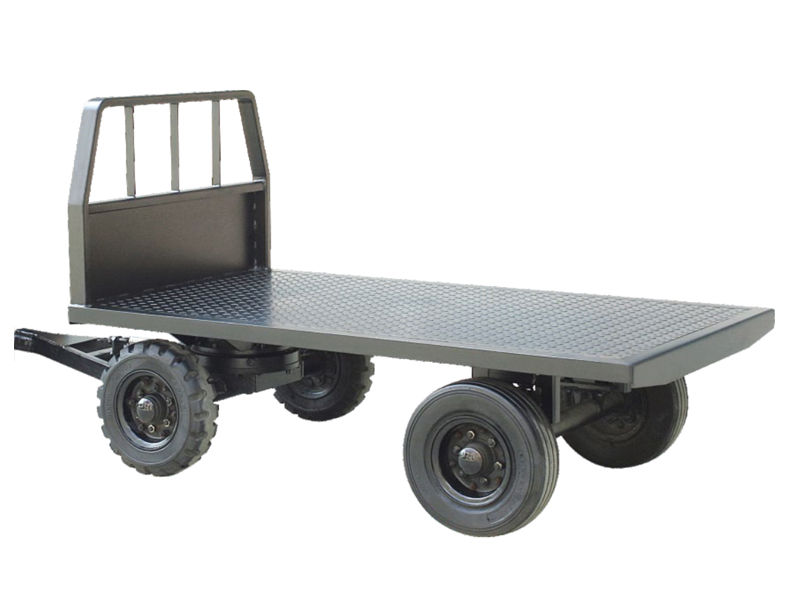 Four-Wheel Towable Cargo Trailer DT30/DT60/DT100Standardise deck height, coupling height, caster size and rated load; these trailers offer 3,000-10,000 kg capacities for tow-tractor trains.View Product →
Then choose cart types by task: flatbed trailers for palletised goods, shelf carts for small parts, kit carts for assembly feeding, and roll containers where the container itself is the load unit. Each cart type adds a station design requirement, so a fleet with four cart types needs four loading layouts and four sets of operator instructions. Fewer cart types means a simpler, more reliable train.
Safety, Stopping Distance and Standards
For driverless industrial trucks, ISO 3691-4 defines safety requirements and verification methods, and in North America ANSI/ITSDF B56.5 covers driverless automatic guided industrial vehicles. Both standards push you toward the same practical questions.
- What is the stopping distance at full train mass and maximum speed, measured on your floor?
- Where do the protective scanner fields need to shrink for narrow aisles, and at what speed?
- How is the train detected at blind corners and doorways, and how does it behave when a person steps into the path?
- How are manual forklift zones kept separate from the automated route, and who enforces that boundary?
Stopping distance is the item most often underestimated. Most carts are unbraked, so the tractor stops and the carts push forward on their casters. Design buffer zones and station clearances around the behaviour of the whole train, not around the tractor alone.
Power, Charging and Shift Coverage
Estimate energy per shift from the route itself: distance travelled, train mass, number of stops and starts, and any ramps. Lead acid batteries usually mean a battery room and a swap at shift change, which costs labour and floor space. Lithium batteries tolerate opportunity charging during breaks and changeovers, so a single pack can often cover a multi shift pattern without a swap. The trade off is a higher purchase price against lower handling cost and no watering routine.
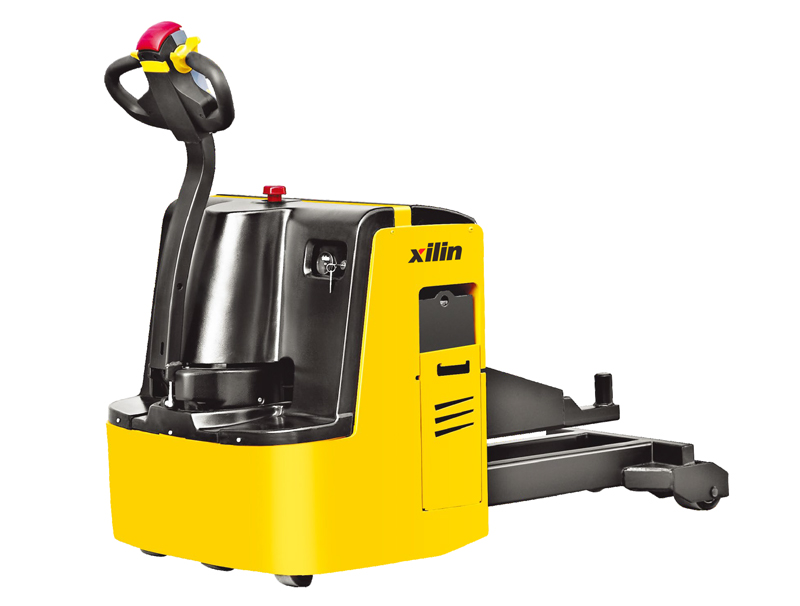 Electric Pedestrian Tow Tractor QDD25WFor shift-energy planning, this electric pedestrian tow tractor has a 2,500 kg capacity and is listed under lithium-ion trucks.View Product →
Check cold store applications separately. Capacity drops at low temperatures, and a train specified for ambient conditions may not complete a full shift in a freezer aisle. Whatever chemistry you choose, confirm that the charging window actually exists in your shift pattern before you sign.
A Rollout Sequence That Survives Contact With Production
- Count the trips you intend to remove. Measure one week of forklift movements on the target route, including empty returns.
- Fix the load unit and the cart fleet. Agree on deck height, coupling height and payload before any tractor is quoted.
- Survey the floor and aisle. Record joint condition, slopes, door widths and the tightest turn with the planned train length.
- Calculate drawbar pull at the worst point, then add margin for caster wear and a heavier future cart.
- Pilot one route on one shift, with manual forklift traffic still running nearby, and measure stops, blocking and intervention rate.
- Expand route by route, keeping cart types and coupling hardware identical so spare parts stay simple.
Procurement Questions Worth Asking Early
- What continuous drawbar pull is guaranteed at the worst grade on my route?
- What is the braking distance with the full number of carts at maximum speed?
- What coupling height tolerance is required, and what does automatic coupling cost?
- Who maintains the fleet management software, and how are route changes handled?
- What happens operationally if a cart is overloaded or parked outside its station?
- Which caster and coupling parts are wear items, and what is the expected replacement interval?
Xilin has manufactured material handling equipment since 1985 and now covers hand pallet trucks, stackers, reach trucks, order pickers, lift tables and tow tractors, with in house development reported at 423 patents and a team of 288 engineers. If you are planning a pilot route, start by matching the tractor to the drawbar pull your floor and grade actually demand, then standardise the carts behind it. Our tow tractor range and the wider equipment catalogue are the practical starting point, and the tractor development milestone we reached with our own platform shows how the line has evolved. Get the numbers right first, and the automation decision becomes far less risky.