 英语
英语 西班牙语
西班牙语 德语
德语 法语
法语 俄语
俄语
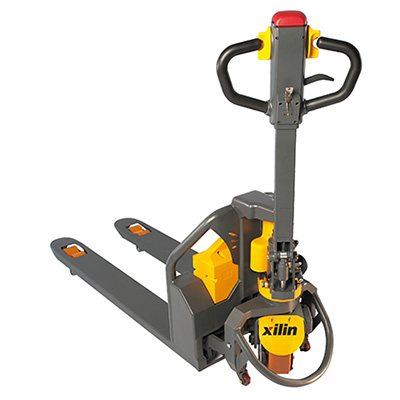 Electric Pallet Truck
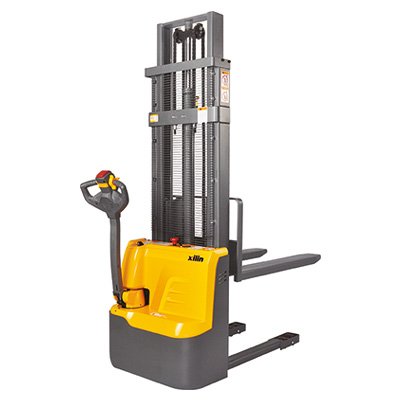 Electric Stacker
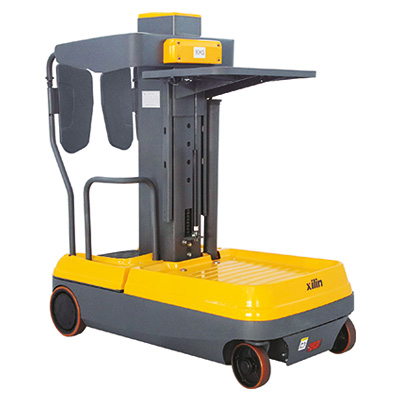 Order Picker
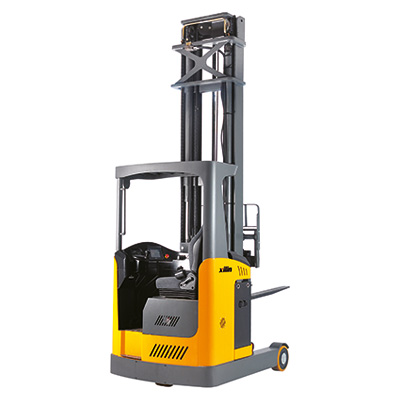 Narrow Aisle Truck
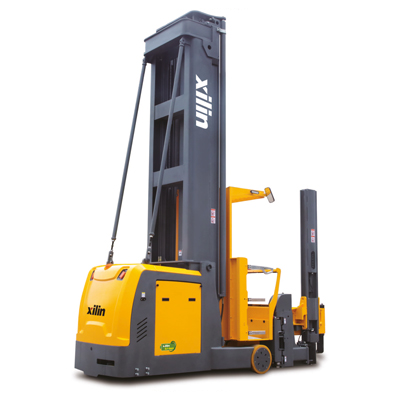 VNA Tri-Lateral Stacker
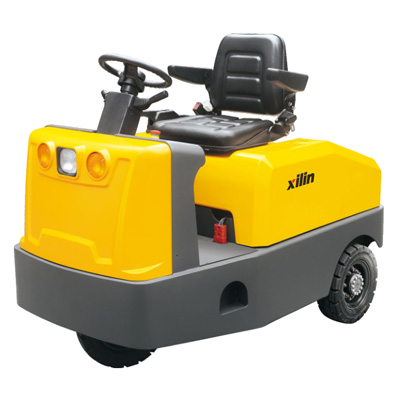 Tow Tractor
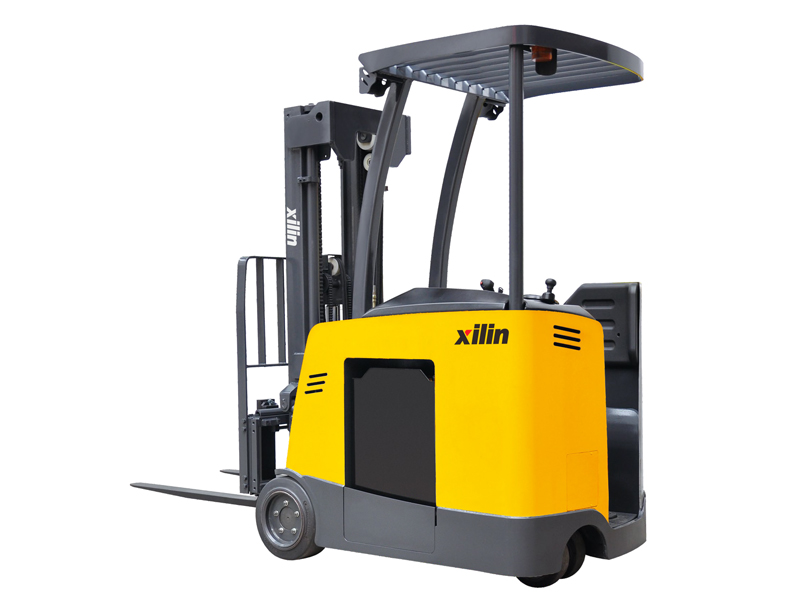
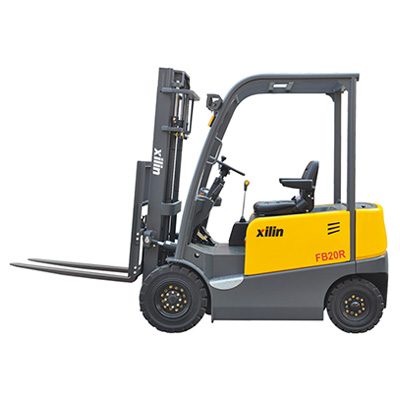 Electric Forklift
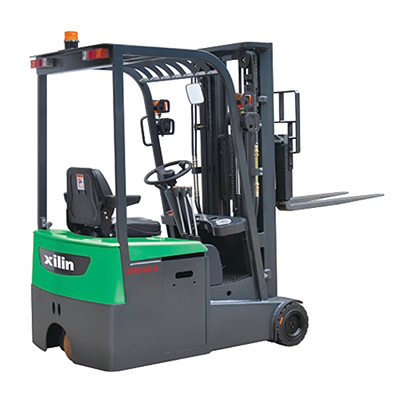 Lithium-ion Truck
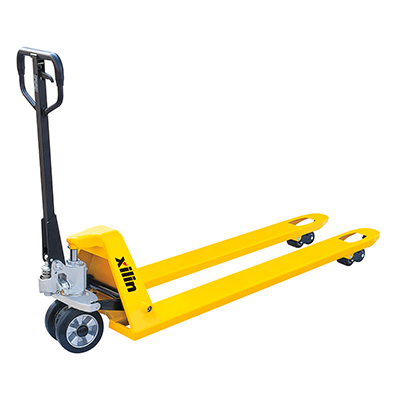 Hand Pallet Truck
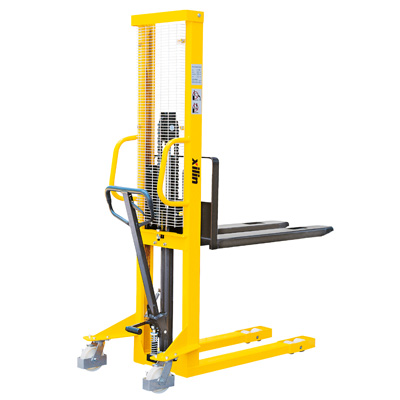 Manual Stacker
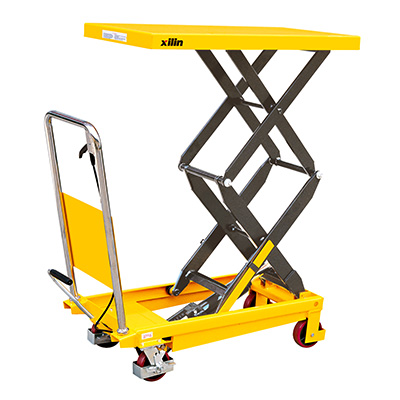 Lift Table
Content
- 1 Lead-Acid vs. Lithium-Ion: How Battery Chemistry Determines Lifespan
- 2 How Long Does One Charge Last Per Shift?
- 3 Key Factors That Determine Total Battery Lifespan
- 4 Multi-Shift Operations: Battery Swapping vs. Fast Charging
- 5 Signs That an Electric Forklift Battery Is Approaching End of Life
- 6 Practical Steps to Maximise Electric Forklift Battery Lifespan
- 7 Expected Lifespan by Operation Type: A Reference Summary
The battery of an electric forklift typically lasts 1,500 to 2,000 charge cycles for lead-acid batteries and 2,000 to 3,000 cycles or more for lithium-ion batteries. In practical calendar terms, a well-maintained lead-acid battery in single-shift operation lasts approximately 5 to 7 years, while a lithium-ion battery in the same conditions can last 8 to 12 years. For operations running two or three shifts per day, these lifespans shorten proportionally because more charge cycles are consumed per calendar year.
On a per-shift basis, a fully charged electric forklift battery is designed to power one full 8-hour shift of typical warehouse operation. However, actual runtime per charge varies significantly based on battery chemistry, the intensity of the work cycle, load weight, ambient temperature, and battery age. The sections below break down each of these factors in detail to give a complete picture of what determines how long an electric forklift battery lasts—both per charge and over its total service life.
Lead-Acid vs. Lithium-Ion: How Battery Chemistry Determines Lifespan
The two dominant battery technologies in electric forklifts—flooded lead-acid (FLA) and lithium-ion (Li-ion)—have fundamentally different performance and longevity profiles. Choosing between them has a larger impact on total battery lifespan than almost any other variable.
Flooded Lead-Acid (FLA) Batteries
Flooded lead-acid batteries are the traditional and still most widely deployed technology in industrial electric forklifts. They are electrochemical cells consisting of lead plates submerged in a liquid sulphuric acid electrolyte. FLA batteries are robust, well-understood, and lower in upfront cost than lithium-ion alternatives—but they require active maintenance and are sensitive to charging and discharging practices that directly affect their lifespan.
Key lifespan characteristics of FLA batteries:
- Cycle life: 1,500 to 2,000 cycles when maintained correctly and discharged to no more than 80% depth of discharge (DoD)
- Discharging below 80% DoD (i.e., using more than 80% of capacity) causes accelerated sulphation of the lead plates, significantly shortening cycle life
- Require weekly watering to maintain correct electrolyte levels; neglecting this leads to plate exposure, permanent capacity loss, and accelerated failure
- Must be fully charged after each shift and require an 8-hour charge period plus a 1-hour equalisation and cooling period—a total of approximately 10 hours off the charger before safe reuse
- Opportunity charging (partial top-up charges between shifts) is generally discouraged for FLA because it disrupts the charge cycle and accelerates stratification of the electrolyte
Lithium-Ion (Li-ion) Batteries
Lithium-ion batteries are the newer and increasingly preferred technology for electric forklifts, particularly in high-utilisation multi-shift operations. They offer higher energy density, faster charging, tolerance for opportunity charging, and significantly longer cycle life than lead-acid batteries—at a higher initial capital cost.
Key lifespan characteristics of Li-ion batteries:
- Cycle life: 2,000 to 3,000+ cycles, with some lithium iron phosphate (LFP) chemistry variants rated to 3,500 cycles at 80% DoD
- Can be opportunity charged during breaks and shift changes without negative effects on cycle life, making them ideal for 24/7 multi-shift operations without battery swapping
- Fast charging capability: a typical Li-ion forklift battery can reach 80% charge in 1 to 2 hours with appropriate fast charger infrastructure
- No watering, equalisation, or ventilation requirements; sealed maintenance-free construction reduces total cost of ownership
- Integrated Battery Management System (BMS) protects against overcharge, over-discharge, and thermal events, automatically optimising charge behaviour to preserve cycle life
| Parameter | Flooded Lead-Acid | Lithium-Ion (LFP) |
|---|---|---|
| Cycle life | 1,500–2,000 cycles | 2,000–3,500 cycles |
| Calendar lifespan (1 shift/day) | 5–7 years | 8–12 years |
| Full charge time | 8–10 hours | 1–3 hours |
| Opportunity charging | Not recommended | Fully compatible |
| Recommended max DoD | 80% | 80–100% (BMS managed) |
| Maintenance requirements | Weekly watering, equalisation | Minimal (sealed) |
| Energy efficiency (charge-to-use) | 75–80% | 95–98% |
| Upfront cost (relative) | Lower | Higher (2–3x) |
How Long Does One Charge Last Per Shift?
Runtime per charge is distinct from total battery lifespan but is equally important for operational planning. A battery sized correctly for the application should deliver a full 8-hour shift of operation on a single charge. In practice, actual runtime varies based on several operating parameters.
Typical Runtime Ranges by Application Intensity
- Light duty (order picking, infrequent lifts, short travel distances) — 7 to 10 hours per charge; battery may outlast the shift with capacity to spare
- Medium duty (standard warehouse distribution, mix of travel and lifting) — 6 to 8 hours per charge; correctly sized battery matches the shift duration
- Heavy duty (continuous cycling, maximum loads, long travel runs) — 4 to 6 hours per charge; may require battery swapping or opportunity charging mid-shift
Factors That Reduce Per-Charge Runtime
The following operating conditions consume battery energy faster than standard laboratory rating conditions, reducing actual runtime below the nameplate specification:
- High load weights — lifting and holding heavy loads near maximum rated capacity draws significantly more current than light loads; mast tilt and side-shift operations also consume additional energy
- Ramp and gradient travel — driving loaded forklifts up inclines is one of the highest-energy activities; a 5% grade driven at full load can reduce shift runtime by 20 to 30%
- Cold ambient temperatures — below 10°C, lead-acid battery capacity reduces noticeably; at -10°C, usable capacity may be only 60 to 70% of rated capacity. Li-ion batteries are less affected but still show some reduction below 0°C
- Battery age and degradation — as batteries age and approach end of service life, usable capacity decreases; a battery at 80% of its original capacity delivers proportionally less runtime per charge
- Auxiliary loads — cab heating, lighting, and attachments such as rotators or clamps continuously draw power from the battery throughout the shift
Key Factors That Determine Total Battery Lifespan
Beyond battery chemistry, several operational and maintenance variables have a large influence on how many years or cycles a forklift battery actually achieves before requiring replacement.
Depth of Discharge Per Cycle
Depth of discharge (DoD) is the percentage of battery capacity used before recharging. This is one of the most powerful variables affecting cycle life. For lead-acid batteries, the relationship is steep: discharging to 50% DoD (using half the capacity) may yield up to 1,200 additional cycles compared to regularly discharging to 80% DoD. Routinely discharging below 80% DoD (using more than 80% of capacity) can cut lead-acid cycle life in half or worse. Li-ion batteries are more tolerant of deeper discharge due to BMS protection, but still benefit from avoiding routine discharge to 100%.
Charging Practices and Charger Quality
Using the correct charger for the battery chemistry is non-negotiable. Lead-acid batteries require a charger with a proper three-stage charge profile (bulk, absorption, float) matched to the battery voltage and capacity. Using an undersized charger extends charge time and risks incomplete charging; using an oversized or unregulated charger overheats the battery and causes accelerated water loss and plate corrosion. For Li-ion batteries, the charger must communicate with the BMS to manage voltage and current within safe limits—a non-compatible charger can cause permanent damage or safety events.
Partial state of charge (PSoC) operation—repeatedly charging to 70 or 80% rather than full capacity—causes sulphation in lead-acid batteries that progressively reduces capacity. It is critical that lead-acid forklift batteries reach a full charge state at least once per day of operation.
Temperature During Charging and Operation
Battery temperature is a critical but often overlooked lifespan factor. Lead-acid batteries experience accelerated corrosion of positive plates at elevated temperatures: for every 10°C rise above 25°C, the rate of electrochemical degradation approximately doubles, halving the expected cycle life. Batteries should not be charged immediately after a demanding hot shift—allowing them to cool to below 40°C before connecting to the charger reduces heat-related degradation. Li-ion batteries similarly degrade faster at elevated temperatures; the BMS typically limits charging if cell temperature exceeds defined thresholds.
Watering Frequency and Electrolyte Maintenance (Lead-Acid)
For flooded lead-acid batteries, maintaining correct electrolyte levels is mandatory for achieving rated cycle life. Plates exposed above the electrolyte surface oxidise irreversibly and lose capacity permanently. Watering should be performed after a full charge (never before, to avoid overflow as the electrolyte expands during charging), using only deionised or distilled water. Tap water introduces mineral contaminants that poison the electrolyte and accelerate self-discharge. Most industrial FLA batteries require watering every 5 to 10 operating days depending on charge frequency and ambient temperature.
Multi-Shift Operations: Battery Swapping vs. Fast Charging
Operations running two or three shifts per day face a fundamental challenge: a single battery cannot power the forklift for more than one shift without recharging, and recharging a lead-acid battery takes 8 to 10 hours. Two strategies are used to manage this, and the choice has direct implications for battery lifespan and total cost.
Battery Swapping (Lead-Acid)
In multi-shift operations with lead-acid batteries, the conventional solution is to maintain a pool of spare batteries—typically two to three batteries per forklift in a two-shift operation. At the end of each shift, the depleted battery is swapped for a fully charged one using a battery changing station. This requires battery handling equipment, a dedicated charging room with ventilation (lead-acid batteries emit hydrogen gas during charging), and a structured battery tracking system. Each battery in the pool completes one cycle per day of operation, so with three batteries on a two-shift operation, each battery completes approximately 120 to 150 cycles per year, reaching end of life in 10 to 13 years on paper—though practical degradation is typically faster due to temperature and maintenance variability.
Opportunity and Fast Charging (Lithium-Ion)
Lithium-ion batteries eliminate the need for battery swapping by accepting fast charging during natural operational breaks—lunch periods, shift changeovers, loading and unloading wait times. A 30-minute opportunity charge during a shift break can restore 20 to 30% of battery capacity, extending runtime through the next shift segment. This approach means a single Li-ion battery per forklift can support multi-shift operation continuously, eliminating the capital cost of spare battery pools and the infrastructure of a battery room. The trade-off is a higher per-cycle count: a battery supporting three shifts with opportunity charging may accumulate 400 to 600 partial cycles per year, consuming the battery's rated cycle life more rapidly in calendar terms—though the higher absolute cycle count of Li-ion still typically delivers a longer calendar lifespan than a lead-acid pool.
Signs That an Electric Forklift Battery Is Approaching End of Life
Recognising end-of-life indicators early allows planned replacement rather than unplanned failure, which is significantly less disruptive and costly. The following symptoms indicate a battery is approaching or at the end of its serviceable life:
- Reduced shift runtime — if a battery that previously lasted a full 8-hour shift now depletes after 5 to 6 hours under the same work conditions, usable capacity has declined significantly; capacity below 80% of original rated capacity is the standard end-of-life threshold
- Extended charging time — a battery that takes significantly longer than its rated charge time to reach full charge has sulphated plates (lead-acid) or degraded cells (Li-ion) that cannot accept charge efficiently
- Excessive heat during charging or operation — abnormal heating indicates internal resistance has increased due to plate degradation or cell imbalance
- Visible physical damage — cracked or bulging battery case, corroded terminals, or electrolyte leakage in lead-acid batteries; cell swelling in Li-ion packs
- Frequent low-battery warnings mid-shift — particularly if occurring earlier in the shift than previously observed, indicating capacity fade
- BMS fault codes (Li-ion) — persistent cell imbalance or voltage anomaly fault codes from the battery management system indicate cell degradation requiring evaluation by a qualified battery technician
Practical Steps to Maximise Electric Forklift Battery Lifespan
Regardless of battery chemistry, the following operational practices consistently extend service life and protect the capital investment in electric forklift batteries:
- Never discharge below 20% remaining charge — the battery indicator warning light on most forklifts activates at 20 to 30% remaining capacity; operating past this point into deep discharge accelerates plate sulphation (lead-acid) or cell stress (Li-ion) and shortens cycle life measurably.
- Complete a full charge cycle every day (lead-acid) — partial charges and repeated opportunity charging without full recharge cycles cause progressive sulphation. Lead-acid batteries must reach 100% charge state regularly to prevent capacity loss.
- Allow cooling before charging — connecting a hot battery to a charger immediately after a demanding shift accelerates heat-related degradation. Allow at least 30 minutes of cooling before beginning the charge cycle.
- Water lead-acid batteries after each full charge — check electrolyte levels after charging (not before) and top up with deionised water only. Establish a regular weekly watering schedule as a maintenance task.
- Perform equalisation charges monthly (lead-acid) — equalisation is a controlled overcharge that reverses stratification and sulphation; most modern smart chargers have an automatic equalisation mode that should be run at least once per month.
- Keep battery terminals clean and tight — corroded or loose terminals increase resistance, causing voltage drop and excess heat during charging and discharging; clean terminals quarterly using a baking soda solution (lead-acid) or dry contact cleaner (Li-ion).
- Conduct annual capacity testing — have a qualified battery technician perform a discharge capacity test annually to measure actual usable capacity against original specification. This identifies batteries approaching end of life before they cause operational disruption and provides data to plan replacement on a managed schedule.
Expected Lifespan by Operation Type: A Reference Summary
The table below provides realistic lifespan estimates for electric forklift batteries across common operational scenarios, combining battery chemistry, shift intensity, and maintenance quality as variables:
| Battery Type | Shifts per Day | Maintenance Quality | Estimated Lifespan |
|---|---|---|---|
| Lead-acid (FLA) | 1 shift | Good | 5–7 years |
| Lead-acid (FLA) | 1 shift | Poor (irregular watering, deep discharge) | 2–4 years |
| Lead-acid (FLA) | 2 shifts (swapping) | Good | 3–5 years per battery |
| Lead-acid (FLA) | 3 shifts (swapping) | Good | 2–3 years per battery |
| Lithium-ion (LFP) | 1 shift | Standard (BMS managed) | 10–12 years |
| Lithium-ion (LFP) | 2–3 shifts (opportunity charging) | Standard (BMS managed) | 5–8 years |
These estimates assume medium-duty operation. Heavy-duty applications with high load cycles and significant ramp travel will reduce lifespan toward the lower end of each range; light-duty applications with consistent maintenance can extend lifespan toward or beyond the upper end.