 英语
英语 西班牙语
西班牙语 德语
德语 法语
法语 俄语
俄语
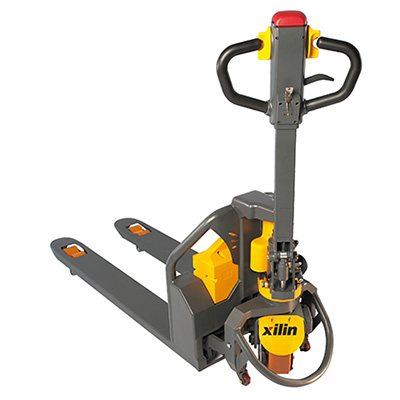 Electric Pallet Truck
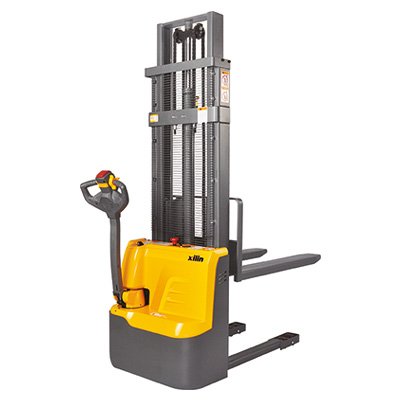 Electric Stacker
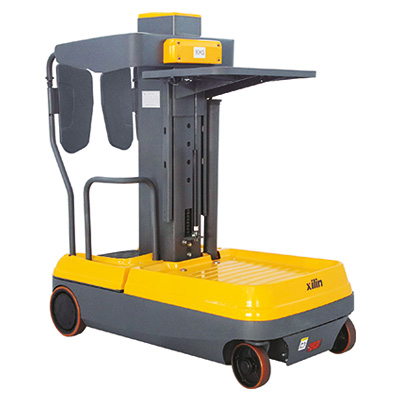 Order Picker
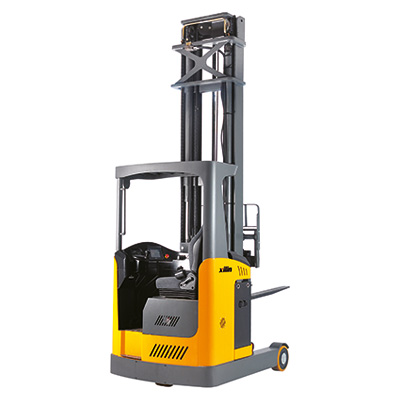 Narrow Aisle Truck
 VNA Tri-Lateral Stacker
 Tow Tractor
 Electric Forklift
 Lithium-ion Truck
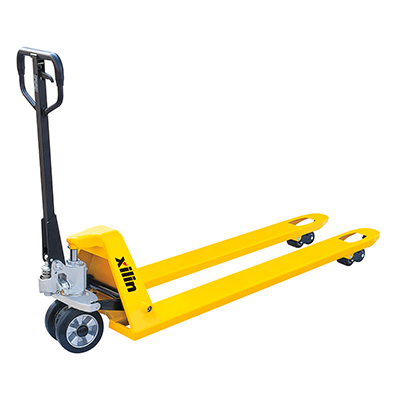 Hand Pallet Truck
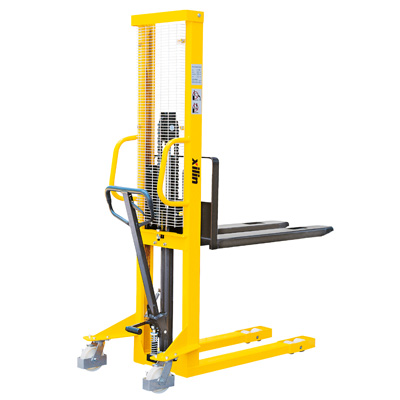 Manual Stacker
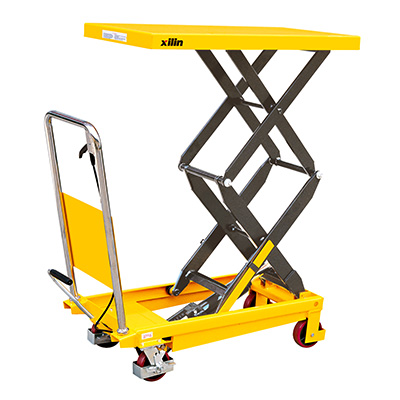 Lift Table
Content
- 1 Load Capacity: The Most Frequently Violated Safety Limit
- 2 Scissor Mechanism Hazards: Crush and Shear Points
- 3 Mechanical Safety Locks: Working Beneath a Raised Table
- 4 Personnel Riding on Lift Tables: When It Is and Is Not Permitted
- 5 Pre-Operation Inspection: What to Check Before Every Use
- 6 Tip-Over and Instability Risks
- 7 Operator Training and Authorisation Requirements
- 8 Maintenance Schedule and Periodic Inspection Requirements
- 9 Environmental and Installation Safety Factors
The primary safety considerations when using a lift table are: never exceed the rated load capacity, keep all personnel clear of the scissor mechanism during operation, ensure the load is centred and stable before lifting, never use the table as a personnel platform unless it is specifically rated and equipped for that purpose, and always use mechanical safety locks before working beneath or alongside a raised table. Lift table accidents are overwhelmingly caused by overloading, unguarded scissor zones, unsecured loads, and inadequate maintenance—all of which are preventable through correct operating procedure and regular inspection.
Lift tables are among the most widely used material handling tools in warehouses, manufacturing facilities, and loading docks, but their apparently simple operation conceals several serious hazard categories. The following sections address each category in depth, with specific thresholds, regulatory references, and practical control measures that translate directly into safer daily operation.
Load Capacity: The Most Frequently Violated Safety Limit
Every lift table has a rated capacity specified by the manufacturer—the maximum total load that the table is designed to safely support and lift. Exceeding this rating is the leading cause of structural failure, hydraulic failure, and tip-over incidents involving lift tables. The rated capacity is not a safety factor to be worked around; it is the maximum permissible load under the most favourable conditions (centred load, level surface, stable platform).
Understanding Rated Capacity and Safety Margins
Lift table rated capacities are established after the manufacturer applies a safety factor—typically at least 2:1 for static loads (meaning the table is proof-tested to twice its rated capacity before sale), but this safety factor is consumed entirely by dynamic loads, eccentric loading, and degradation over the equipment's service life. Operating at or near the rated capacity leaves no margin for the additional forces introduced by:
- Dynamic loading during load placement (a 500 kg load dropped from even 50 mm height generates significantly more than 500 kg of impact force)
- Eccentric loading where the centre of gravity of the load is offset from the geometric centre of the platform
- Hydraulic cylinder seal wear that reduces effective lift pressure over time
- Scissor arm pin and bushing wear that introduces lateral play and reduces structural integrity
Load Centring Requirements
Even within the rated load limit, an off-centre load creates a bending moment on the platform and scissor structure that can exceed design limits locally. Most manufacturers specify that the load centre of gravity must be within the central 50% of the platform area for rated capacity operation. Loads placed near the edge of the platform create tip-over risk as the table rises—the effective tipping moment arm increases with height. Always position the heaviest component of any load as close to the geometric centre of the platform as the task allows.
Scissor Mechanism Hazards: Crush and Shear Points
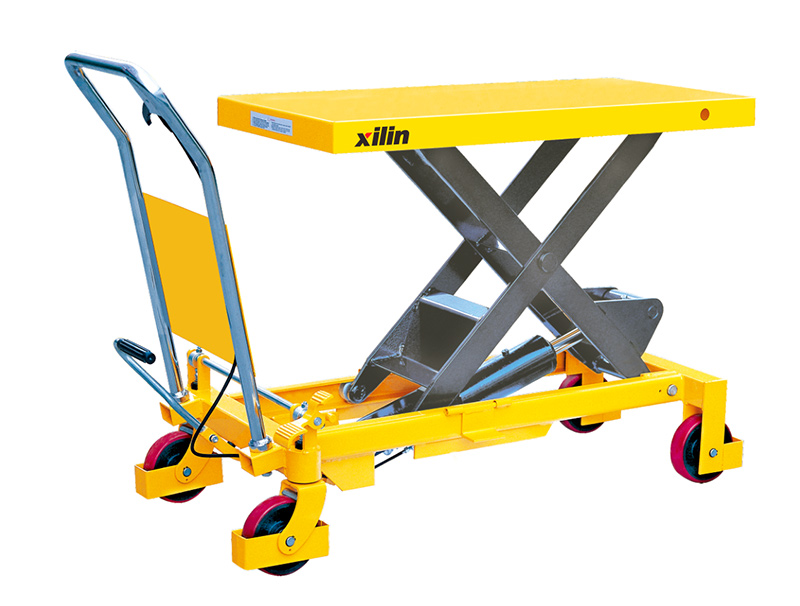
The scissor mechanism is the most dangerous zone of any lift table. As the table descends, the crossing arms move toward each other and toward the base frame, creating multiple pinch points capable of generating crushing forces well in excess of 1,000 kg in industrial hydraulic scissor tables. Entrapment of a hand, foot, or limb in the scissor zone during table movement is a catastrophic injury event that has caused amputations and fatalities in industrial settings.
Guards and Physical Barriers
Regulatory standards in most jurisdictions—including OSHA 29 CFR 1910.217 in the United States and EN 1570-1 in Europe—require that scissor mechanisms be guarded against access during operation. Guarding options include:
- Accordion-style bellows guards — flexible fabric or rubber bellows that compress as the table descends and expand as it rises, covering the scissor zone on all sides throughout the full travel range
- Fixed perimeter guards — rigid steel panels around the base of the table that prevent access to the scissor zone; combined with a presence detection mat or sensor that stops descent if a person approaches
- Toe guards — spring-loaded plates at the base perimeter that stop downward travel if a foot or object is detected beneath the descending table edge
Never operate a lift table with damaged, removed, or bypassed guards. If a guard is damaged, the table should be taken out of service until the guard is repaired or replaced. The cost of a guard repair is negligible compared to the cost of a serious injury and the regulatory penalties that follow.
Safe Exclusion Zones During Operation
All personnel not directly involved in the lifting operation should remain outside a clearly defined exclusion zone during table movement. The exclusion zone should extend at minimum 1 metre beyond the outer perimeter of the table in all directions. In high-traffic areas, visible floor markings, safety barriers, or audible/visual warning signals (lights or alarms that activate during table movement) help enforce this zone. Never allow anyone to stand on or lean over the platform edge while the table is in motion.
Mechanical Safety Locks: Working Beneath a Raised Table
Any work conducted beneath or alongside a raised lift table—maintenance, repair, load adjustment, cleaning—must be performed only with the mechanical safety lock engaged. Hydraulic systems can fail without warning: a seal rupture, solenoid valve failure, or hydraulic line breach can cause a loaded or unloaded table to drop at full speed. The energy released by a 500 kg table dropping from 1 metre of height is sufficient to cause fatal crushing injuries.
Types of Mechanical Safety Locks
Lift tables are typically fitted with one or more of the following mechanical locking mechanisms:
- Scissor arm safety prop (maintenance bar) — a rigid steel bar that is placed between the scissor arms or between the platform and base frame when the table is at a defined raised position; must be secured in position before any person goes beneath the table
- Ratchet-type safety lock — a mechanism that automatically engages at defined height increments during raising and must be manually released to allow descent; provides continuous mechanical restraint throughout the operating range
- Cylinder locking collar — a collar placed around the hydraulic cylinder rod that mechanically prevents cylinder retraction; used primarily on single-cylinder tables during maintenance
The safety lock must never be improvised with non-rated materials such as wooden blocks, pipe sections, or bricks. Only manufacturer-approved safety props rated for the full load capacity of the table are acceptable. After completing work beneath the table, all personnel must clear the area before the safety lock is removed and the table is lowered.
Personnel Riding on Lift Tables: When It Is and Is Not Permitted
A standard lift table is a material handling tool, not a personnel elevating work platform (PEWP). Using a standard lift table to raise people to work height is a serious safety violation in most regulatory jurisdictions and creates significant fall, tip-over, and entrapment risk. The distinction matters because the two equipment categories are designed to fundamentally different safety standards.
Standard lift tables are not required to have:
- Guardrails or toe boards to prevent falls from the elevated platform
- Load sensing systems that detect a person's shift in weight and prevent tip-over
- Emergency stop controls accessible to the person on the platform
- Overload protection calibrated for the dynamic loads of a person moving on an elevated platform
Where personnel elevation is required, only a lift table or work platform specifically designed, rated, and certified for personnel use—and equipped with the required fall protection, emergency controls, and stability systems—should be used. These units comply with standards such as ANSI/SAIA A92.3 (manually propelled elevated work platforms) or equivalent national standards. If your lift table's documentation does not explicitly state it is rated for personnel, it must not be used to lift people.
Pre-Operation Inspection: What to Check Before Every Use
A brief pre-operation inspection before each use is the single most effective way to identify developing problems before they become accidents. Inspections take less than five minutes and should become habitual for every operator. The following items should be checked at the start of each shift or before each significant use:
- Hydraulic fluid level and visible leaks — check the reservoir sight glass or dipstick; inspect the base, cylinder, hoses, and fittings for oil seepage or pooling. A hydraulic leak indicates reduced lift capacity and potential for sudden pressure loss.
- Platform surface condition — check for damage, warping, or missing anti-slip surface material that could cause loads or operators to slide. Replace damaged anti-slip matting or grating before use.
- Scissor arm pins and bushings — visually inspect for visible play, cracks, or missing locking pins; unusual noise or lateral movement during operation indicates worn pins that require replacement
- Guard integrity — confirm all bellows, perimeter guards, and toe guards are present, undamaged, and properly attached
- Control function — operate the table through its full range (raise and lower) without load, checking for smooth, controlled movement without jerking, unusual noise, or drift under the no-load condition
- Safety lock availability and condition — confirm the safety prop or lock is present, undamaged, and accessible; a safety lock that cannot be located or is damaged must be replaced before work beneath the table can proceed
- Stability of installation — for mobile or pit-mounted tables, confirm the unit is correctly positioned and, where applicable, secured to floor anchors before loading
Any defect identified during pre-operation inspection should result in the table being taken out of service and tagged with a Do Not Operate warning until the defect is repaired by a qualified technician. Never operate a lift table with a known defect, even for a "quick" or "light" task.
Tip-Over and Instability Risks
Lift table tip-over—where the table and load topple laterally—is a catastrophic event that can injure bystanders, damage property, and destroy the equipment. Tip-over risk increases with platform height, eccentric loading, and any lateral force applied to an elevated load.
Conditions That Increase Tip-Over Risk
- Load offset from centre — as discussed above; the lateral moment arm increases with height, and an eccentrically placed load that is stable at floor level may be destabilising at maximum height
- Applying horizontal force to an elevated load — pushing, pulling, or rotating a load while the table is at height applies lateral force to the table structure; all load repositioning or manipulation should be done with the table at its lowest practical working height
- Mobile lift tables on uneven surfaces — wheeled or mobile lift tables should only be moved in the fully lowered position; moving a mobile table with a raised load on an uneven floor significantly increases tip-over risk
- Tall or top-heavy loads — loads that are significantly taller than wide have a higher centre of gravity, reducing the load's own stability margin and transferring more tipping moment to the table structure
Installation-Level Stability Controls
For fixed or pit-mounted lift tables, anchor bolts secure the table base to the floor and are a structural safety requirement, not an optional installation enhancement. Anchor bolt specifications are provided by the manufacturer and must be followed using the specified bolt grade and embedment depth. For heavy industrial tables, floor anchoring may need to resist lateral forces equivalent to 30 to 50% of the rated load under worst-case eccentric and dynamic loading conditions. An unanchored fixed lift table is not safe for rated-capacity operation.
Operator Training and Authorisation Requirements
Lift table operation must be restricted to trained and authorised personnel. This is not merely a regulatory requirement—it is a practical safety control, because the majority of lift table accidents involve operators who were unaware of the specific hazards of the equipment they were using or were using the equipment for a purpose it was not designed for.
Effective operator training for lift table use should cover:
- Equipment-specific hazard identification — the location and nature of all pinch points, crush zones, tip-over conditions, and hydraulic failure modes for the specific table model being operated
- Rated capacity and load centring requirements — how to determine load weight, how to position loads correctly, and what to do if load weight is uncertain
- Pre-operation inspection procedure — the complete inspection checklist, how to identify reportable defects, and the process for taking equipment out of service
- Safe operating procedure — control functions, exclusion zone management, communication with co-workers during operation, and emergency stop procedures
- Safety lock use — when the safety lock is required, how to correctly install it, and the prohibition on working beneath an unsupported raised table
- Prohibited uses — personnel elevation on non-rated tables, overloading, guard bypassing, and makeshift modifications
Training should be documented, with records of who was trained, on which equipment, by whom, and when. Refresher training should be conducted when an operator is observed using equipment unsafely, after any incident involving the equipment, and periodically at intervals defined by the facility's safety management system (typically annually as a minimum).
Maintenance Schedule and Periodic Inspection Requirements
Regular scheduled maintenance is essential for maintaining lift table safety over the equipment's service life. Components that are acceptable at installation degrade with use; hydraulic seals harden and leak, structural pins wear, and weld joints develop fatigue cracks that are invisible until they propagate to failure. A structured maintenance programme catches these developments before they reach a critical threshold.
| Frequency | Inspection / Maintenance Task | Purpose |
|---|---|---|
| Daily (pre-shift) | Visual check of guards, platform, controls, hydraulic leaks | Identify obvious defects before operation |
| Weekly | Check hydraulic fluid level; inspect hose and fitting condition; lubricate pivot pins per manufacturer schedule | Maintain hydraulic system integrity and reduce pin wear |
| Monthly | Inspect scissor arm pins and bushings for wear and play; check weld integrity on scissor arms and base frame; test emergency stop and overload protection functions | Detect structural degradation before failure |
| Annually | Full hydraulic system service (fluid change, filter replacement, seal inspection); load test at rated capacity; structural inspection by qualified engineer; guard function verification | Confirm continued fitness for rated service; meet statutory inspection requirements |
| After any incident | Full inspection before return to service; engineering assessment of structural components if overload or impact occurred | Ensure no hidden damage exists following abnormal loading or collision |
In many jurisdictions, lift tables used in workplaces are classified as lifting equipment subject to statutory periodic examination under national work equipment regulations. In the UK, for example, the Lifting Operations and Lifting Equipment Regulations 1998 (LOLER) require that lifting equipment be thoroughly examined by a competent person at least every 12 months (or 6 months if used to lift people), with written examination reports retained for the life of the equipment. Equivalent requirements exist under OSHA standards in the US and machinery safety directives in the EU. Compliance with these requirements is not optional—it is a legal duty of the equipment owner and user.
Environmental and Installation Safety Factors
The environment in which a lift table is installed and used introduces additional safety considerations that are specific to the site and application.
Floor Loading and Pit Installations
A lift table transfers its load—the weight of the table itself plus the full rated load—to the floor through the base frame footprint. Before installation, the floor's load-bearing capacity must be verified to ensure it can support the combined load without cracking or subsidence. Heavy industrial lift tables with rated capacities of 5,000 kg or more may require reinforced concrete slabs with a minimum thickness of 150 to 200 mm and appropriate compressive strength. For pit installations (where the table sits in a floor recess so the platform is flush with the floor at minimum height), the pit structure must be independently verified by a structural engineer before the table is installed.
Electrical Safety in Powered Lift Tables
Electrically powered lift tables (AC motor-driven hydraulic power units) must be connected to the facility's electrical supply by a qualified electrician, with proper earthing (grounding), overcurrent protection, and emergency stop isolation in compliance with national electrical codes. In wet or washdown environments—common in food processing facilities—the electrical components must be rated to at least IP65 (dust-tight and water-jet resistant) or higher to prevent water ingress that causes short circuits, insulation failure, and electrocution hazard.
Hazardous Area Considerations
In environments where flammable gases, vapours, or dusts may be present—such as chemical storage areas, paint shops, or grain handling facilities—standard hydraulic lift tables with conventional electric motors and controls cannot be used. Explosion-proof or ATEX-rated equipment is required, with all electrical components enclosed in housings that prevent ignition of the surrounding atmosphere. Using standard equipment in a classified hazardous area is both a regulatory violation and a potential ignition source for a fire or explosion.