 英语
 西班牙语
 德语
 法语
 俄语

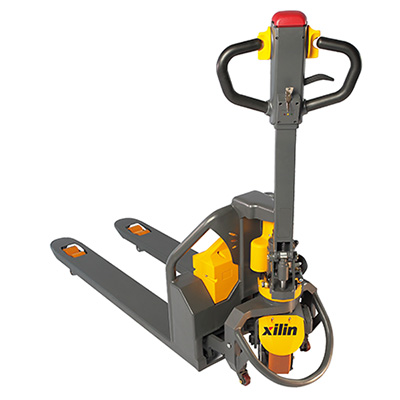 Electric Pallet Truck
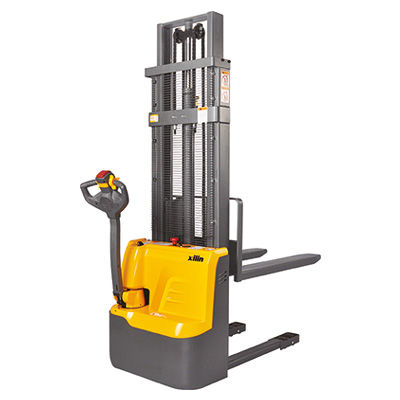 Electric Stacker
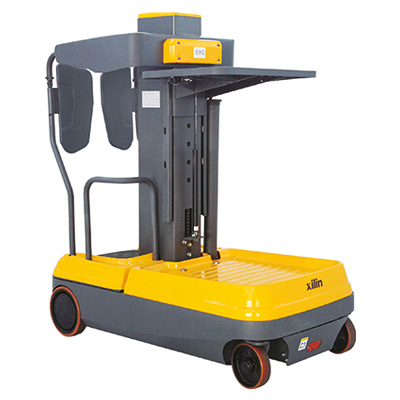 Order Picker
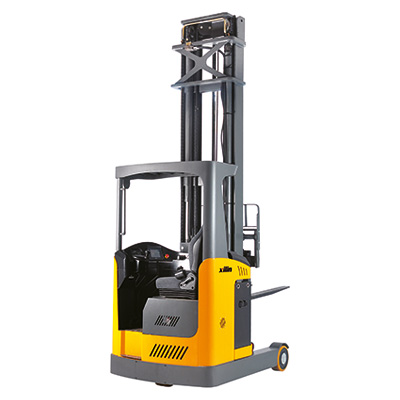 Narrow Aisle Truck
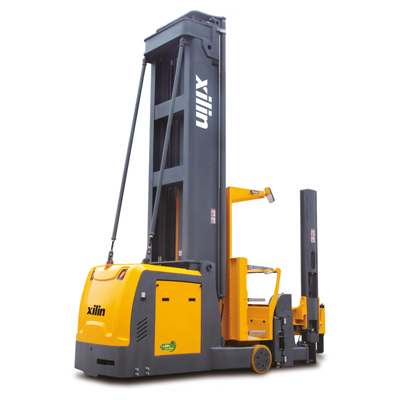 VNA Tri-Lateral Stacker
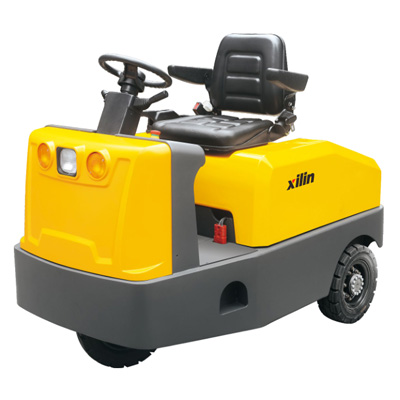 Tow Tractor
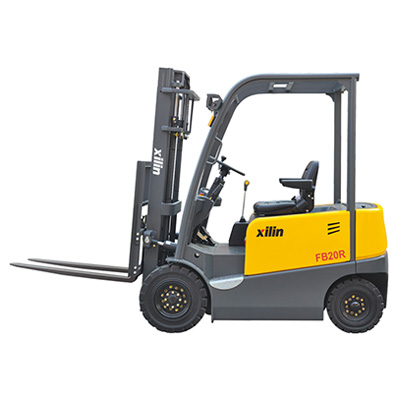 Electric Forklift
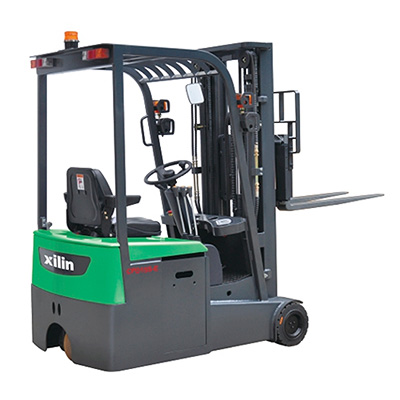 Lithium-ion Truck
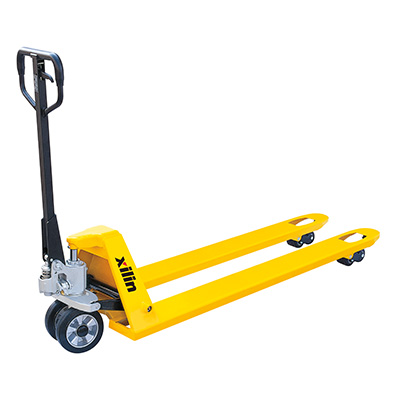 Hand Pallet Truck
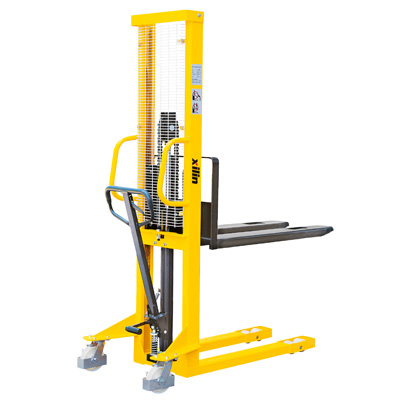 Manual Stacker
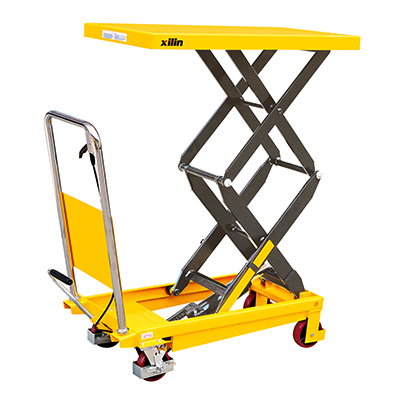 Lift Table

Content
- 1 What a drum dumper attachment is made of
- 2 Match the clamp to the drum before anything else
- 3 The host truck decides whether it works at all
- 4 Rotation angle, dump height and discharge control
- 5 Keep the mast low by moving the receiving side
- 6 Safety points that come up in audits
- 7 Alternatives worth pricing at the same time
- 8 Procurement checklist
A 200 litre steel drum filled with a product at 1.2 specific gravity weighs around 260 kg. Inverting it by hand at a mixing station is not a task anyone should attempt, and a 1,500 kg forklift will not automatically do it either once the mast is lifted and the load centre moves forward. A drum dumper forklift attachment closes that gap, but only when it is selected in the right order: clamp first, rotation angle second, host truck last.
Work in the opposite order and the failures are predictable. A drum slips in the jaws halfway through the pour. Product leaves the drum faster than the receiving hopper can take it. Or the truck looks capable on its nameplate but is overloaded at the height where the work actually happens.
What a drum dumper attachment is made of
Nearly every industrial installation belongs to one of three hardware families.
- Fork-mounted tilter. The frame slips over the truck forks and is held by a strap, chain or locking pin. Rotation is manual through a hand crank or worm gear, or hydraulic through a small cylinder fed from an auxiliary circuit.
- Carriage-mounted dumper. Bolted to the carriage with hook-type mountings, usually class II at 406 mm or class III at 508 mm. Rotation comes from a hydraulic rotary actuator or a chain-driven sprocket.
- Self-powered unit. Carries its own 12 V or 24 V power pack, so no auxiliary hydraulic valve is needed on the truck. This is the practical answer when the truck is older, leased or shared between shifts.
Single-drum capacities normally run from 350 kg to 500 kg, and the attachment adds 90 kg to 250 kg at the carriage. Twin-drum models roughly double both figures. Rotation stops at 135 degrees on partial-dump versions and at a full 180 degrees on units built for complete inversion.
Match the clamp to the drum before anything else
The clamp is the only part of the assembly touching the load, and it is where most failures begin. Steel, plastic and fibre drums react differently to the same jaw pressure. An open-head drum adds a second risk, because an unsecured lid becomes a loose object the moment the drum passes 90 degrees.
| Clamp style | How it holds the drum | Best suited to | Watch out for |
|---|---|---|---|
| Rim or chime clamp | Jaw grips the rolled top edge | Closed-head steel drums | Plastic rims deform and dented chimes lose grip |
| Belly or side clamp | Two arms squeeze the drum body | Steel and plastic drums | Fibre drums crush under clamp pressure |
| Cradle with retention gate | Drum rests in a curved cradle held by a strap | Any 200 litre drum, including fibre | Slower loading, and the cradle must match drum diameter |
| Forks plus strap | Attachment strapped to the forks, drum strapped in | Low volume, low headroom | Manual strapping on every cycle |
A standard 200 litre drum measures about 572 mm across and 851 mm high, but drums run from 30 litres to 114 litres and diameters vary slightly between makers. Confirm the stated diameter range and test the clamp on the drums you actually buy, not on the one the supplier brings to the demonstration.
The host truck decides whether it works at all
The attachment is only half of the lifting system. OSHA 1910.178(a)(4) and (a)(5) require the truck manufacturer written approval before an attachment that affects capacity is fitted, and require the capacity plate, tags and decals to be changed to match. ANSI/ITSDF B56.1 points the same way. A dumper bolted on without that paperwork is an exposure in any incident investigation, however well the equipment performs.
The arithmetic behind the new plate is simple. A full 200 litre drum of product at 1.2 specific gravity weighs about 260 kg including the drum itself. A fork-mounted tilter of 140 kg pushes that mass roughly 600 mm further forward than a normal pallet load. With the drum horizontal, the combined load centre can sit near 1,100 mm from the carriage face. Applying the moment rule, the drum demands about 570 kg of capacity at the 500 mm reference point and the attachment about 170 kg, so close to 740 kg is used up before mast height is counted. Mast height usually takes away more than load centre does, so ask for the manufacturer capacity chart rather than the sales sheet.
Indoor dump stations in chemical, food and pharmaceutical plants rarely allow diesel or LPG, so the host truck is usually electric and compact enough to work inside a processing aisle.
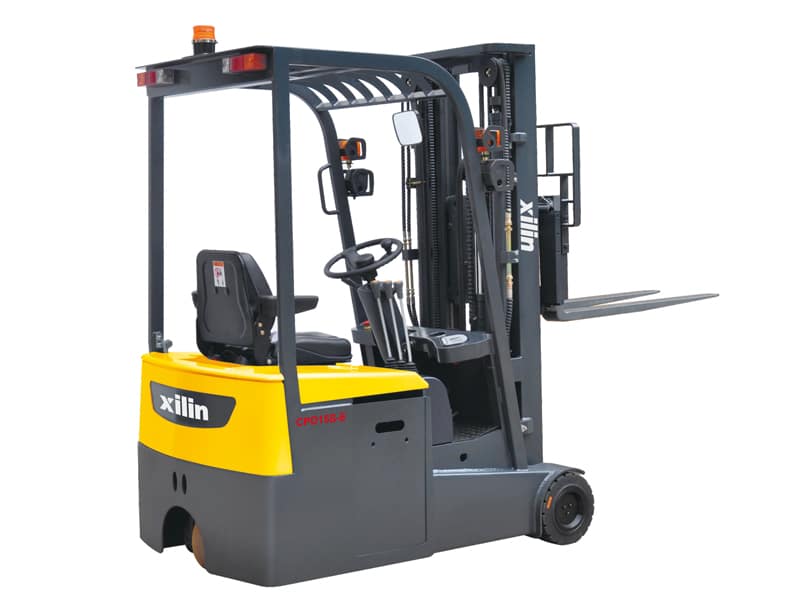 Ningbo Ruyi CPD10S-E/CPD15S-E Three-Wheel Electric ForkliftA compact seated electric counterbalance truck in 1,000 kg and 1,500 kg capacities, suited to indoor aisles where diesel or LPG trucks are not permitted.View Product →
Rotation angle, dump height and discharge control
Rotation angle is a process decision, not a specification detail. A 135 degree tilt empties free-flowing liquids and keeps the drum mouth clear of the hopper, which limits splash and dust. A full 180 degree inversion is what empties viscous pastes, powders and products that cling to the wall, but it needs a clamp that can hold the drum upside down and usually a drip tray beneath the dump zone.
Discharge height sets the mast. If the hopper rim sits at 1,500 mm, a two stage mast is enough. Dumping into a mixer throat at 3,000 mm needs a three stage mast, and residual capacity falls sharply at that height. A 572 mm drum also needs roughly 900 mm of clear space above the receiving opening to turn without striking it. Fit a flow control valve so inversion speed can be matched to the product, because letting a full drum swing over at full flow is how hoppers get damaged and operators get splashed.
Keep the mast low by moving the receiving side
Not every high discharge point needs a taller mast. If the receiving tote or container can be raised to meet the drum, the truck works at a lower, safer height with more residual capacity. A hydraulic lift table under the fill station does that job without adding anything to the mast, and it keeps the operator working at a comfortable level instead of reaching upward.
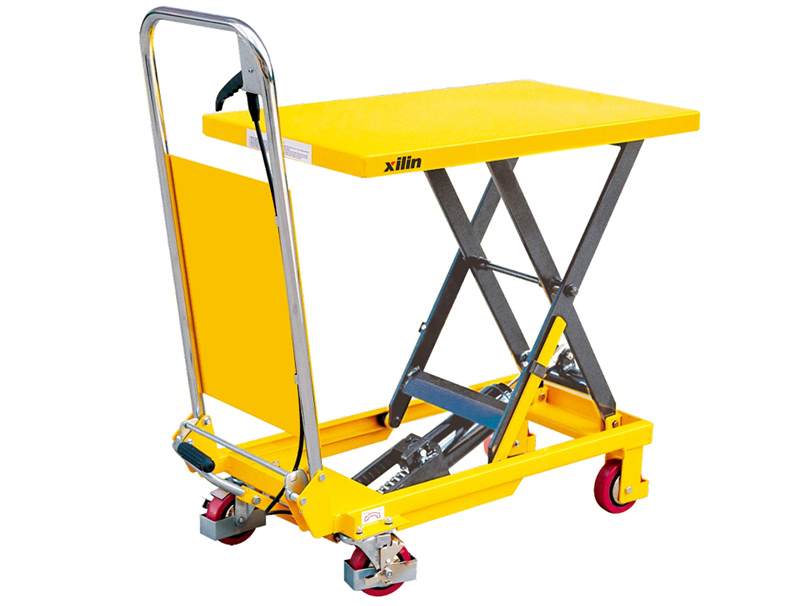 EU Type SP150 Hydraulic Lift TableA 150 kg foot-operated lift table for raising loads to a comfortable height, useful where a fill station needs positioning without adding mast height.View Product →
Safety points that come up in audits
- Written approval from the truck maker and an updated capacity plate for the attachment combination.
- Documented operator training that covers the attachment itself, not only the truck.
- Restraint use. Operators should stay seated and belted while tipping, and the habits that keep a standard forklift stable apply with equal force once an attachment is fitted.
- Drum condition. Reject dented chimes, split seams and swollen plastic drums before they enter the clamp.
- Bonding and grounding when flammable liquids are transferred, plus spill containment under the dump zone and a closed transfer arrangement where local fire codes require one.
- Travel position. Carry a loaded drum low and tilted back, never raised, and park the attachment on a stand with the hoses disconnected when it is idle.
Alternatives worth pricing at the same time
A forklift-mounted tilter is not the only way to empty a drum, and the best option depends on throughput and floor space.
| Method | Throughput | Strength | Limitation |
|---|---|---|---|
| Forklift-mounted dumper | Roughly 30 to 60 drums per shift | Uses a truck already in the plant and dumps at any station | Needs a derated truck and a trained operator |
| Floor-mounted dumping station | High and continuous | Fixed height with dust hood and containment built in | Occupies floor space and drums must be delivered to it |
| Pallet-mounted manual cradle | Low | Lowest purchase cost and no truck required | Manual effort and the highest injury risk |
| Lift and pour attachment only | Medium | Moves and positions drums without tipping | Does not empty the drum |
Whichever method is chosen, drums still have to reach the dump point. Moving them on pallets in batches, rather than one at a time, is the same productivity question that decides manual against powered handling equipment elsewhere in the warehouse.
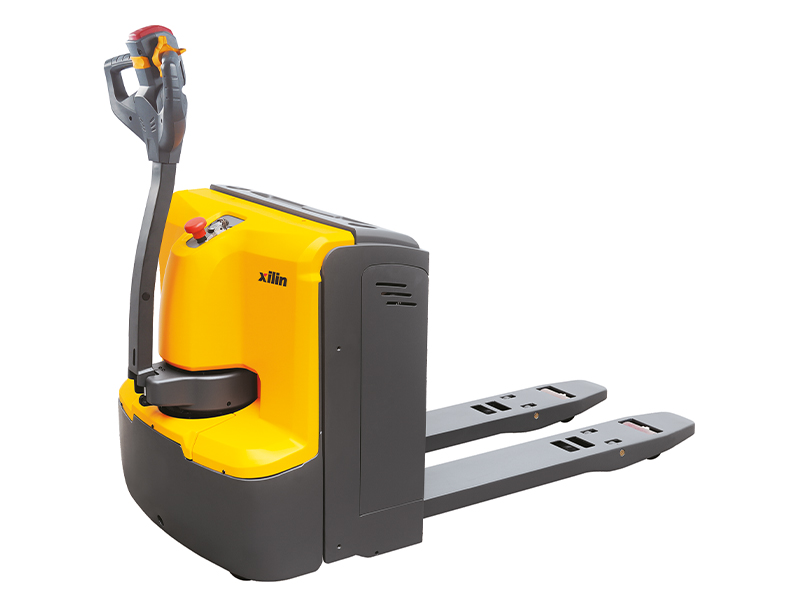
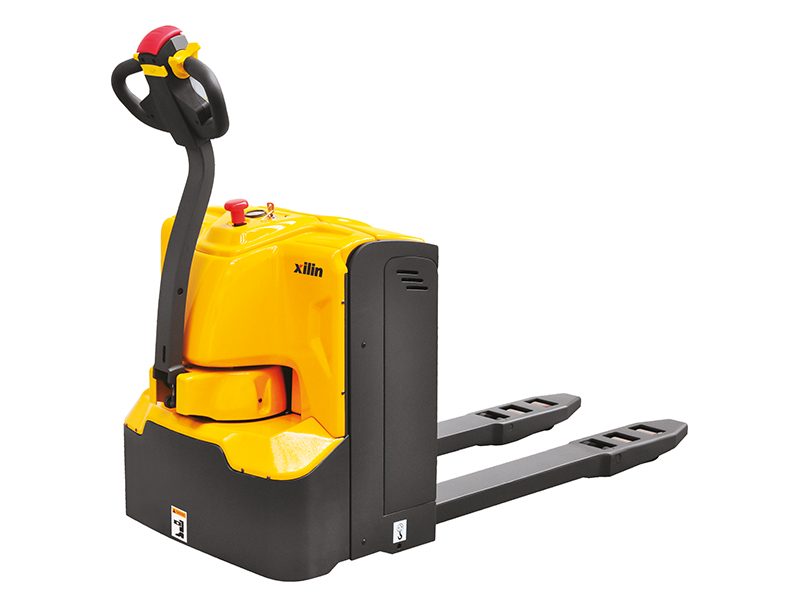
 Heavy-Duty Electric Pallet Truck CBD30R-IIA 3,000 kg electric pallet truck for moving palletized drums in batches to the dump point, with AC controls and heavy-gauge forks.View Product →
Procurement checklist
- Ask for the attachment weight and its capacity at the load centre you will really use, not at the 500 mm reference.
- Confirm the hook-type mounting class matches the truck carriage, class II at 406 mm or class III at 508 mm.
- Measure your forks. Pocket width, thickness and inside spread must match or the frame will rock on them.
- Check the auxiliary hydraulic flow and pressure available, or specify a self-contained unit instead.
- State the drum material, head type and diameter range in writing, then require a test on one of your own full drums.
- Ask whether the supplier helps with the re-rating document and the new capacity plate.
- Price the consumables as well as the unit: clamp pads, seals, hoses and a spare hydraulic power pack.
The sequence matters more than the catalogue. Choose the clamp that suits the drum, choose a rotation angle that suits the product, then confirm in writing that the truck can carry the combination at the height involved. Do those three things and the drum dumper forklift attachment becomes a straightforward piece of production equipment instead of a recurring maintenance and safety problem.
Ningbo Ruyi (Xilin) has manufactured material handling equipment since 1985, covering electric forklifts, pallet trucks, stackers, order pickers, tow tractors and lift tables. The dumper itself normally comes from a specialist attachment maker, while the truck that carries it, the equipment that stages the drums and the table that positions the receiving container can come from one range.