 英语
 西班牙语
 德语
 法语
 俄语

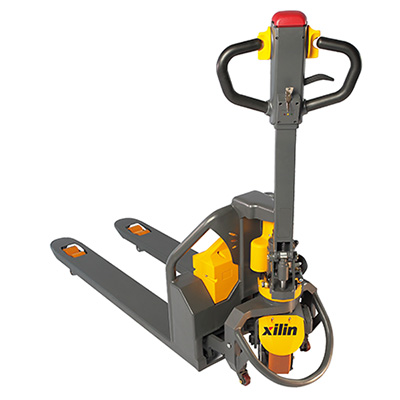 Electric Pallet Truck
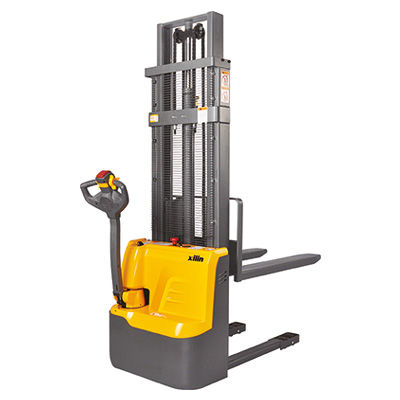 Electric Stacker
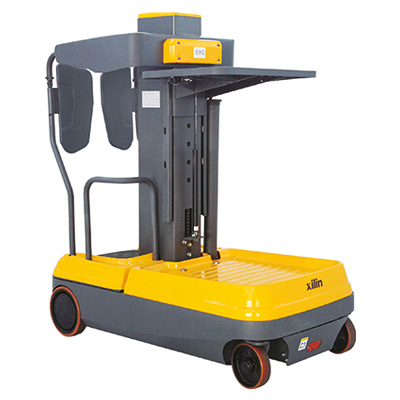 Order Picker
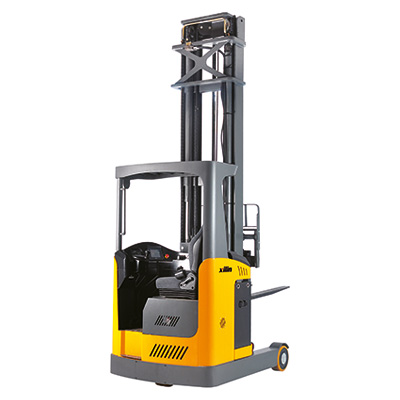 Narrow Aisle Truck
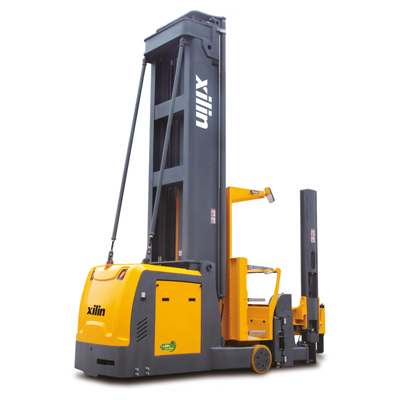 VNA Tri-Lateral Stacker
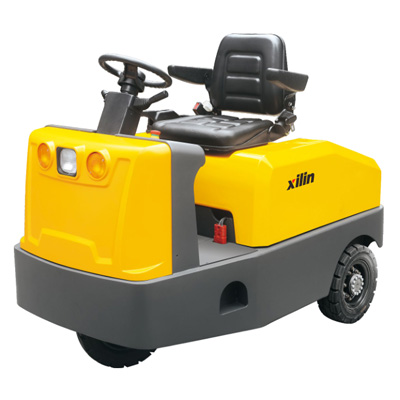 Tow Tractor
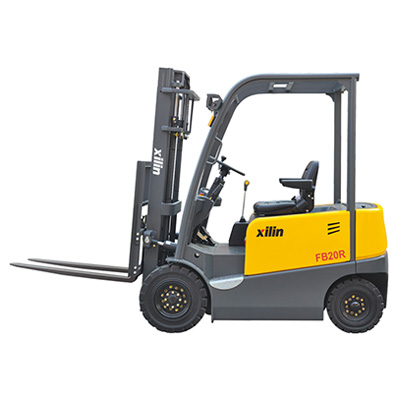 Electric Forklift
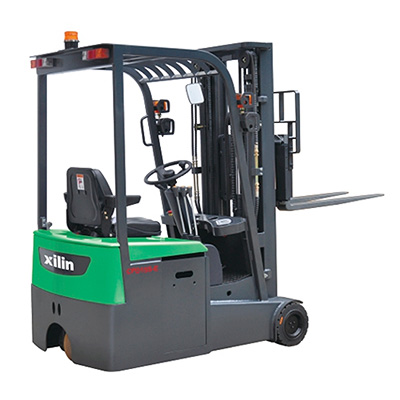 Lithium-ion Truck
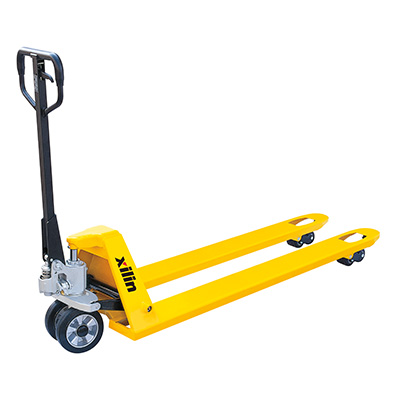 Hand Pallet Truck
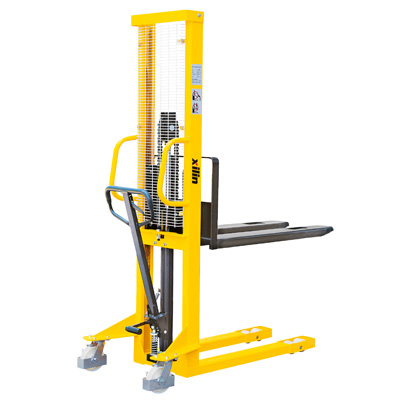 Manual Stacker
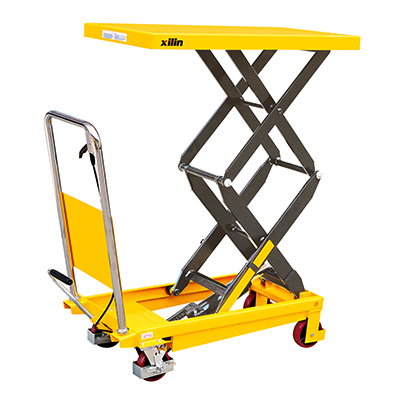 Lift Table

Content
- 1 The Dimensions Listed on Every Forklift Datasheet
- 2 Typical Forklift Dimensions by Truck Class
- 3 Mast Height: Lowered, Raised and Free Lift
- 4 Aisle Width Is Where Overall Length Becomes Cost
- 5 Fork Dimensions, Load Centre and Capacity
- 6 How to Check Dimensions Against Your Own Building
- 7 Common Mistakes When Comparing Forklift Dimensions
A 2.5 tonne counterbalance forklift and a 1.5 tonne walkie pallet truck are both sold as forklifts, yet one is close to 3.6 m long and 1.2 m wide while the other measures about 1.7 m long and 0.7 m wide. That gap is why the dimensions of a forklift never reduce to one number, and why load capacity alone is a poor basis for choosing a truck.
The conclusion first: four figures usually decide whether a machine fits your building. Overall width decides whether the truck passes between rack uprights. Lowered mast height decides whether it clears a door, a gate or a container opening. Overall length and turning radius together decide the aisle it needs. The remaining figures, from fork length to overhead guard height, are supporting numbers that still have to be verified before an order is placed.
This guide covers the standard dimension set found on every datasheet, typical ranges by truck class, and the way each number becomes a real operating limit on site.
The Dimensions Listed on Every Forklift Datasheet
Datasheets list dimensions in a fairly consistent order, and comparing models in that same order avoids most confusion. One pair is frequently mixed up: overall width is measured at the widest point of the machine, which may be the chassis, the overhead guard or the mast, while fork spread is measured between the outer edges of the two fork arms.
- Overall length, quoted either to the front face of the chassis or to the fork tips. Check which convention a datasheet uses before comparing two models.
- Overall width, taken at the widest point. On a reach truck this is usually the chassis; on a counterbalance truck it is often the overhead guard or the drive tyres.
- Overhead guard height, normally 2.10 m to 2.25 m on a rider truck. It rarely limits access, because the collapsed mast is usually taller.
- Mast lowered height, also called collapsed height. This is the figure that governs door, gate and container entry.
- Mast raised height, or lift height, which must exceed the highest rack beam you intend to pick from.
- Free lift, the distance the forks rise before the mast begins to extend. It matters inside containers and for double stacking.
- Wheelbase and turning radius, the basis of manoeuvring calculations and of the aisle figure quoted by a supplier.
- Right angle stacking aisle, the space needed to turn 90 degrees into a rack. It is always wider than turning radius plus load depth.
- Fork length, fork width and fork thickness, three numbers that change overall length, load centre and clearance under a pallet.
- Ground clearance, typically 60 mm to 100 mm on electric warehouse trucks, which affects dock plates, ramps and uneven flooring.
Typical Forklift Dimensions by Truck Class
The table below shows the ranges normally quoted for common warehouse machines without optional equipment. Fitting a side shifter, a longer fork or a taller mast shifts the numbers, so the final word always belongs to the datasheet of the exact model.
| Truck class | Overall length | Overall width | Mast lowered height | Stacking aisle |
|---|---|---|---|---|
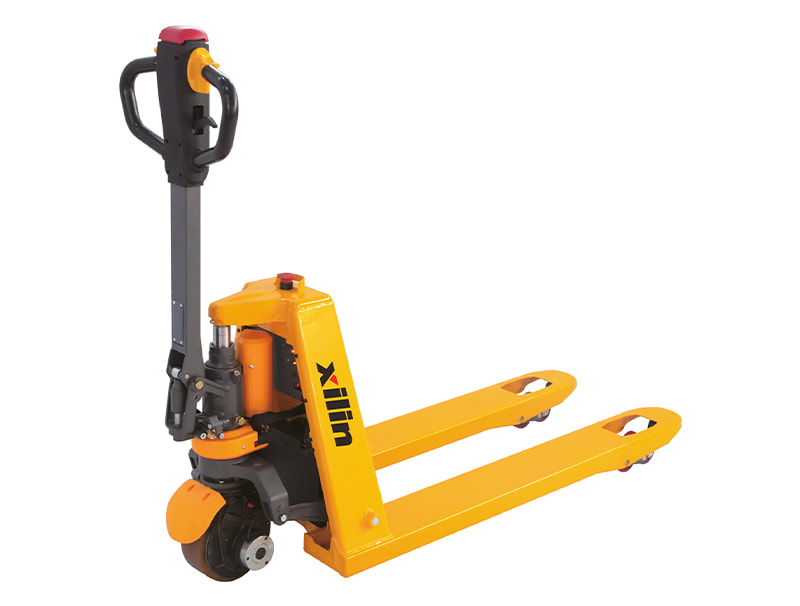
| Hand pallet truck, 2.5 t | 1.50 m to 1.60 m | 0.52 m to 0.68 m | Not applicable | 1.80 m to 2.00 m |
| Electric walkie pallet truck, 1.5 to 2.0 t | 1.60 m to 1.90 m | 0.70 m to 0.80 m | Not applicable | 2.10 m to 2.40 m |
| Stand on pallet truck, 2.0 t | 2.10 m to 2.40 m | 0.80 m to 0.90 m | Not applicable | 2.40 m to 2.70 m |
| Electric stacker, 1.5 t | 1.80 m to 2.00 m | 0.78 m to 0.85 m | 1.90 m to 2.10 m | 2.30 m to 2.60 m |
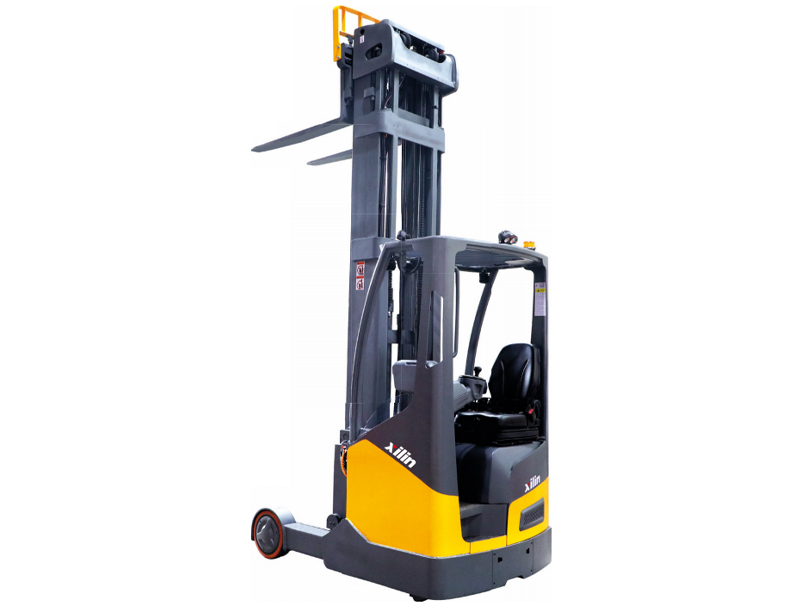
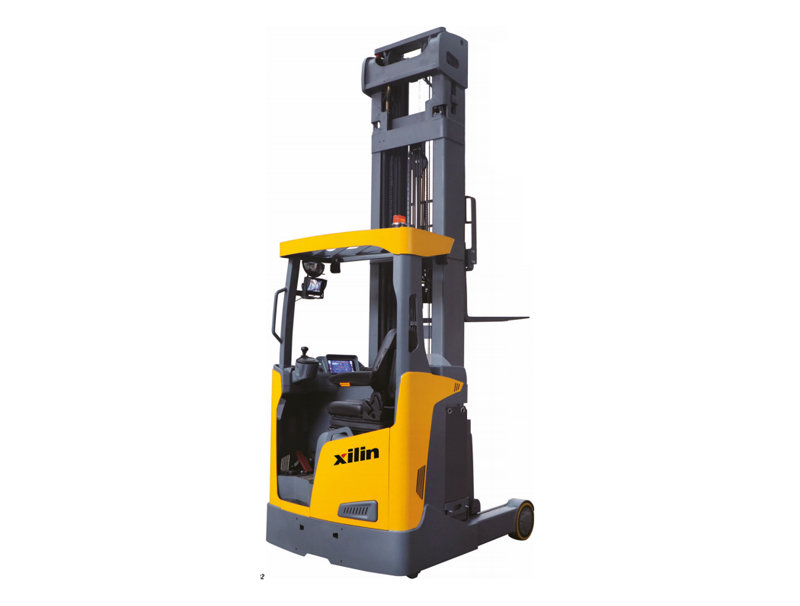
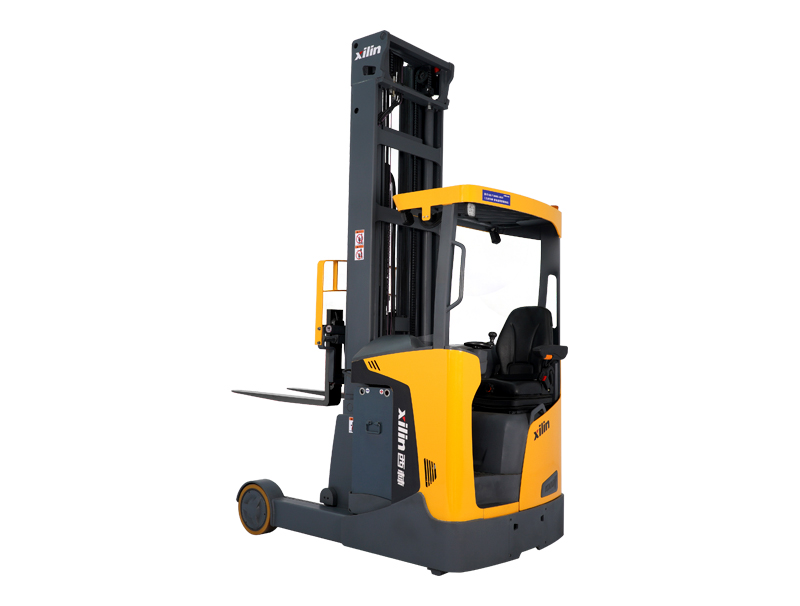
| Reach truck, 1.5 to 2.0 t | 2.40 m to 2.70 m | 1.10 m to 1.30 m | 2.10 m to 2.40 m | 2.70 m to 3.00 m |
| Three wheel counterbalance, 1.5 to 2.0 t | 3.20 m to 3.50 m | 1.05 m to 1.20 m | 2.00 m to 2.20 m | 3.50 m to 3.90 m |
| Four wheel counterbalance, 2.5 to 3.5 t | 3.60 m to 4.20 m | 1.20 m to 1.40 m | 2.20 m to 2.50 m | 4.00 m to 4.80 m |
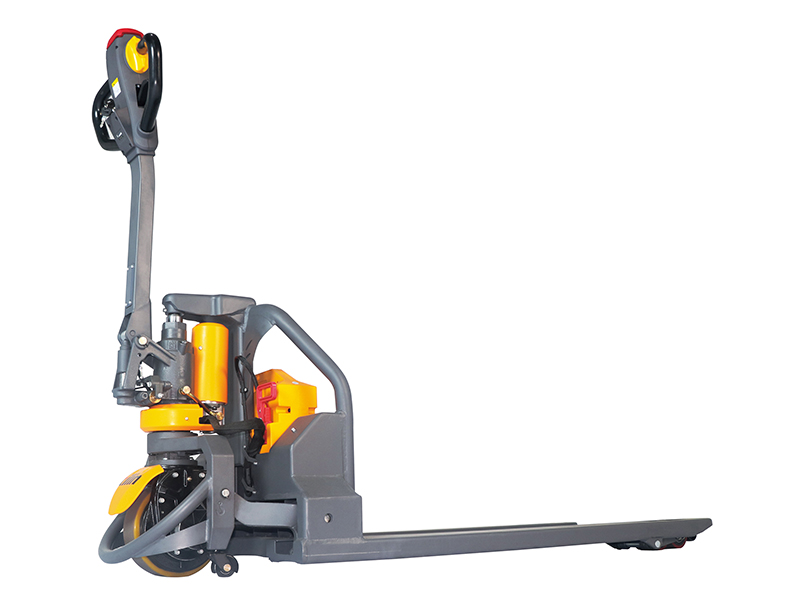
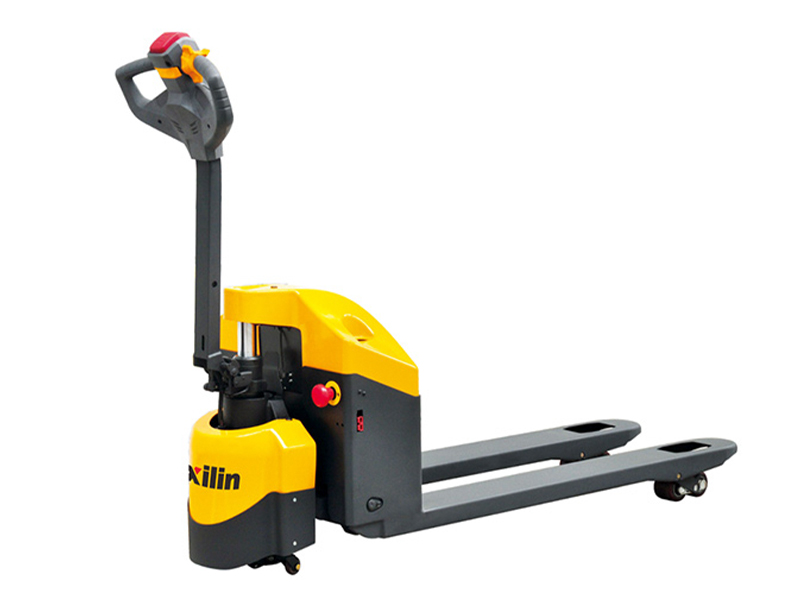
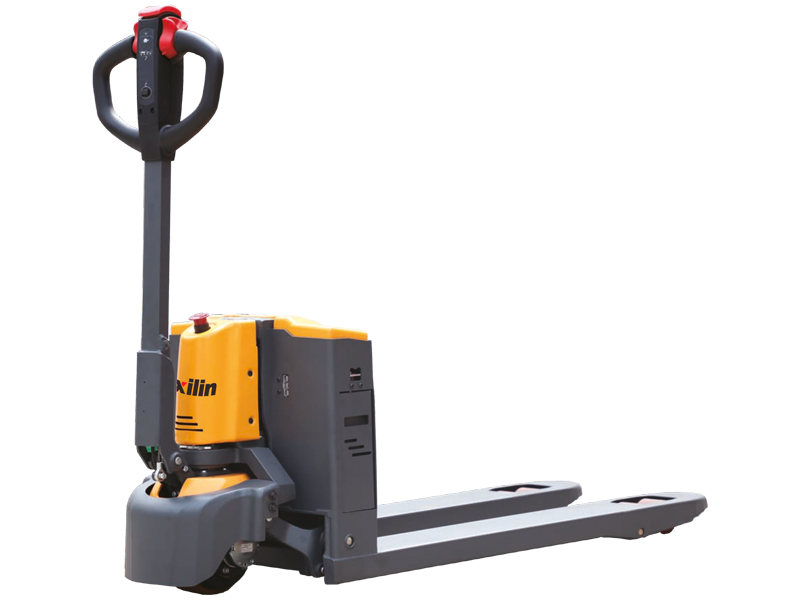
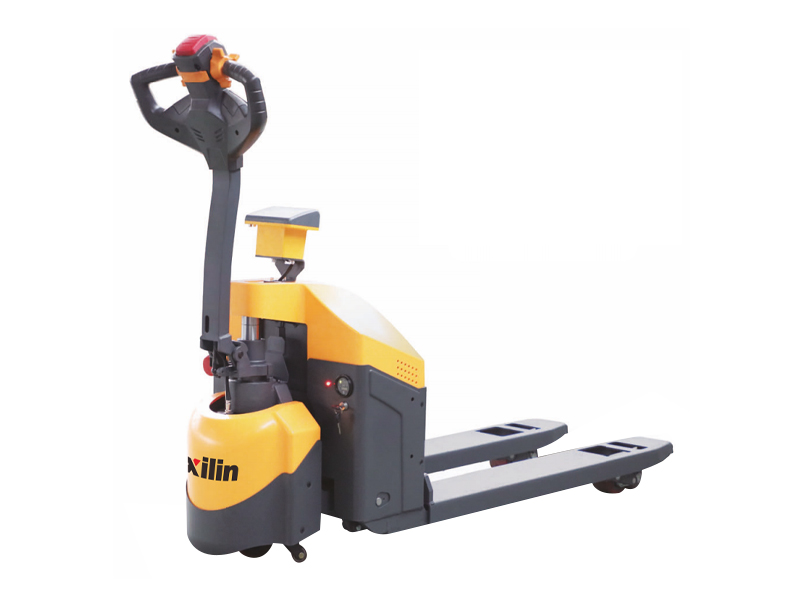
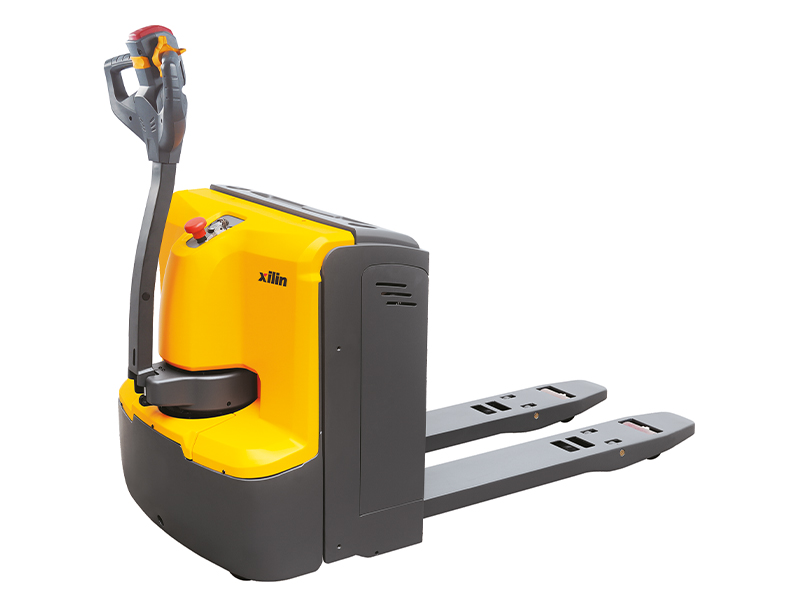
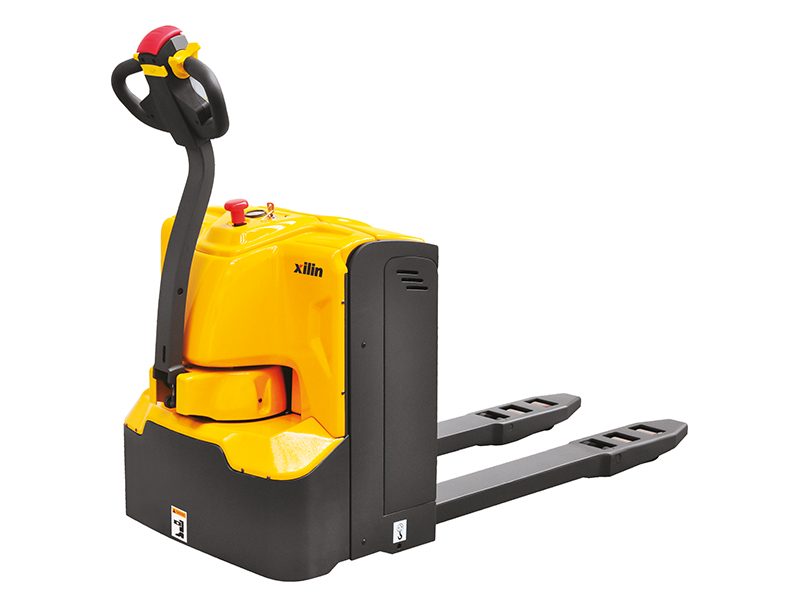
An electric walkie pallet truck is the clearest example of how a small footprint changes what a building can do. Its width stays close to the width of a standard pallet, and its length is barely longer than the forks themselves, which is why it handles aisle work that a counterbalance truck cannot enter at all.
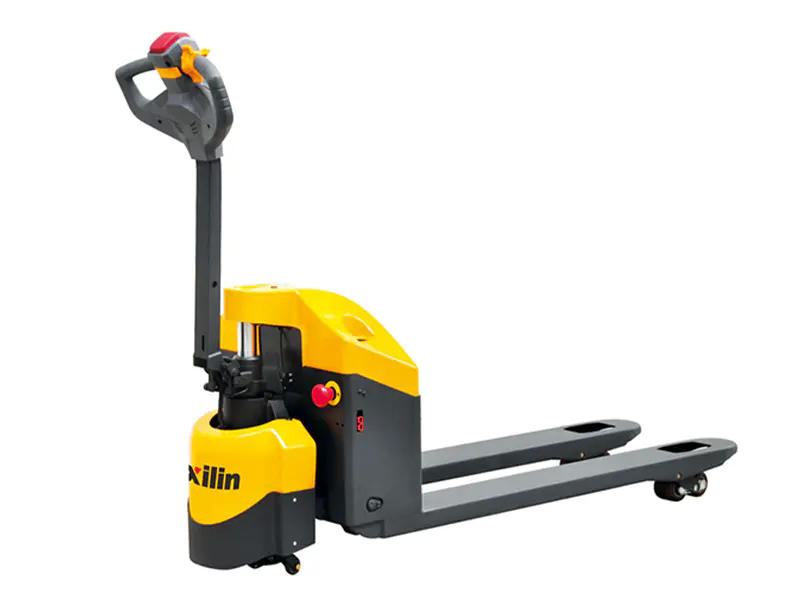 Electric Walkie Pallet Truck CBD15W-E and CBD20W-EA compact 1500/2000 kg pedestrian pallet truck for narrow aisles and containers, with a footprint close to a hand pallet truck.View Product →
Mast Height: Lowered, Raised and Free Lift
The mast blocks more purchases than any other dimension. A truck that lifts to 6 m is no problem in a 7 m high building, but if its mast stands 2.40 m tall when collapsed, it will never enter a standard container or pass a 2.20 m door frame.
Container loading is the classic trap. A standard dry container has a door opening of roughly 2.28 m in height and 2.34 m in width, and the interior is slightly narrower than the door frame. A high cube container offers about 2.58 m of door height. A three stage mast with a collapsed height of 2.05 m to 2.20 m usually enters a high cube container, while the same truck may need the mast tilted back and careful measurement to work inside a standard container. Free lift is what makes container work practical, because the forks can be raised to the top tier without the mast extending above the roof line.
On the rack side, the raised height has to clear the top of the pallet, the fork carriage and a lifting allowance of 100 mm to 150 mm for safe fork entry and exit. A rack with beams at 5.00 m therefore needs more than 5.15 m of lift, and the free lift must be sufficient to reach the top level without the mast striking a duct or a sprinkler line.
Aisle Width Is Where Overall Length Becomes Cost
Right angle stacking aisle width is the most expensive dimension in a warehouse, because every 200 mm it grows costs rack rows across a wide building. Manufacturers publish this figure directly, and it is always larger than turning radius plus load depth, since the counterweight, the drive unit and the pallet swing outside the turning circle during a 90 degree turn.
For the same 1,200 mm deep pallet, a 1.5 t reach truck is typically quoted at 2.70 m to 3.00 m of stacking aisle, while a comparable three wheel counterbalance truck needs about 3.50 m to 3.90 m. Neither figure includes the 100 mm to 200 mm of operator margin that good practice adds for uneven floors, protruding rack feet and pallet overhang.
Where the available aisle is only 2.40 m to 2.70 m, a reach truck or a specialist very narrow aisle machine becomes the realistic option, and the layout question turns into a truck selection question. That relationship between aisle width and storage density is examined further in this discussion of narrow aisle trucks and warehouse layout.
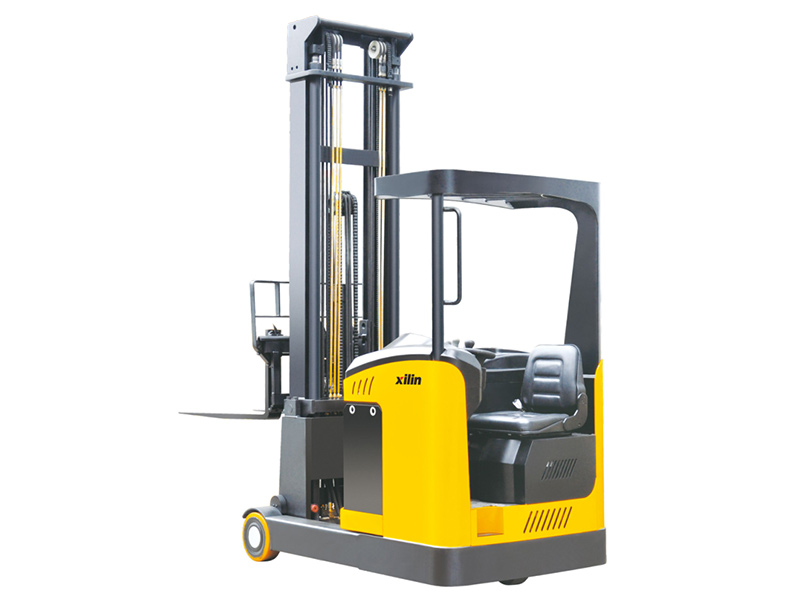 Electric Reach Truck CQD15 for Narrow AislesA 1500 kg seated reach truck with up to 8000 mm lift and a compact cabin, suited to drive-in racking and narrow aisle layouts.View Product →
A useful habit is to measure the narrowest point of the route rather than the average aisle. A single column guard, a fire door frame or a level change can reduce a 3.00 m aisle to 2.60 m, and that one point sets the maximum truck width and the minimum turning capability for the whole operation.
Fork Dimensions, Load Centre and Capacity
Fork dimensions look minor until capacity is recalculated. Fork length is usually 1,150 mm for a 1,200 mm by 1,000 mm pallet handled across the 1,000 mm side, and 1,220 mm or more when loads are handled the other way round. Fork width, the spread between the outer edges, is commonly 550 mm or 685 mm, matched to the pallet entry openings. Fork thickness is typically 40 mm to 50 mm on a 1.5 t to 2.5 t truck and sets the clearance left under the pallet.
Load centre is the distance from the vertical face of the fork to the centre of gravity of the load, and it is defined by the pallet rather than by the truck. A truck rated 2,000 kg at a 500 mm load centre is usually derated to roughly 1,600 kg at 600 mm, and the derating continues as the load centre moves further out. Adding a side shifter moves the load forward by 100 mm to 150 mm with a similar effect, which is why the capacity plate on a finished truck often shows less than the marketing figure.
Fork length also feeds back into length and aisle. Moving from 1,150 mm to 1,220 mm forks adds 70 mm to the front of the machine, consumes 70 mm of stacking aisle margin and reduces residual capacity at the same time.
How to Check Dimensions Against Your Own Building
Five measurements catch most problems before an order is placed.
- Narrowest door, gate or fire shutter on the route, measured at the frame rather than the opening, including any threshold or ramp that raises the truck body.
- Lowest overhead obstruction, such as a sprinkler line, a duct, a mezzanine edge or a container door frame.
- Narrowest aisle between rack uprights or stored goods, measured at the tightest point along the whole route.
- Pallet footprint and actual load centre, including overhang created by goods sitting outside the pallet edge.
- Highest rack beam level, plus the lifting allowance needed for safe fork entry and exit.
With those five figures on paper, the datasheet becomes easy to read: width against the narrowest aisle, collapsed mast height against the lowest obstruction, raised height against the top rack level, and overall length with turning radius against the stacking aisle.
A broad product range makes this matching work simpler, because one supplier can cover horizontal transport, low level racking and dock handling without forcing a second vendor into the project. Ningbo Ruyi has built material handling equipment since 1985, and the Xilin range spans electric pallet trucks, stackers, reach trucks, order pickers, tow tractors and electric forklifts. A three wheel electric forklift is a good illustration of how the numbers interact in practice.
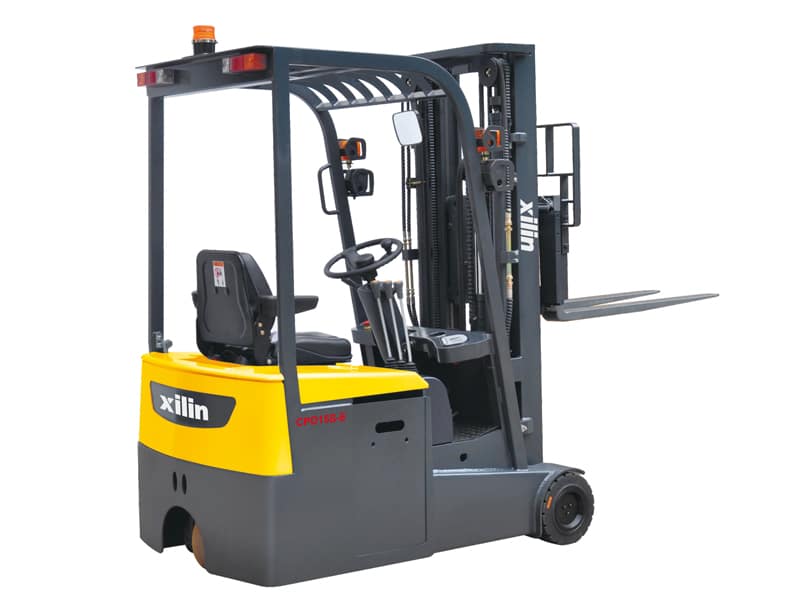 Three Wheel Electric Forklift CPD10S-E and CPD15S-EA 1000/1500 kg three-wheel electric forklift with compact body and tight turning radius, suited to older buildings and elevator access.View Product →
Three wheel trucks are shorter and narrower than four wheel machines of the same capacity, and the rear wheel steers within a tighter radius, which is precisely why they appear so often in buildings designed before anyone planned for forklift traffic.
Common Mistakes When Comparing Forklift Dimensions
- Comparing capacity plates only. Two 2.0 t trucks can differ by 500 mm in length and by a full metre in stacking aisle.
- Using raised mast height to check door clearance, when the collapsed height is the relevant figure.
- Measuring the average aisle instead of the narrowest point along the route.
- Forgetting that a side shifter, a longer fork or a non standard carriage shifts the load centre and changes both capacity and aisle.
- Assuming models in the same class share dimensions. Chassis design, battery compartment and drive unit differ between manufacturers and between series.
- Leaving out the operator margin. A truck that fits an aisle with 20 mm to spare will not be productive or safe in daily use.
Forklift dimensions are not a single specification but a set of constraints, and the useful ones are those that match a physical limit in your building. Start with the narrowest aisle, the lowest opening and the highest rack level, then compare width, collapsed mast height and stacking aisle on the datasheet. Capacity, fork length and load centre follow, because a truck that cannot reach the rack safely has no usable capacity at all.
Measured this way, the question shifts from how big a forklift is to which dimensions your operation can actually accept. That is a far more reliable basis for a purchase decision, and it is also the version of the question a supplier can answer with a specific model, a specific mast and a specific set of figures.