 英语
英语 西班牙语
西班牙语 德语
德语 法语
法语 俄语
俄语
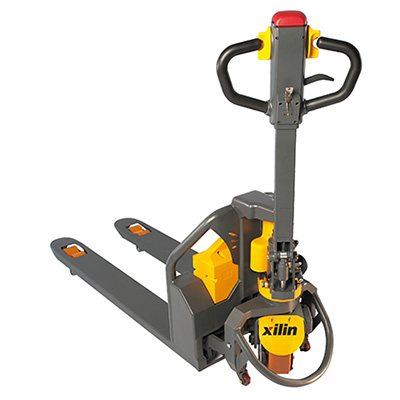 Electric Pallet Truck
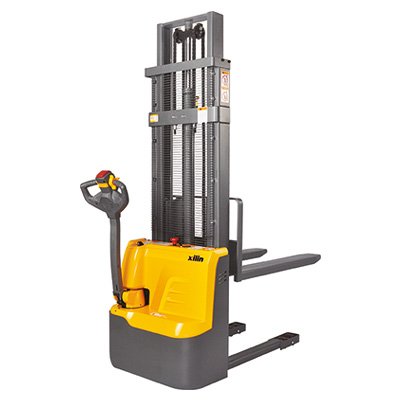 Electric Stacker
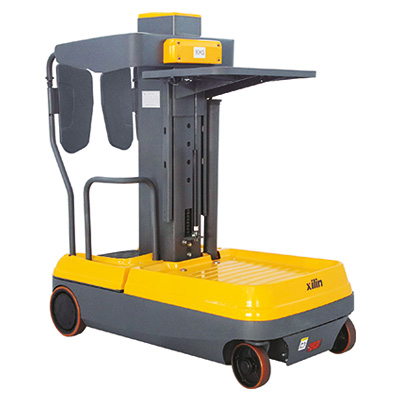 Order Picker
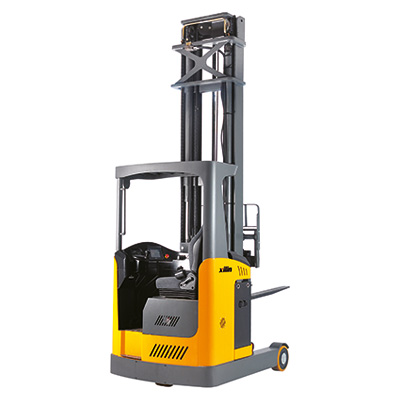 Narrow Aisle Truck
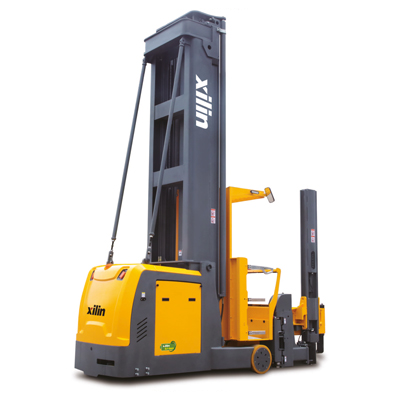 VNA Tri-Lateral Stacker
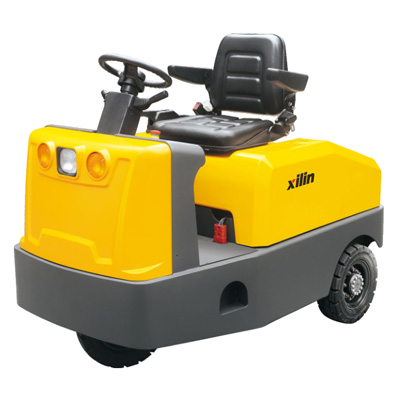 Tow Tractor
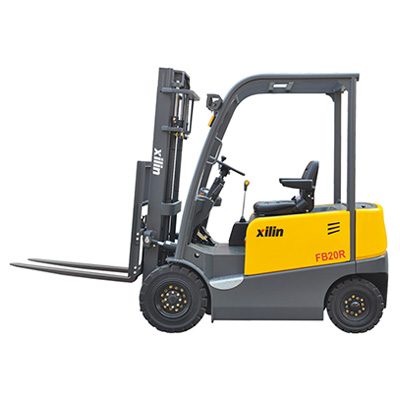 Electric Forklift
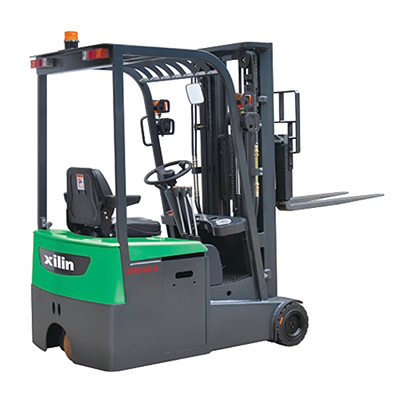 Lithium-ion Truck
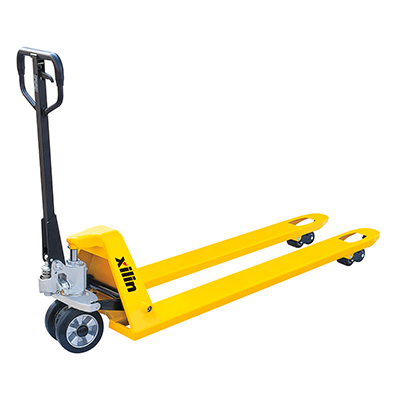 Hand Pallet Truck
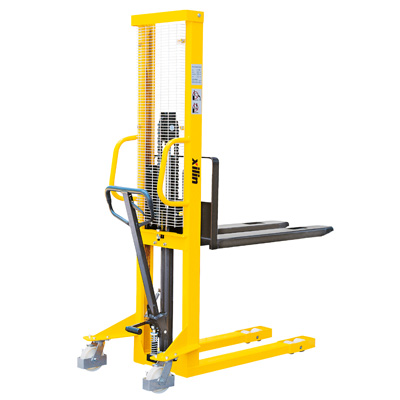 Manual Stacker
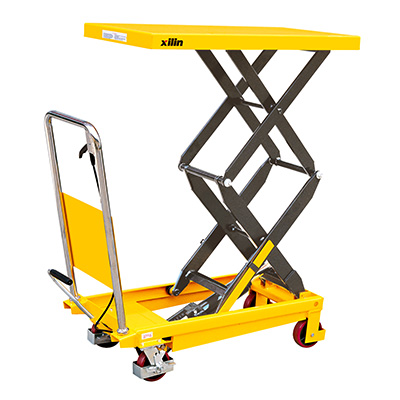 Lift Table
Content
An electric stacker crane (also called an electric stacker) is designed primarily for vertical storage — lifting pallets or goods to height in compact aisle environments. A forklift is a general-purpose load-handling machine designed for lifting, transporting, and placing loads across a wider range of tasks and distances. While both can lift and place loads, their engineering, operational footprint, and cost structures differ significantly, making each suited to different warehouse scenarios.
Choosing the wrong machine for your application results in either wasted investment (buying a forklift when a stacker suffices) or operational limitations (using a stacker where a forklift's versatility is needed).
Side-by-Side Comparison: Key Specifications
| Feature | Electric Stacker Crane | Electric Forklift (Counterbalance) |
|---|---|---|
| Typical lift height | Up to 5–6 m (standard); 8+ m (heavy duty) | 3–7 m (standard mast); up to 10+ m (special) |
| Load capacity | 500–2,000 kg | 1,000–5,000+ kg |
| Minimum aisle width | 1.5–2.5 m | 3.0–4.5 m |
| Operator position | Walk-behind or stand-on platform | Seated cab |
| Travel speed (laden) | 4–6 km/h | 10–16 km/h |
| Suitable for outdoor use | No (indoor flat surfaces only) | Yes (with appropriate tyres) |
| Approximate purchase price | €3,000–€18,000 | €18,000–€50,000+ |
| Operator licence required | Training recommended; no formal licence in many regions | Formal forklift operator certification required |

Aisle Width and Space Efficiency
This is the most operationally significant difference for warehouse layout. A standard counterbalance electric forklift requires a working aisle of 3.5–4.5 m to turn and place a pallet in standard racking. An electric stacker with reach or straddle legs can operate in aisles as narrow as 1.6–2.0 m.
In a warehouse of 1,000 m², shifting from forklift-width aisles to stacker-compatible narrow aisles can increase usable racking capacity by 30–40% — effectively gaining the equivalent of additional warehouse space without expanding the building footprint. This is a key reason why stackers are chosen in urban or high-rent warehouse environments where every square meter counts.
Load Capacity and Lifting Height
Electric stackers are generally limited to loads of 500–2,000 kg, which covers the majority of standard pallet weights in retail, e-commerce, and light manufacturing. For heavier industrial loads — steel coils, machinery, or dense bulk materials exceeding 2,000 kg — a counterbalance forklift is the correct tool.
On lifting height, the gap has narrowed in recent years. Heavy-duty electric stacker cranes now reach 8–10 m, overlapping with the range of standard triple-stage forklift masts. However, at heights above 6 m, stability requirements become strict, and stackers typically require guidance systems (floor rails or wire guidance) to operate safely — adding installation cost.
Mobility and Versatility
Forklifts are substantially more versatile than electric stackers. A forklift can:
- Travel at speeds up to 16 km/h between storage zones and loading docks
- Operate on outdoor yard surfaces, loading ramps, and uneven dock areas
- Use a wide range of attachments — clamps, rotators, side-shifters, and push-pull units
- Handle non-palletized loads or oversized items
Electric stackers, by contrast, are optimized purely for the lift-and-place cycle within a defined aisle system. Their maximum travel speed of 4–6 km/h makes them impractical for long travel distances between receiving and storage areas.
Cost Comparison: Purchase, Operation, and Licensing
Electric stackers offer a major cost advantage at the point of purchase. A walkie stacker can be acquired for €3,000–€8,000, while a stand-on platform stacker with a 5 m lift height typically costs €10,000–€18,000. An equivalent electric counterbalance forklift starts at approximately €18,000–€25,000 and rises to €40,000–€50,000 for higher-capacity or higher-mast models.
Operating costs follow the same pattern. Stackers have simpler drivetrains, consume less energy per cycle, and have lower maintenance costs. Annual service costs for a stacker are typically 40–60% lower than for a comparable forklift.
However, forklift operator certification costs are partially offset by the higher productivity per operator hour that forklifts deliver in multi-task environments — the total cost comparison must account for throughput, not just machine cost.
Safety Characteristics of Each Machine
Both machine types carry safety risks that differ in nature:
Electric Stacker Safety Profile
The walk-behind operating position places the operator close to pedestrian traffic lanes. At height, stability is the primary concern — forward tip risk increases significantly if loads are placed eccentrically or if the straddle legs are not fully engaged. Most modern stackers include load weight sensors and mast tilt limiters to manage this.
Forklift Safety Profile
Forklifts present a higher pedestrian collision risk due to their higher travel speed and larger blind spots around the cab. They also have a higher tip-over risk when cornering with elevated loads. Regulatory requirements for forklift operation are more stringent than for stackers in most countries, reflecting the higher inherent risk profile.
Which to Choose: A Decision Framework
Use this guide to match the right machine to your operational requirements:
- Choose an electric stacker if: your loads are under 2,000 kg, aisle widths are below 2.5 m, operations are purely indoor on smooth floors, and your primary task is putting goods into and out of racking
- Choose a forklift if: you handle loads above 2,000 kg, need to transport pallets across long distances, work on outdoor yard surfaces, or require attachments for non-standard loads
- Consider both if: your warehouse has separate inbound/outbound areas requiring long travel (forklift) and a high-density storage zone requiring narrow aisles (stacker) — a mixed fleet is common in larger distribution centers