 英语
英语 西班牙语
西班牙语 德语
德语 法语
法语 俄语
俄语
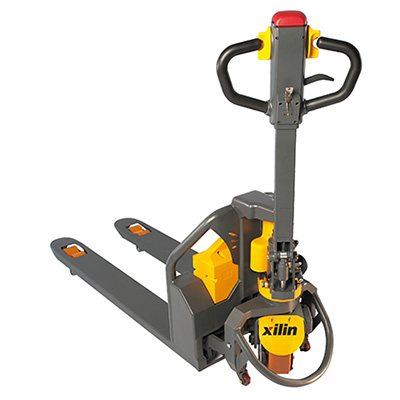 Electric Pallet Truck
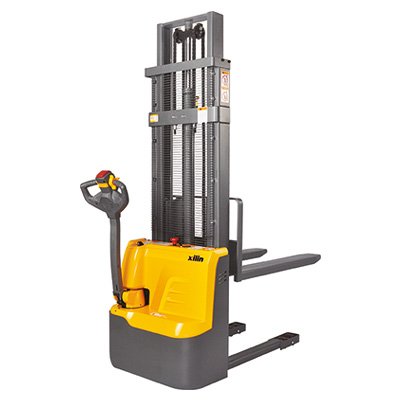 Electric Stacker
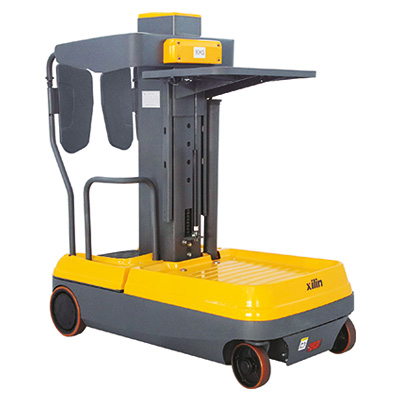 Order Picker
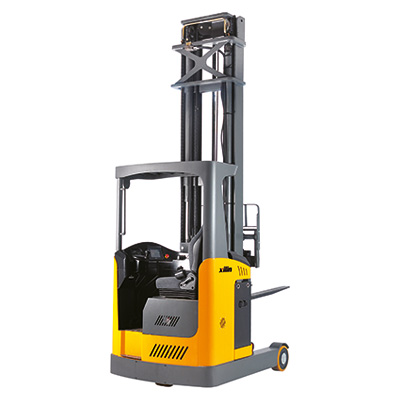 Narrow Aisle Truck
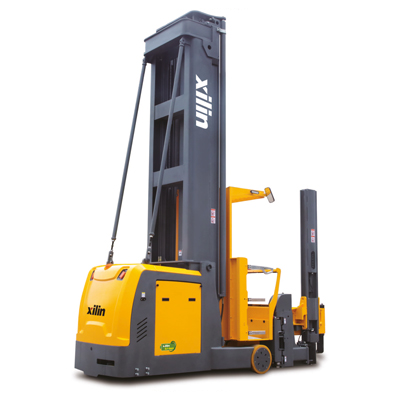 VNA Tri-Lateral Stacker
 Tow Tractor
 Electric Forklift
 Lithium-ion Truck
 Hand Pallet Truck
 Manual Stacker
 Lift Table
Content
- 1 How a Reach Truck Works
- 2 How a Narrow Aisle (VNA) Truck Works
- 3 Aisle Width: The Most Visible Difference
- 4 Lift Height Capabilities Compared
- 5 Infrastructure Requirements: What Each System Demands of the Building
- 6 Operational Flexibility: Where Each Machine Can and Cannot Go
- 7 Productivity and Throughput Rates
- 8 Operator Position and Ergonomics
- 9 Full Specification Comparison at a Glance
- 10 Which System Is Right for Your Operation?
The fundamental difference between a narrow aisle (VNA) truck and a reach truck lies in the aisle width they require, the height they can operate at, and how they handle loads. A reach truck operates in aisles of 2.3–2.8 metres by extending its forks forward to reach into racking, while a very narrow aisle (VNA) truck operates in aisles as narrow as 1.5–1.8 metres using a rotating or side-shifting mast that lifts and places loads without the truck itself turning. VNA trucks are designed exclusively for maximising storage density in purpose-built warehouses with guided aisle systems, whereas reach trucks offer greater operational flexibility and are the industry standard for medium-density warehouse storage.
How a Reach Truck Works
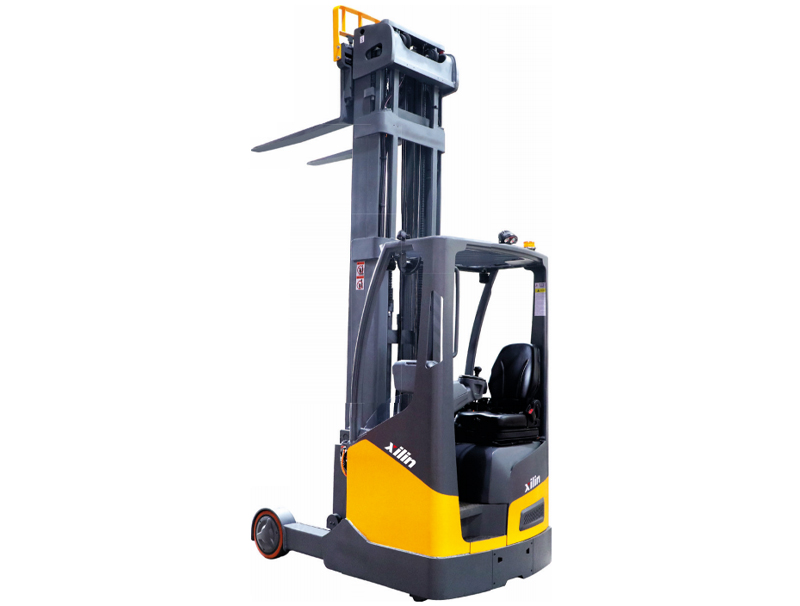
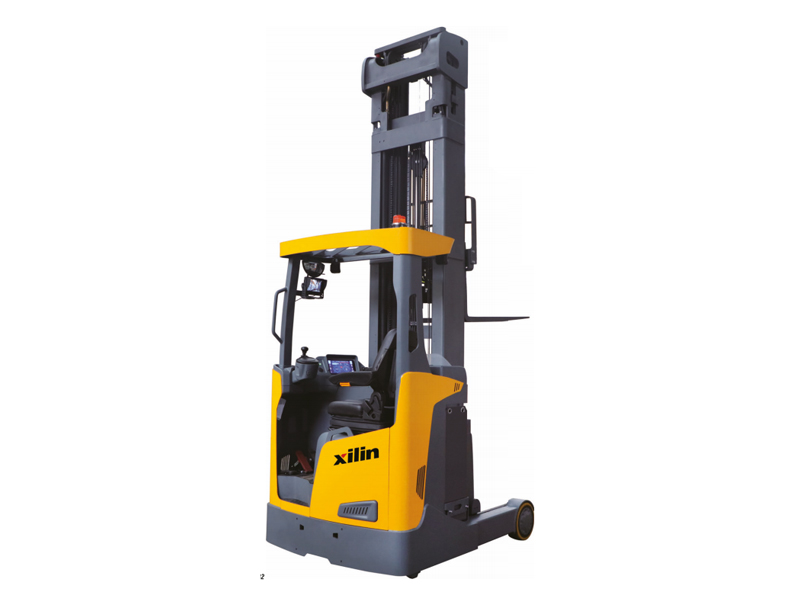
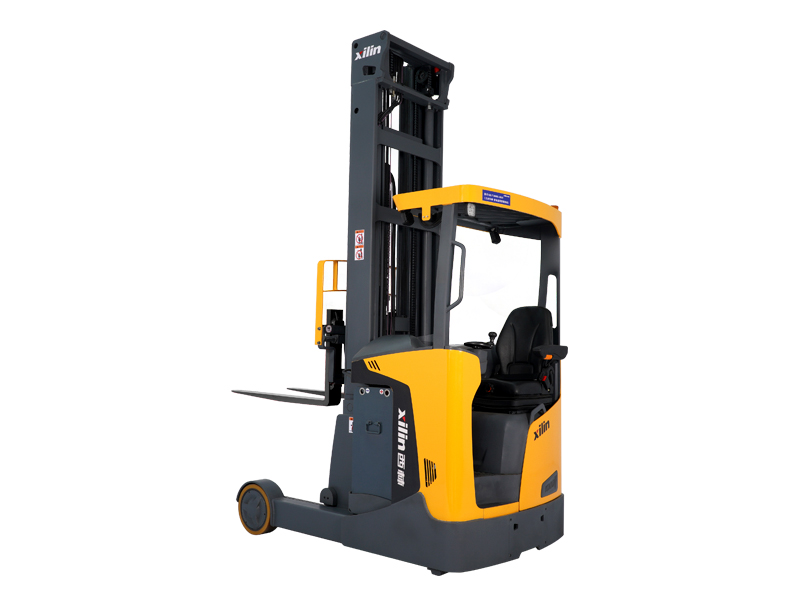
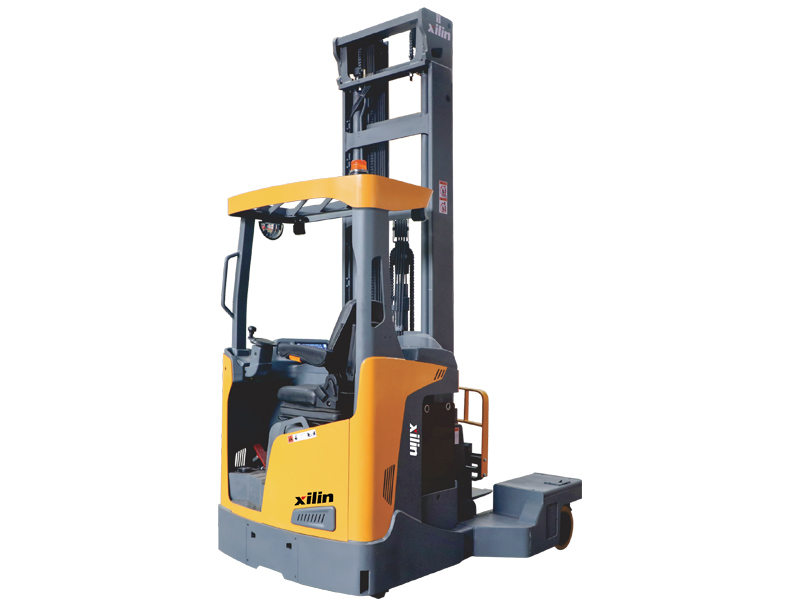
A reach truck is a stand-on or sit-down electric counterbalanced forklift fitted with an extending fork carriage. The machine enters an aisle facing the racking, and the fork carriage — mounted on pantograph arms or a telescopic mechanism — extends forward to place or retrieve a pallet without the truck needing to drive fully under the racking beam.
The reach function allows the truck's body to remain partially in the aisle while the forks extend up to 600–900 mm forward to engage a pallet in the racking. This is what enables operation in narrower aisles than a conventional counterbalanced forklift — which must drive fully under the load — while maintaining the ability to manoeuvre freely between aisle ends, loading bays, and staging areas.
Reach trucks are typically rated to lift loads of 1,200–2,500 kg to heights of 8–12 metres, with some high-mast models reaching 13–14 metres. They require free-movement floor surfaces and offer the flexibility to operate anywhere in the warehouse — not just in racking aisles.
How a Narrow Aisle (VNA) Truck Works
A very narrow aisle (VNA) truck — also called a turret truck, man-up order picker, or articulated narrow aisle truck depending on the specific variant — is designed to operate within a fixed aisle without turning. Rather than manoeuvring in the aisle, the VNA truck travels straight down the aisle and uses a rotating mast, side-shifting carriage, or articulating body to place and retrieve loads on either side.
Most VNA trucks are guided by wire or rail systems embedded in the warehouse floor, which steer the machine automatically and keep it centred in the aisle at all times. This guidance eliminates the need for aisle width sufficient for manual steering and allows aisle widths as narrow as 1.5 metres — compared to 2.3–2.8 metres for reach trucks.
VNA turret trucks can lift loads to heights of 14–18 metres or more, significantly exceeding the practical reach truck envelope, and are designed for operation in warehouses with clear heights of 12–20+ metres. Their operating speed within aisles is typically 8–12 km/h, with combined lift and travel functions allowing highly productive high-rack operations.
Aisle Width: The Most Visible Difference
Aisle width is the specification that most directly drives the choice between a reach truck and a VNA truck, because it determines how many storage aisles — and therefore how many pallet positions — can be fitted into a given warehouse footprint.
To understand the practical impact, consider a warehouse with a 10,000 m² footprint allocated to racking. Assuming standard 1,100 mm pallet depth and 100 mm rack upright width on each side:
- Reach truck (2.6 m aisle): Each bay pitch (one aisle + two rack rows) occupies approximately 4.9 metres. A 50-metre warehouse bay accommodates approximately 10 aisle/rack units.
- VNA truck (1.6 m aisle): Each bay pitch reduces to approximately 3.9 metres — the same 50-metre bay accommodates approximately 12 aisle/rack units, a 20% increase in storage row density.
When this density improvement is combined with the additional lift height VNA trucks provide, the total pallet position increase in a VNA-equipped warehouse versus a reach truck warehouse of equivalent footprint can reach 30–50% — a compelling justification for the higher infrastructure investment that VNA systems require.
Lift Height Capabilities Compared
Lift height is a critical differentiator because it determines how many racking levels can be utilised — and therefore the total storage capacity per floor area unit.
| Equipment Type | Typical Max Lift Height | Required Clear Height | Approx. Racking Levels |
|---|---|---|---|
| Standard reach truck | 8–12 m | 9–13 m | 4–6 levels |
| High-mast reach truck | 12–14 m | 13–15 m | 6–7 levels |
| VNA turret truck | 14–18 m | 15–20 m | 8–12 levels |
| VNA man-up order picker | Up to 16 m | 17–18 m | 8–10 levels |
Infrastructure Requirements: What Each System Demands of the Building
The infrastructure requirements of reach trucks and VNA trucks differ significantly, and these differences often determine which system is economically viable for a given facility.
Reach Truck Infrastructure Requirements
- Floor flatness: Reach trucks require an FM2-class floor (TR34 specification in the UK) with a surface regularity tolerance of approximately ±3 mm over a 3-metre straightedge. Most standard industrial warehouse floors meet this specification.
- Aisle marking: Simple painted aisle lines or floor tape are sufficient for reach truck aisle definition — no embedded guidance systems are required.
- Clear height: Buildings with clear heights from 9 metres upward are suitable for reach truck deployment, making them compatible with a wide range of existing industrial buildings.
- Racking specification: Standard adjustable pallet racking (APR) is fully compatible with reach truck operation.
VNA Truck Infrastructure Requirements
- Superflat floor: VNA trucks operating at heights above 13 metres require an FM1 or superflat floor (also called F-class floor) with a surface regularity tolerance of ±1 mm over a 3-metre straightedge — a significantly more demanding and expensive specification than standard FM2.
- Aisle guidance system: VNA trucks require either wire guidance (inductive wire embedded in the floor) or rail guidance (floor-mounted steel rails) to steer the machine automatically within the aisle. Installing this system requires specialist contractor work and typically costs £15,000–£40,000 per aisle depending on length and system type.
- High clear height building: To justify the infrastructure investment in VNA systems, buildings generally need a minimum clear height of 14–15 metres, with 18–20 metre clear heights providing maximum return on the system investment.
- Racking tolerance: VNA racking must be erected to tighter column plumb tolerances than standard APR because the truck operates at very close clearances to the uprights — typically 75–100 mm clearance on each side at height.
Operational Flexibility: Where Each Machine Can and Cannot Go
One of the most practically important differences between reach trucks and VNA trucks is their operational freedom of movement throughout the warehouse.
A reach truck is a free-roaming machine. Once it exits a storage aisle, it can travel anywhere in the warehouse — to a goods-in area, loading dock, staging lane, marshalling area, or another aisle entirely. This flexibility means a single reach truck can handle multiple tasks: receiving pallets from delivery vehicles, staging goods, and putting away stock into racking without requiring an equipment transfer.
A VNA truck is an aisle-specialist machine. Its narrow profile, low ground clearance at the front, and (in the case of man-up variants) elevated operator cab make it unsuitable for free travel in warehouse areas outside the guided aisle zone. Most VNA warehouse operations require a separate fleet of reach trucks or counterbalanced forklifts to handle goods receiving, staging, and cross-docking functions — with the VNA truck used exclusively for put-away and retrieval within the racking aisles.
This dual-fleet requirement is an important cost consideration that partially offsets the storage density advantages of VNA systems in operations with complex inbound and outbound goods flows.
Productivity and Throughput Rates
Productivity — measured in pallet moves per hour — differs between the two systems in ways that depend on the warehouse layout and the nature of the operations performed.
Reach Truck Productivity
A standard reach truck in a typical warehouse environment achieves a productivity of approximately 15–25 pallet moves per hour on combined put-away and retrieval tasks. Travel time between aisles and to staging areas constitutes a significant portion of the cycle time. In deep aisles with multiple locations per cycle, productivity can increase to 25–35 moves per hour as travel time between picks is reduced.
VNA Truck Productivity
Within its operating aisle, a VNA turret truck achieves higher productivity per aisle than a reach truck because combined travel and lift functions — moving horizontally and vertically simultaneously — reduce cycle time per move. Productive rates of 25–40 pallet moves per hour per aisle are achievable on modern VNA systems. However, this productivity advantage is realised only within the guided aisle; the need for a separate machine to transfer pallets to and from aisle ends adds time and cost to each overall cycle.
Operator Position and Ergonomics
The operator position differs fundamentally between the two machine types, with implications for comfort, visibility, and suitability for different operator demographics.
- Reach truck: The operator stands or sits at one end of the machine, facing the forks, with a full view of the racking face. Most modern reach trucks include a camera system displaying fork and load position at height on a cab-mounted screen, reducing neck strain from sustained upward viewing at high rack levels.
- VNA turret truck (man-down): The operator remains at floor level throughout the cycle, with cameras and display screens providing visibility of the rotating fork carriage at height. This configuration is ergonomically straightforward but requires good screen monitoring discipline at high rack levels.
- VNA man-up truck: The operator cab rises with the forks, positioning the operator at the same level as the racking location being worked. This provides excellent visibility and pick accuracy but requires operators to be comfortable working at heights of up to 16 metres for sustained periods — a consideration in operator recruitment and health and safety risk assessment.
Full Specification Comparison at a Glance
| Specification | Reach Truck | VNA Turret / Narrow Aisle Truck |
|---|---|---|
| Minimum aisle width | 2.3–2.8 m | 1.5–1.8 m |
| Maximum lift height | 8–14 m | 14–18 m+ |
| Load mechanism | Extending fork carriage (pantograph) | Rotating or side-shifting mast/head |
| Aisle guidance | Not required | Wire or rail guidance required |
| Floor specification | FM2 standard | FM1 superflat |
| Free-roaming capability | Full warehouse access | Aisle-only; ancillary fleet needed |
| Typical load capacity | 1,200–2,500 kg | 1,000–1,500 kg |
| Productivity (pallet moves/hr) | 15–35 | 25–40 (within aisle) |
| Storage density vs. reach truck | Baseline | 30–50% more pallet positions |
Which System Is Right for Your Operation?
The choice between a reach truck and a VNA system is ultimately determined by the specific operational profile, building specification, and business case of each warehouse. The following guidelines indicate where each system delivers best value:
Choose a Reach Truck When:
- The warehouse building has a clear height below 14 metres — VNA systems are difficult to justify economically at lower clear heights.
- The operation requires operators to move freely between racking, staging, and loading dock areas with a single machine.
- Throughput volumes are moderate and the cost of a dual-fleet VNA operation cannot be justified.
- The facility is an existing building where floor replacement or superflat specification upgrade is not feasible.
- Operational flexibility and the ability to redeploy equipment to other sites or operations is a priority.
Choose a VNA System When:
- The warehouse is purpose-built or being refurbished with a clear height of 15 metres or above.
- Land cost is high and maximising storage density per square metre of footprint is the primary objective.
- The operation has sufficient pallet throughput to justify a dedicated aisle fleet alongside ancillary handling equipment.
- A new superflat floor slab is being specified as part of a new-build project, eliminating the additional floor cost compared to retrofitting.
- Long-term storage density improvement of 30–50% over a reach truck layout has been confirmed to deliver a positive return on investment over a 5–10 year horizon.