 英语
英语 西班牙语
西班牙语 德语
德语 法语
法语 俄语
俄语
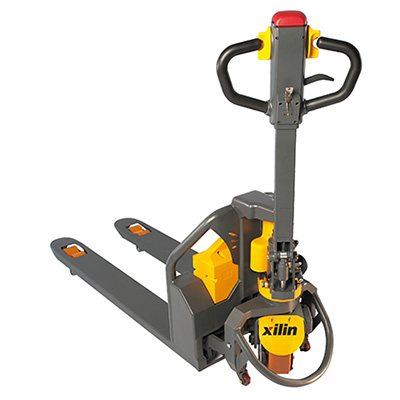 Electric Pallet Truck
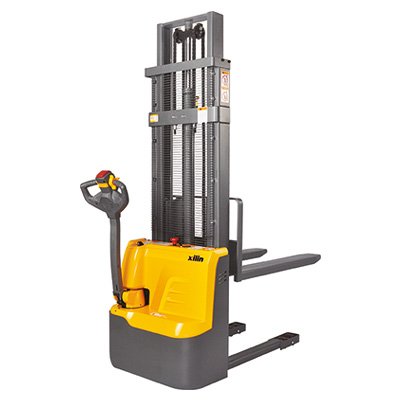 Electric Stacker
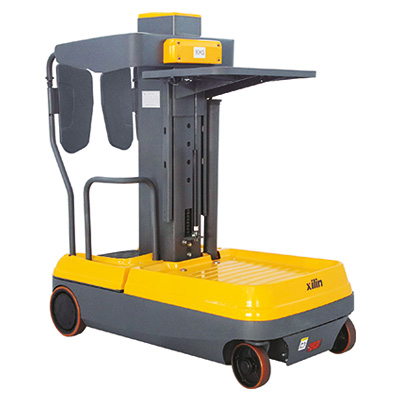 Order Picker
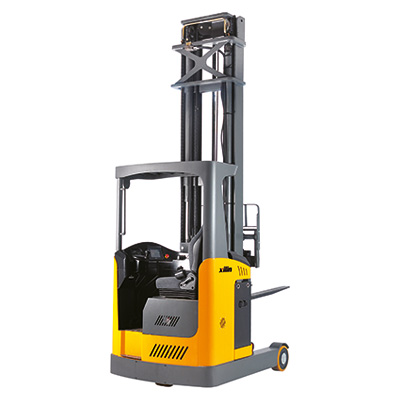 Narrow Aisle Truck
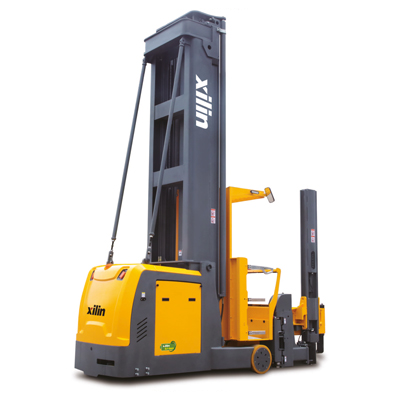 VNA Tri-Lateral Stacker
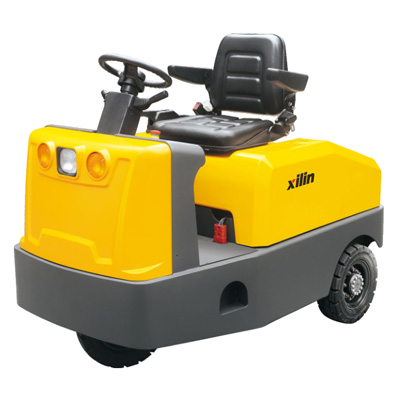 Tow Tractor
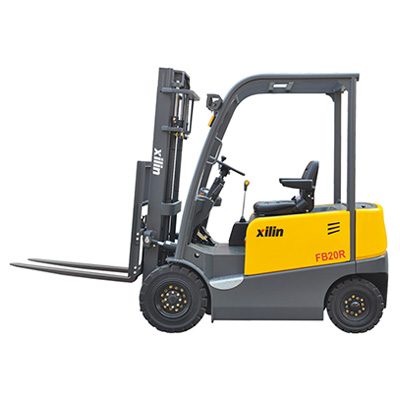 Electric Forklift
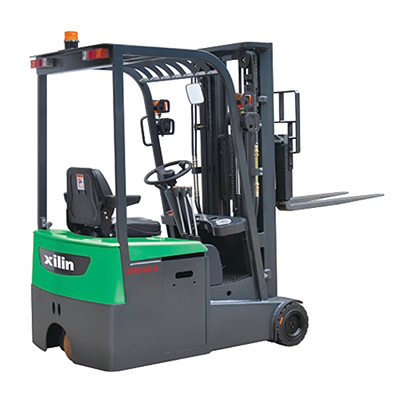 Lithium-ion Truck
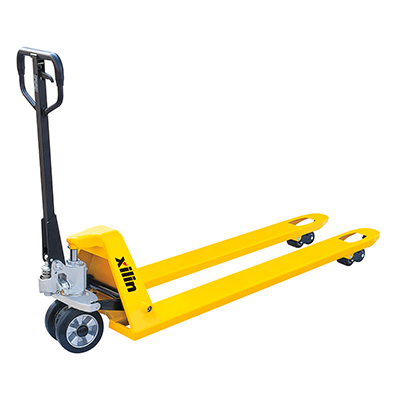 Hand Pallet Truck
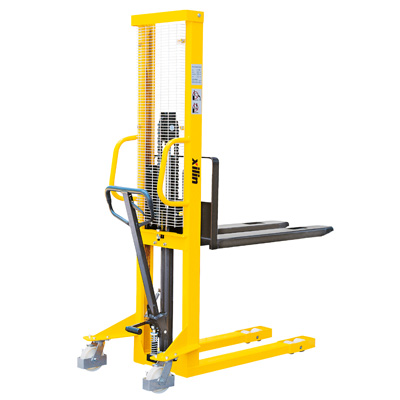 Manual Stacker
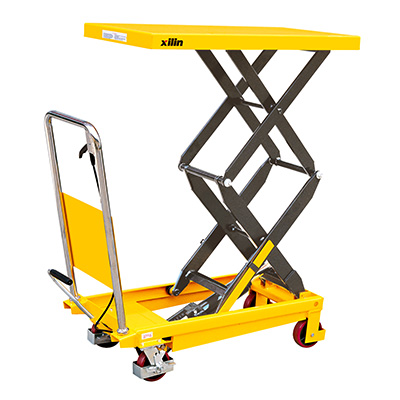 Lift Table
Content
The core difference is simple: a pallet truck moves loads horizontally, while a pallet stacker lifts loads vertically for storage at height. A hand pallet truck (also called a pallet jack) slides under a pallet and raises it just enough to roll it across a flat surface. A pallet stacker, by contrast, uses a mast and forks to elevate pallets — often to heights of 3 meters or more — for placement on racking systems. Choosing the wrong equipment for your operation leads to inefficiency, safety risks, and unnecessary costs.
What Is a Pallet Truck?
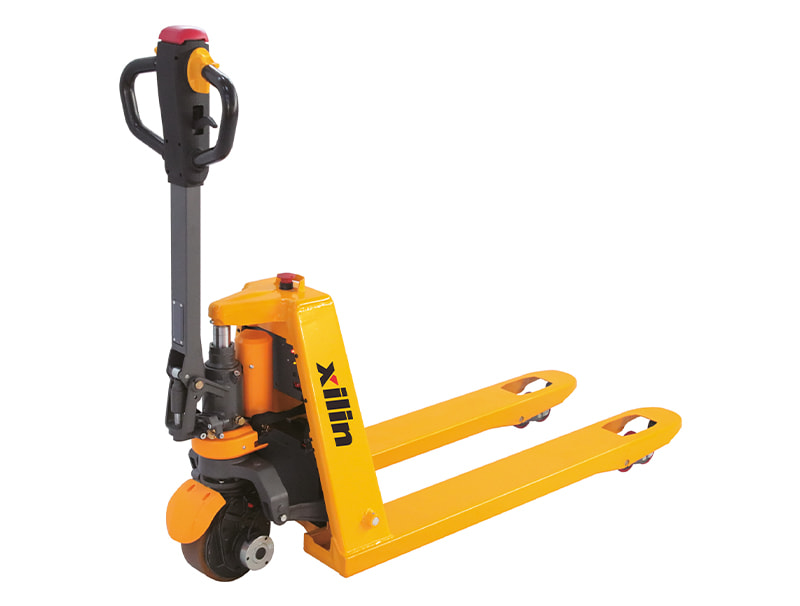
A pallet truck — commonly called a hand pallet truck or pallet jack — is a ground-level material handling tool designed for horizontal transport. The forks slide into pallet openings, and a hydraulic pump lifts the load just 150–200 mm off the floor — enough to clear the ground and roll freely.
Ruyi hand pallet trucks are built for exactly this purpose: moving heavy loads efficiently across warehouses, loading docks, and production floors without the complexity of motorized or elevating equipment.
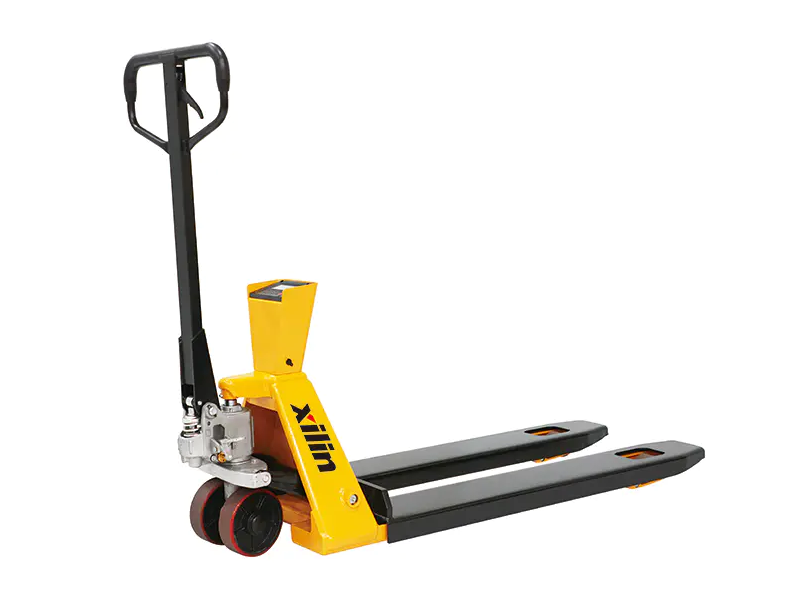
Key characteristics of a hand pallet truck:
- Lift height: typically 85–200 mm off the ground
- Load capacity: commonly 2,000–5,500 kg for standard models
- Operation: manual pump handle — no power source required
- Footprint: compact and maneuverable in tight spaces
- Purpose: horizontal transport only — no racking or stacking
Because they are manually operated, hand pallet trucks require no battery charging, no maintenance of motors, and no operator certification in most regions — making them the most cost-effective solution for ground-level movement.
What Is a Pallet Stacker?
A pallet stacker is a lifting device equipped with a vertical mast that raises loaded pallets to height — for placement onto shelving, racking, or multi-tiered storage. Stackers come in manual (hand-cranked), semi-electric (battery-powered lift, manual push), and fully electric (powered lift and drive) configurations.
Key characteristics of a pallet stacker:
- Lift height: typically 1,600–5,500 mm, depending on model
- Load capacity: generally 1,000–2,000 kg for standard stackers
- Operation: manual crank, electric motor, or combined
- Footprint: larger frame with outrigger legs for stability at height
- Purpose: vertical lifting and placement into racking systems
Stackers are essential in warehouses that use vertical space for storage. However, they come with greater complexity: battery maintenance for electric models, larger turning radii, higher purchase costs, and in many cases, operator training requirements.
Pallet Truck vs. Pallet Stacker: Side-by-Side Comparison
The table below summarizes the most important differences to help you choose the right equipment for your application:
| Feature | Hand Pallet Truck | Pallet Stacker |
|---|---|---|
| Primary Function | Horizontal transport | Vertical lifting & stacking |
| Max Lift Height | ~200 mm | Up to 5,500 mm |
| Typical Load Capacity | 2,000–5,500 kg | 1,000–2,000 kg |
| Power Source | Manual (hydraulic pump) | Manual, semi-electric, or electric |
| Racking Compatible | No | Yes |
| Purchase Cost | Low | Medium to High |
| Operator Training | Minimal | Required (especially electric) |
| Maintenance | Very low | Moderate to high |
| Best Environment | Flat floors, loading docks, production | Warehouses with racking systems |
When to Use a Hand Pallet Truck
A hand pallet truck is the right choice when your operation involves ground-level movement with no need to lift loads above working height. Common use cases include:
- Loading and unloading trucks: Moving pallets from dock to storage or directly to production
- Retail back-of-house: Repositioning stock in storerooms and aisles
- Manufacturing floors: Feeding assembly lines with raw materials or components
- Cold storage and food processing: Where electric equipment may be restricted
- Small warehouses with floor-level storage: Where no racking exists
Ruyi hand pallet trucks are particularly well-suited for high-frequency, ground-level transport tasks where reliability and load capacity matter most. With capacities up to 5,500 kg, they outperform stackers in raw load-moving ability.
When to Use a Pallet Stacker
A pallet stacker becomes necessary when your warehouse uses vertical storage — meaning goods are placed on racking systems above floor level. If your facility has aisles lined with shelving at 2, 3, or 4+ meters, a stacker is required to place and retrieve loads safely.
- Multi-tier racking systems: Where pallets are stored at 1.5 m height or above
- Warehouses maximizing vertical space: Buildings with 5–10 m ceiling heights
- Order picking operations: Where individual cartons or items are retrieved from height
- Consolidation and staging: When loads must be temporarily raised for downstream processing
The trade-off is complexity: electric stackers need battery charging infrastructure, regular servicing of hydraulic and electrical components, and operators trained in safe elevated load handling.
Can a Pallet Truck and Stacker Be Used Together?
Yes — and in most medium-to-large warehouses, both tools are used in combination. A common workflow looks like this:
- A delivery truck arrives at the dock.
- A hand pallet truck unloads pallets and moves them to a staging area (fast, simple, no power needed).
- A pallet stacker picks up pallets from staging and places them into racking at the correct height.
- When orders are fulfilled, the stacker retrieves pallets, and the hand truck moves them to the dispatch area.
This combination maximizes efficiency: the pallet truck handles high-frequency, low-complexity moves quickly, while the stacker focuses on precision vertical placement where it excels.
Key Buying Considerations
Before purchasing either piece of equipment, evaluate these practical factors:
For Hand Pallet Trucks
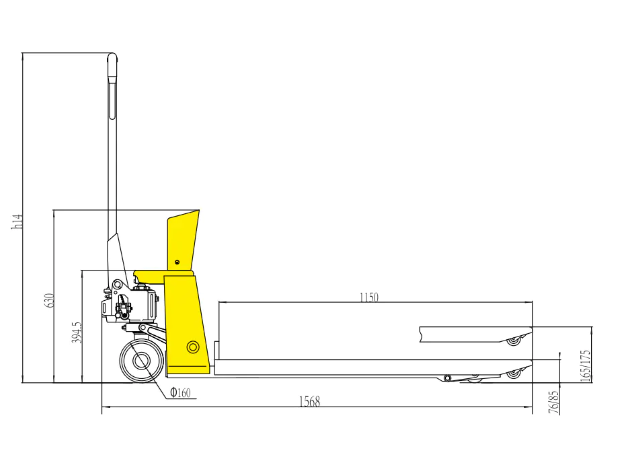
- Fork length and width: Standard forks are 1,150 mm long; wide-load models go up to 1,220 mm wide for non-standard pallets
- Wheel material: Nylon wheels for smooth floors; polyurethane for better grip and load distribution
- Capacity rating: Match to your heaviest typical load, not just average loads
- Pump handle ergonomics: Especially important for high-cycle operations to reduce operator fatigue
For Pallet Stackers
- Required lift height: Always spec for your highest rack level plus 200–300 mm clearance
- Aisle width compatibility: Stackers with outrigger legs need wider aisles — typically 2,200–2,800 mm minimum
- Battery runtime: For electric models, ensure one charge covers a full shift (typically 6–8 hours)
- Mast type: Single, duplex, or triplex mast — triplex allows lifting in low-clearance environments
Summary: Which One Do You Need?
The decision comes down to one question: do you need to lift pallets above floor level?
- If no — a hand pallet truck is faster, cheaper, simpler, and handles heavier loads.
- If yes — a pallet stacker is essential for safe, efficient racking operations.
- If both — use hand pallet trucks for ground transport and a stacker for vertical placement.
For operations where ground-level material handling is the primary need, Ruyi hand pallet trucks deliver proven reliability, high load capacity, and low total cost of ownership — making them the practical backbone of efficient warehouse and logistics operations worldwide.