 英语
 西班牙语
 德语
 法语
 俄语

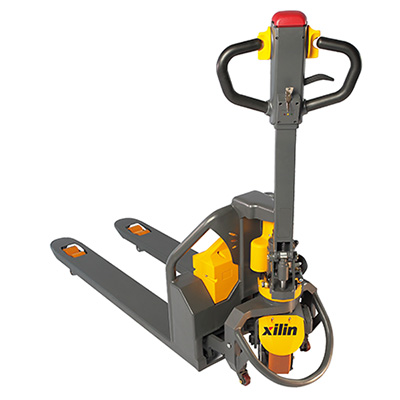 Electric Pallet Truck
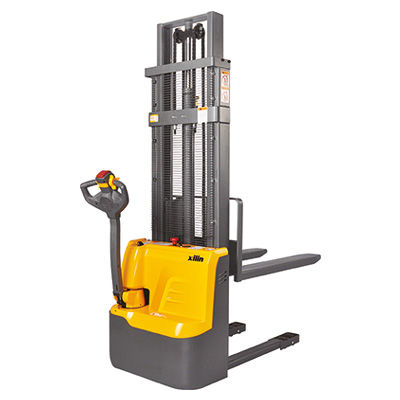 Electric Stacker
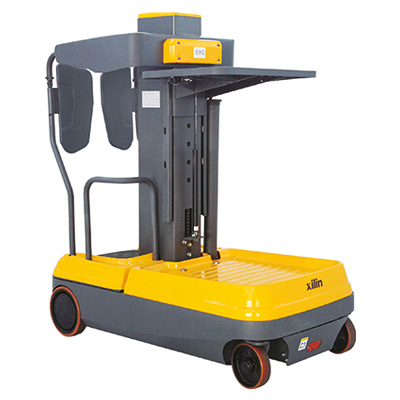 Order Picker
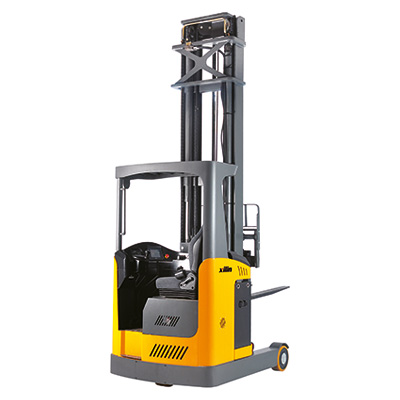 Narrow Aisle Truck
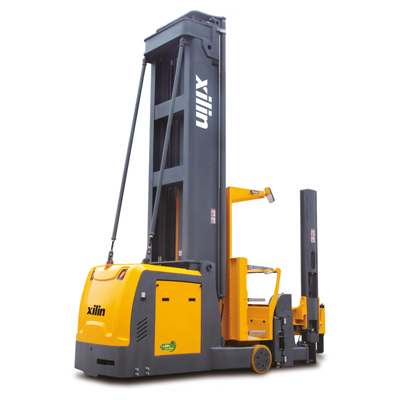 VNA Tri-Lateral Stacker
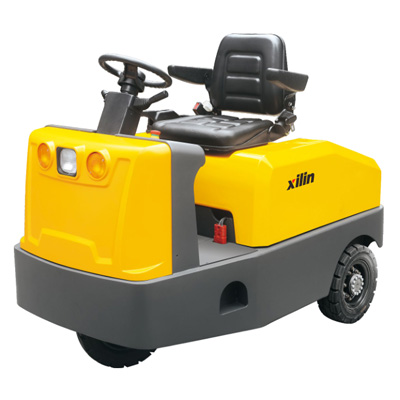 Tow Tractor
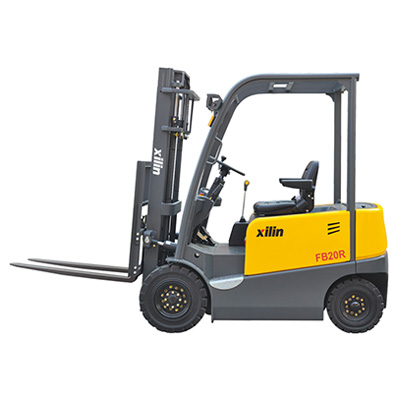 Electric Forklift
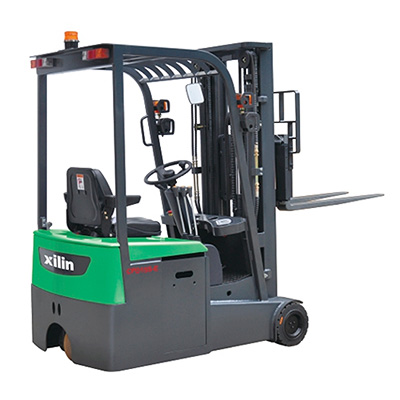 Lithium-ion Truck
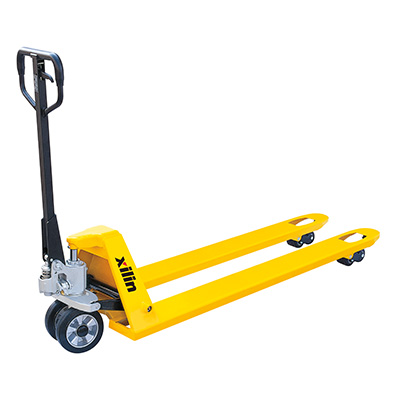 Hand Pallet Truck
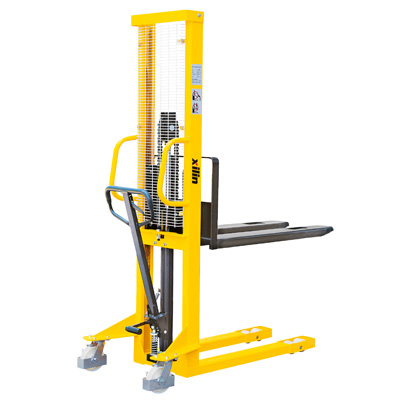 Manual Stacker
 Lift Table

Content
A 3,000 mm aisle is roomy for a walkie pallet truck and impossible for a three-wheel counterbalance forklift. That single comparison explains most of the confusion around forklift aisle width: there is no universal figure, only a figure that belongs to a specific truck, a specific load and a specific building. Get those three inputs right and the aisle number comes out of the datasheet in a few minutes. Get them wrong and the truck arrives, enters the aisle once, and then spends its life parked in the yard.
The method below is the one we normally walk through with warehouse teams, including the numbers that are often missing from a quotation, the typical aisle bands for each truck class, and the site conditions that quietly consume 200 mm of clearance before anyone notices.
The short answer: three numbers plus a clearance allowance
Forklift aisle width is the sum of the truck's right-angle stacking aisle, the load length measured along the aisle, and a clearance allowance on each side. The first number comes from the manufacturer, the second from the pallet and the product standing on it, and the third from the floor and the people who will drive in that aisle every shift.
Right-angle stacking aisle, usually printed as Ast on a datasheet, is the space needed to turn 90 degrees into a rack bay and set a load down. It already includes the turning radius, the front overhang and the distance from the drive axle to the fork face, which is why it is the only figure worth comparing between two brands. A truck with a tight turning radius but a long fork carriage can still need a wider aisle than its competitor.
Load length is where estimates usually drift. A 1,200 by 1,000 mm pallet carried on 1,150 mm forks leaves 50 mm of pallet hanging past the fork tips, and that 50 mm goes straight into the aisle. Products that overhang the pallet, such as tyres, drums or long cartons, do exactly the same thing.
Clearance is a judgement call rather than a formula. For hand pallet trucks and walkie stackers in a clean, level area, 100 mm per side is the practical minimum. For ride-on equipment, high racking or floors with expansion joints and drainage covers, 150 to 200 mm per side is the figure that stops operators clipping uprights all day.
| Input | Where to find it | How it changes the aisle |
|---|---|---|
| Right-angle stacking aisle (Ast) | Truck datasheet or dimension drawing | Already includes turning radius, front overhang and fork position; the only fair comparison between brands |
| Load length | Pallet drawing plus one real loaded pallet | A pallet or product overhanging the fork tips adds directly to the aisle |
| Clearance | Site survey and floor condition | 100 mm per side minimum for hand and walkie work, 150 to 200 mm for ride-on equipment |
| Aisle ends and doorways | Layout drawing | Turning into a cross aisle or passing a door frame often sets the real limit |
One warning about the datasheet figure: it is measured on a level floor, with a 90-degree approach and no rack protrusions in the way. Every deviation from that ideal, including a 10 mm step at the dock edge, is taken out of your clearance rather than the manufacturer's figure.
Typical aisle widths by truck class
The bands below are working figures for a common 1,200 by 1,000 mm pallet. They are useful for early layout studies and for judging whether an existing building can be densified, but they should always be replaced with the datasheet value for the exact model you intend to buy.
| Truck class | Typical aisle | Typical use |
|---|---|---|
| Walkie pallet truck | 1,800 to 2,100 mm | Floor level transport, loading and unloading |
| Stand-on or ride-on pallet truck | 2,100 to 2,400 mm | Longer horizontal moves, faster cycle times |
| Reach truck | 2,700 to 3,000 mm | Stacking above 5 m in narrow aisles |
| Very narrow aisle man-down | 1,600 to 1,900 mm | Guided aisles, high bay density |
| Three-wheel counterbalance | 3,500 to 4,000 mm | Free travel, dock work, mixed loads |
| Four-wheel counterbalance | 4,000 to 4,600 mm | Heavy loads, yard and production feeding |
In practice, anything under about 3,000 mm is described as narrow aisle, and anything under 2,000 mm usually requires guidance. If the building already exists, the aisle is fixed and the truck choice has to follow it, not the other way round.
Matching the truck class to the aisle you have
Walkie and stand-on pallet trucks for 1,800 to 2,400 mm
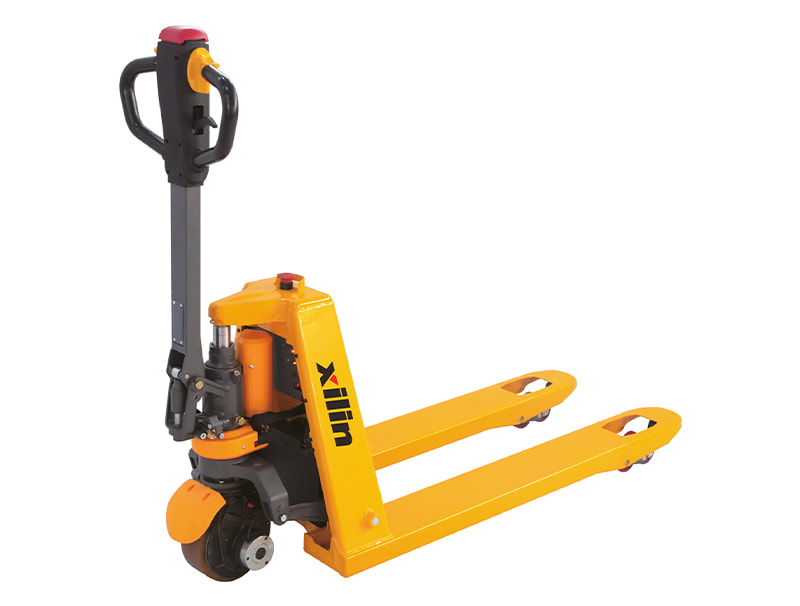
These are the cheapest way to keep a narrow aisle productive, and the most common mistake is buying one for a job that later needs first beam level stacking. A walkie truck handles floor level transport only; a stand-on or ride-on unit adds speed on long runs but still cannot put a pallet away at height.
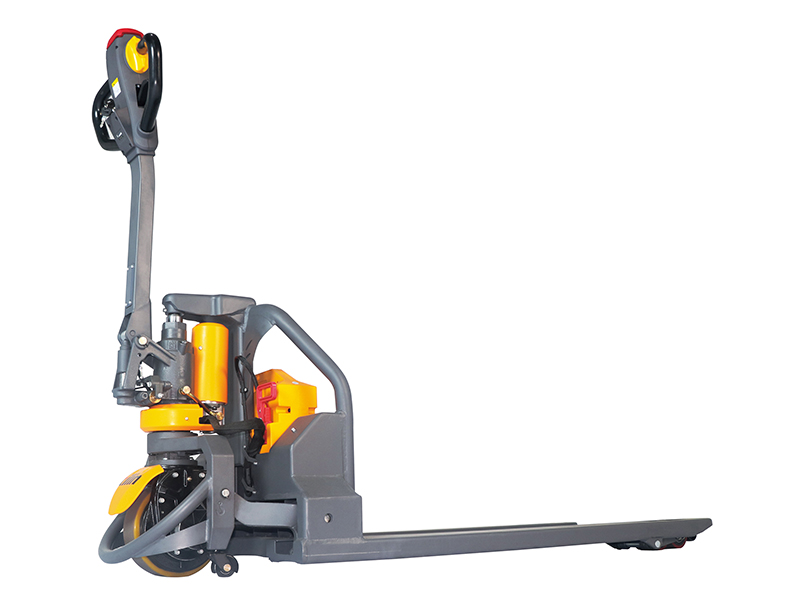
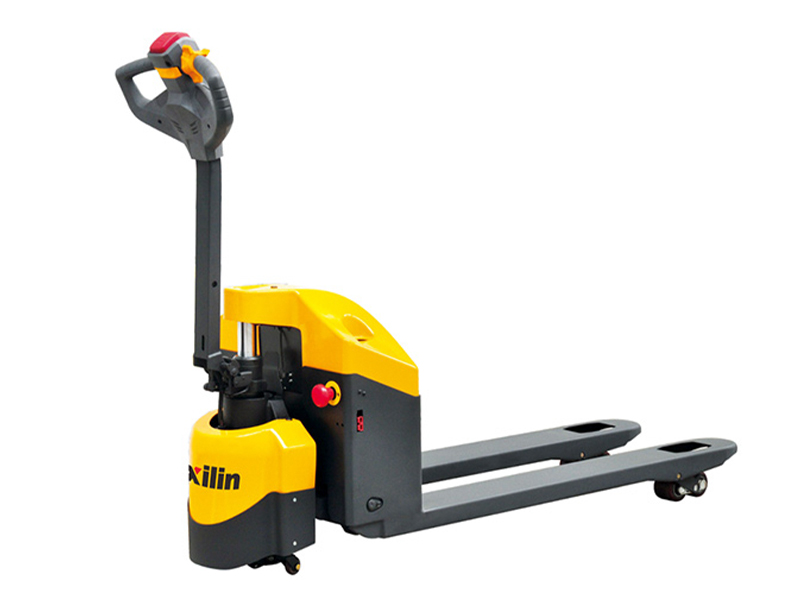
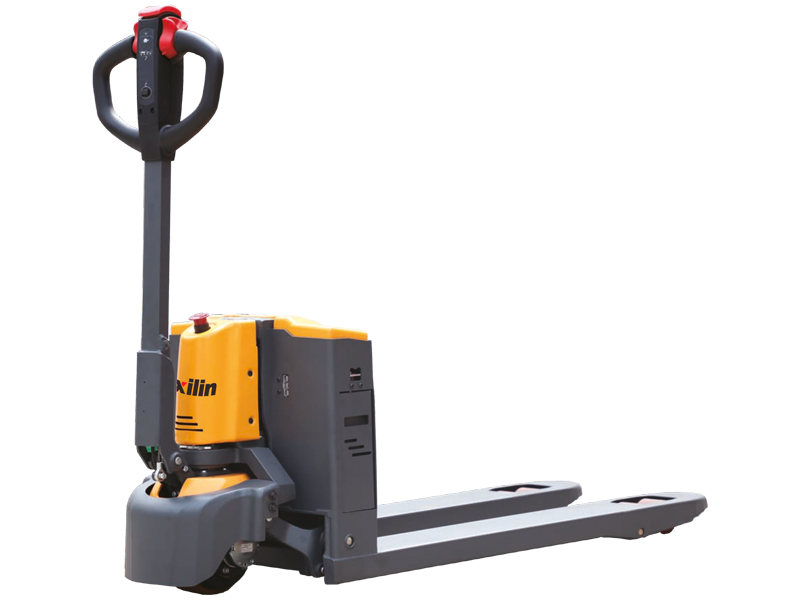
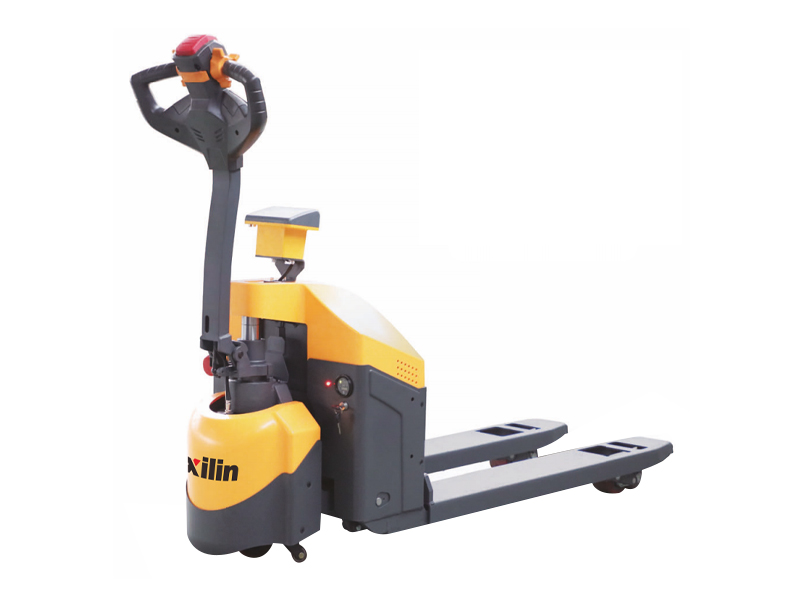
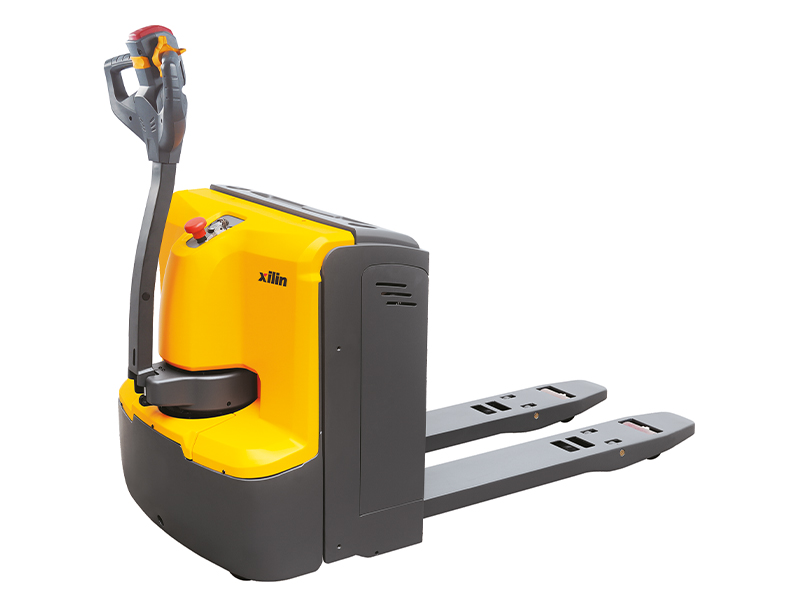
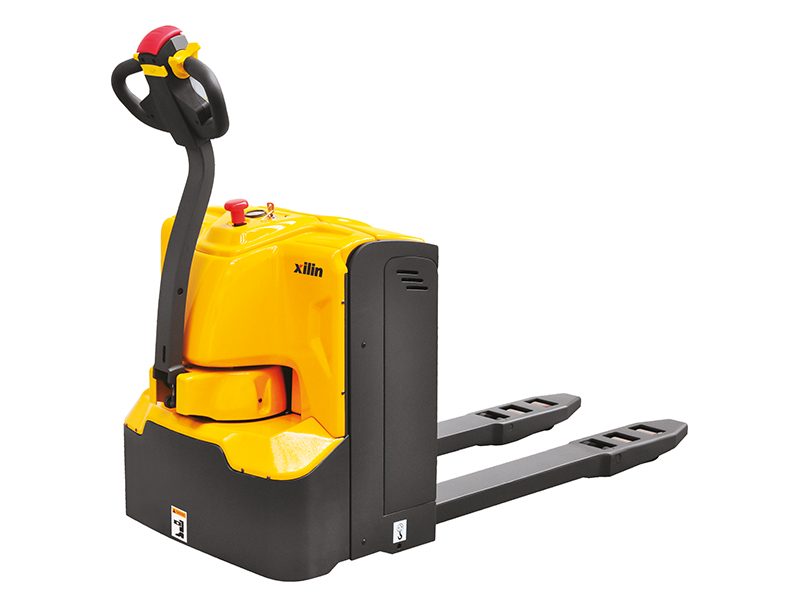
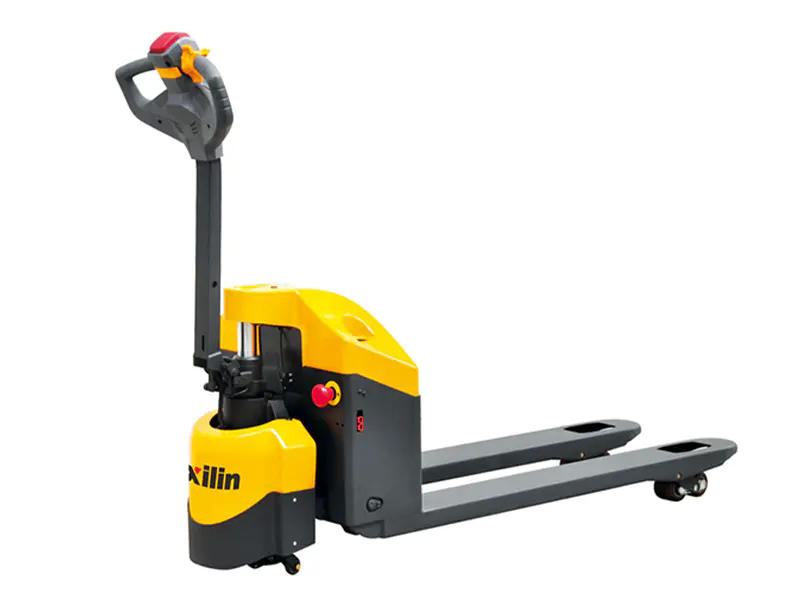 CBD15W-E/CBD20W-E Electric Walkie Pallet TrucksCompact pedestrian electric pallet trucks with 1,500 kg and 2,000 kg capacities for floor-level transport in narrow aisles, workshops and containers.View Product →
Reach trucks for 2,700 to 3,000 mm
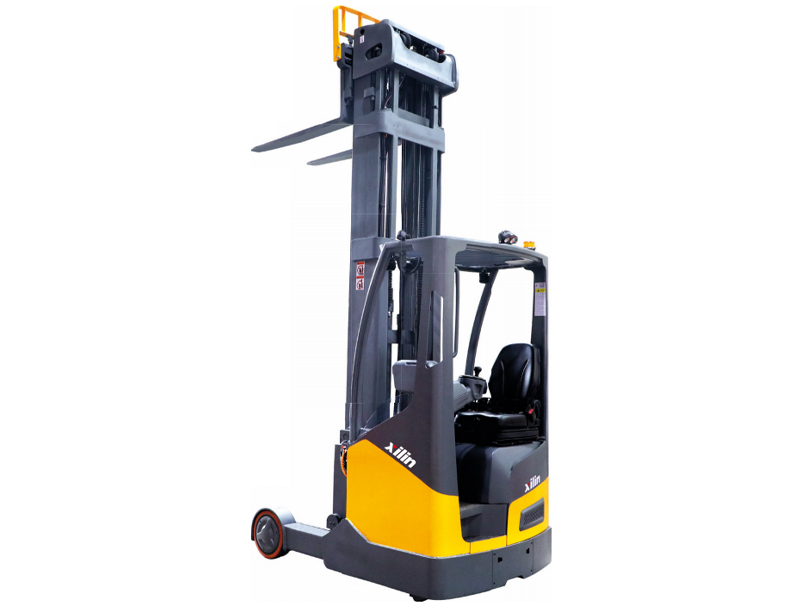
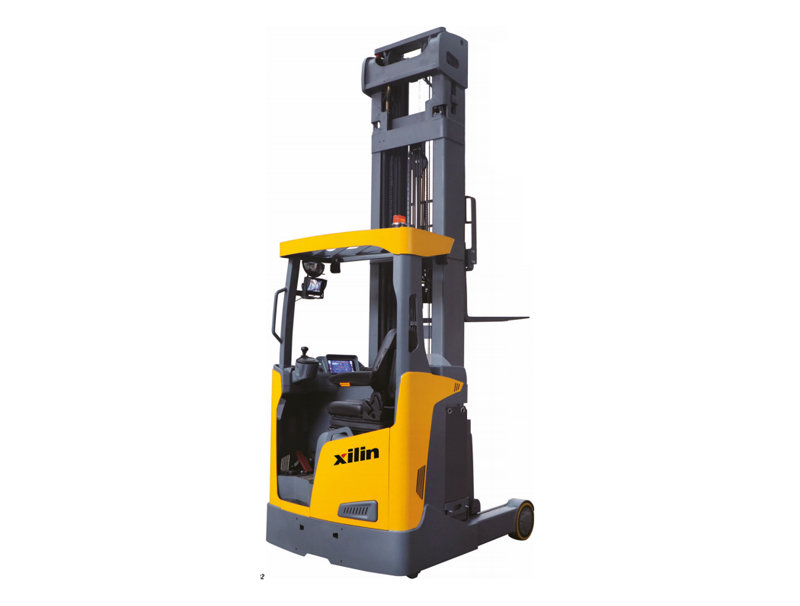
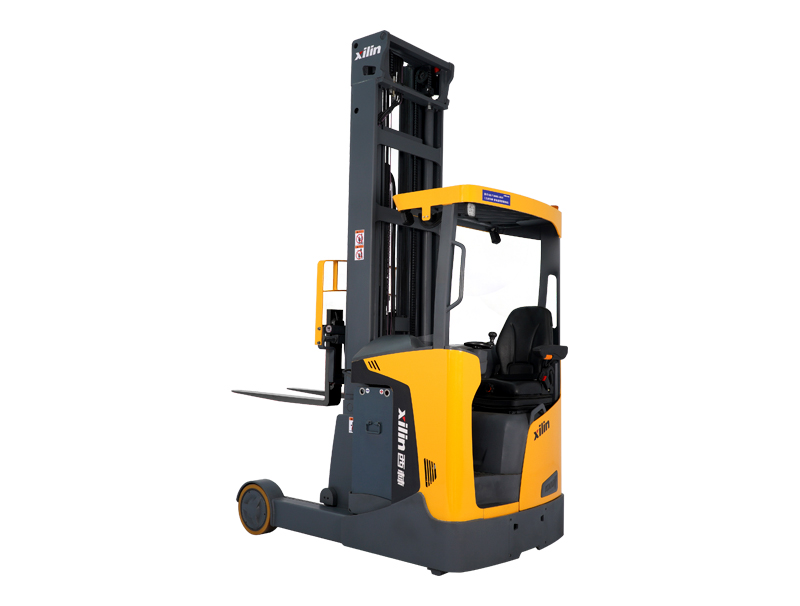
A reach truck earns its aisle because the mast stays in the aisle while the forks reach into the rack, so the truck does not have to reverse a carried load between the uprights. That is why a reach truck stacks at 8 m in less space than a counterbalance truck needs at 3 m. Check the collapsed mast height and the overhead guard against sprinkler pipework before you sign, not after.
 CQD15L Electric Standing-Operator Reach TruckA 1,500 kg standing-operator reach truck for narrow aisles, with lift heights up to 6,200 mm and aisle widths around 2,800–2,850 mm.View Product →
Very narrow aisle trucks for 1,600 to 1,900 mm
Below roughly 2,000 mm, the truck is normally guided by a rail or a wire, and the floor flatness tolerance tightens considerably. Man-down units suit fast pallet handling at moderate heights, while man-up units let the operator rise with the cab for picking and for very high bays. Both trade flexibility for density, so the aisle must be treated as fixed infrastructure rather than a variable.
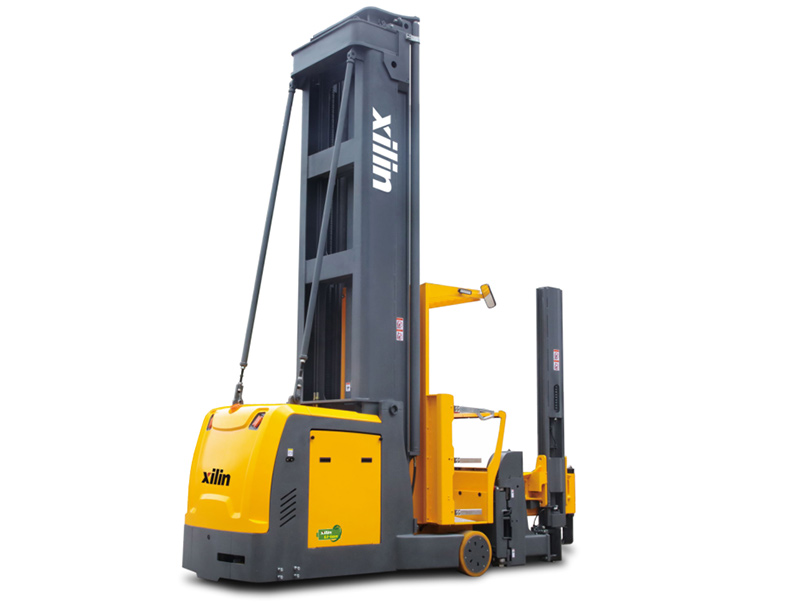 OPTS15 Electric Tri-Lateral Reach StackerA 1,500 kg tri-lateral stacker for high-rack narrow aisles, with lifting heights from 6,000 mm to 13,000 mm and integrated safety controls.View Product →
If you are weighing up how much storage a narrower aisle actually releases, this explanation of how narrow aisle trucks change warehouse layout sets out the trade between aisle count and pallet positions.
Counterbalance trucks at 3,500 mm and above
Counterbalance trucks pay for their flexibility with aisle space. A three-wheel chassis with a dual front wheel arrangement typically saves 300 to 500 mm against a four-wheel truck of similar capacity, which is often enough to keep an existing aisle. These machines remain the right answer where the truck must also work on the dock or in the yard. Typical options include three-wheel electric forklifts with compact chassis dimensions.
Where a correctly calculated aisle still fails on site
The formula is rarely the problem. The failures we see come from details that were never drawn on the layout:
- Floor joints, dock levellers and drainage covers that lift one wheel while the truck is fully turned, adding 50 to 100 mm to the swept path.
- Rack uprights, column protectors and sprinkler risers that sit inside the nominal clear aisle.
- Building columns that reduce usable width by 200 mm at the busiest bay in the warehouse.
- Aisle-end intersections where two trucks must pass; the corner needs noticeably more width than the straight run.
- Charging stations and battery changing areas placed at the aisle head, removing the turning space the truck needs.
- Pallet quality: a leaning or damaged pallet is easily 80 mm wider than its nominal footprint.
A five-step check before you place the order
- Measure the narrowest point of the existing aisle, not the widest, and record every obstruction at floor level.
- Weigh and measure one real loaded pallet, including product overhang, shrink wrap and any damaged timber.
- Ask for the right-angle stacking aisle figure and the dimension drawing for the exact model and fork length.
- Add the clearance allowance, then test the layout with tape on the floor and a full pallet before committing.
- Confirm floor flatness, floor loading, guidance requirements and aisle-end turning with the supplier in writing.
Common questions about forklift aisle width
Does a wider aisle always mean fewer pallet positions?
Roughly, yes. Storage loss is close to linear: adding 500 mm to every aisle in a twenty-aisle block costs the equivalent of about half an aisle of pallet positions, and that loss repeats at every block. This is why the aisle decision usually matters more than the truck price difference between two models.
Is aisle width measured to the rack face or to the upright?
Measure the clear distance between the nearest fixed obstructions at floor level. In most warehouses that is the upright protector rather than the beam, and the difference of 50 to 80 mm per side is exactly the margin that decides whether a pallet goes in cleanly or clips the rack.
The reliable sequence is to start from the load, check the building, and only then choose the truck whose stacking aisle fits with clearance to spare. Working in that order turns aisle width from an argument about catalogues into a straightforward measurement, and it keeps a new truck out of the yard.