 英语
英语 西班牙语
西班牙语 德语
德语 法语
法语 俄语
俄语
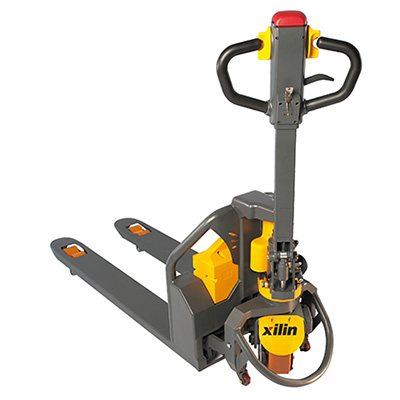 Electric Pallet Truck
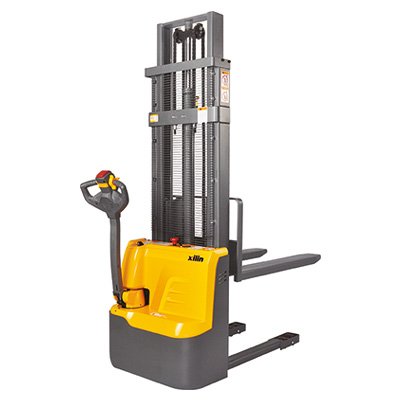 Electric Stacker
 Order Picker
 Narrow Aisle Truck
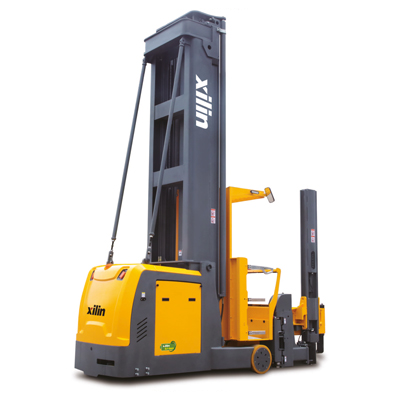 VNA Tri-Lateral Stacker
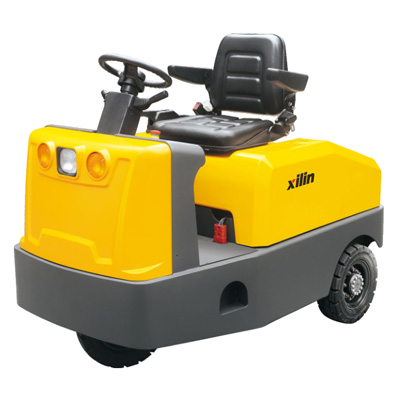 Tow Tractor
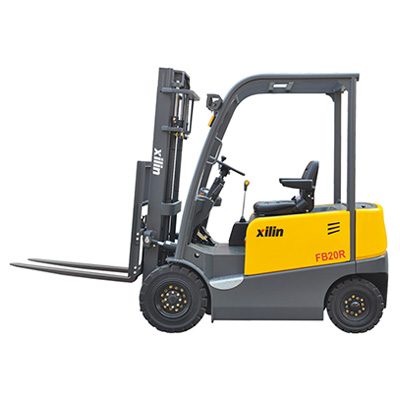 Electric Forklift
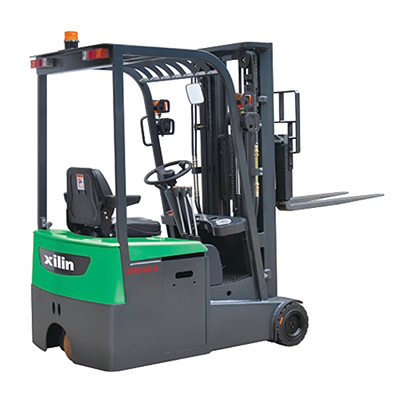 Lithium-ion Truck
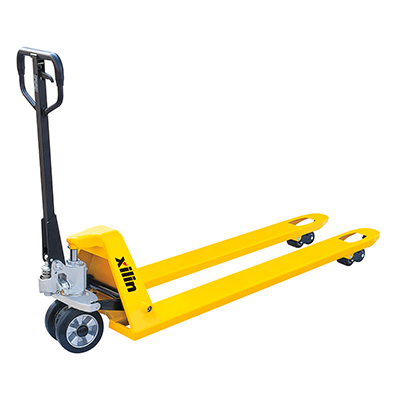 Hand Pallet Truck
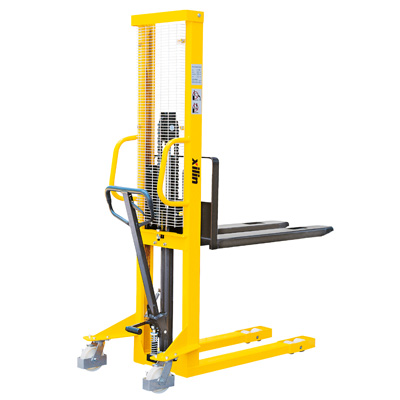 Manual Stacker
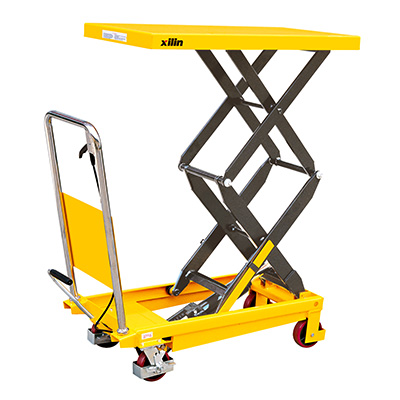 Lift Table
Content
Every year, forklift accidents injure tens of thousands of workers worldwide, and many of those incidents end in death or permanent disability. The pattern behind them is consistent: an untrained operator, a forklift with a worn brake, a blind corner without a mirror, a load stacked beyond its rated capacity, or a pedestrian crossing a machine lane. None of these causes is exotic, and all can be corrected before an incident occurs. The most direct path to prevention combines operator competence, disciplined inspection, controlled traffic, and equipment designed with safety in mind. This article presents the accident types that cause the most harm and the prevention measures that deliver measurable results.
The Most Common Forklift Accident Types
Rollover or tip-over incidents consistently rank as the leading cause of forklift fatalities, with pedestrian collisions close behind. Falling loads, operators falling from raised forks, and emission-related poisoning complete the list of severe accident categories. The chart below shows a typical distribution of reported forklift incidents based on aggregated industry data.
The horizontal bar chart above shows how reported forklift incidents typically distribute across accident types. Rollover or tip-over events claim the largest share, because a forklift is counterweighted and becomes unstable when the load center shifts beyond the stability triangle between the wheels. Pedestrian collisions are second, so separating foot traffic from forklift routes is a high-priority countermeasure. Falling loads and falls from raised forks both trace back to improper stacking, overloaded forks, and riding on tines instead of using a proper platform. Emission poisoning is a smaller but severe category, mainly affecting internal-combustion trucks in poorly ventilated warehouses. Spending prevention effort in these five areas addresses most serious injuries. For detailed guidance on the rollover risk specifically, review our practical notes on preventing electric forklift overturning and cargo overflow.
| Accident Type | Typical Primary Cause | First Prevention Priority |
|---|---|---|
| Rollover or tip-over | Excessive cornering speed, shifted load center | Operator training, load discipline |
| Pedestrian collision | Mixed traffic, blind corners | Traffic separation, mirrors, horns |
| Falling loads | Overloaded forks, loose stacking | Capacity compliance, load securing |
| Fall from raised forks | Riding on forks, improper platform use | Strict no-ride rule, work platforms |
| Emission poisoning | Engine exhaust in poorly ventilated areas | Electric equipment, ventilation |
Forklift Prevention Measures Ranked by Impact
Not all safety measures deliver equal results, and spreading effort too thinly dilutes impact. Seven measures consistently produce the strongest results: the first six are operational practices described below, and the seventh is equipment selection, explained in the next section. The column chart compares the typical reduction in reportable incidents that structured programs can achieve when implemented properly and sustained over time.
The column chart above compares the typical reduction potential of five prevention program areas. Operator training leads because operator error contributes to most rollovers, collisions, and load-drop incidents. Traffic separation and daily inspections follow closely, because they remove the most common preconditions for positional and mechanical failures. Load stability rules and PPE compliance produce smaller but still meaningful gains. These figures are planning benchmarks from industry safety literature, not guarantees. The measures also interact: a trained operator gets more value from an inspection checklist, and good markings help trained drivers react earlier.
1. Start with Operator Training and Certification
Training is the foundation of forklift accident prevention, and no other single measure reduces risk more. An untrained operator can turn a maintained machine into a hazard in seconds by cornering too fast, ignoring a worn brake, or lifting beyond the rated center. Certification programs that combine classroom theory, hands-on practice, and a formal evaluation produce measurable improvements in driving behavior. Refresher training matters too, because standards change, new equipment arrives, and operators develop shortcuts. Many facilities run annual refresher sessions and add a practical assessment whenever a new model enters the fleet. New operators should never be sent onto the floor after only a few minutes of verbal instruction.
2. Inspect Every Forklift Before Every Shift
A pre-shift inspection catches small defects before they become accidents, and it takes less than ten minutes per machine. Operators should work through a printed or digital checklist rather than relying on memory. The checklist must cover the following:
- Brakes, steering, horn, lights, and seat belt function
- Tire condition, including cuts, wear, and pressure
- Forks, mast chains, and hydraulic hoses for cracks or leaks
- Load backrest extension and fork positioning locks
- Battery charge level and cable connections
Operators should report anything unusual immediately, and supervisors must take a defective machine out of service. A dated inspection record proves the process happened and helps identify components that fail repeatedly across the fleet.
3. Protect Load Stability and Respect Capacity Limits
Most falling-load accidents share a simple root cause: a forklift pushed beyond its rated capacity or a load center shifted without accounting for the consequences. The capacity plate states a maximum load weight for a defined load center, typically 500 or 600 mm from the fork face. When the load center moves further out, safe lifting capacity drops, sometimes by more than half. Operators should verify that the load is fully against the fork heel, tilted back, and carried no more than 150 to 250 mm above the floor while traveling. Stacking at height demands extra care because a small pallet misalignment grows as the mast rises. A safe lifting sequence protects both the operator and people nearby:
- Approach the load with forks at the correct height and fully inserted.
- Lift slightly, then tilt the mast back to stabilize the load.
- Lower the forks to travel height before moving.
- Keep the load uphill on slopes and avoid turning across an incline.
Equipment designed with stable masts and controlled descent hydraulics, such as a full electric stacker, gives operators an extra margin during repetitive stacking work.
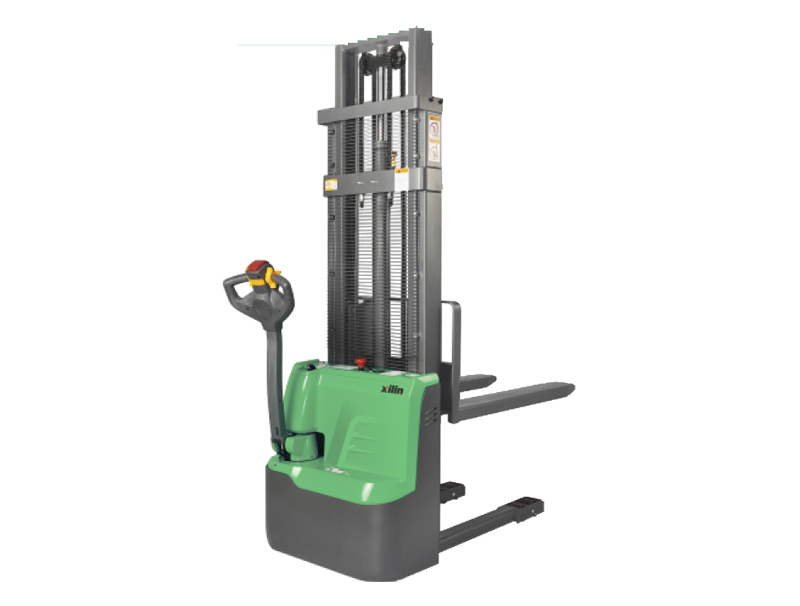 Electric Stacker with Stable Mast and Controlled HydraulicsThis electric stacker model series offers stable masts and controlled descent hydraulics, providing extra safety margin during repetitive stacking tasks in pedestrian-dense facilities.View Product →
4. Separate Forklift Traffic from Pedestrians
Physical separation prevents pedestrian collisions more reliably than signs or training alone. Mark dedicated forklift lanes with durable floor paint, install barriers around walkways, and position mirrors at blind corners and door openings. High-visibility vests help, but they are not a substitute for segregation. Aisles should be wide enough for the equipment in use, and doors should have vision panels so operators can see through before passing. Where traffic must cross, create controlled crossing points with warning signage and speed-reduction measures.
5. Enforce Safe Driving Behavior
Speed multiplies every other risk because it shortens reaction time and increases the lateral forces that cause tip-overs. Operators should slow to a walking pace in aisles, sound the horn at blind corners and intersections, and keep both hands on the controls. Seat belts must be worn on every ride-on machine, and no one may ride on the forks or any position other than the designated operator seat. Mobile phones should be stored away while operating any forklift. These rules work best when they are written into the operator manual, communicated at shift briefings, and reinforced by supervisors on the floor.
6. Require Personal Protective Equipment
Personal protective equipment is the last line of defense, but it is not optional. Operators should wear safety shoes that resist compression, helmets that protect against falling objects, and high-visibility clothing that makes them easy to spot. Pedestrians working in the same area should follow the same PPE rules, plus any site-specific requirements such as gloves or face shields. PPE is bought by the employer, maintained by the user, and checked during every shift inspection. It does not prevent the accident itself, but it consistently reduces the severity of injuries when contact occurs.
7. Choose Equipment That Supports Safer Operation
Equipment choice is a prevention measure in its own right, not just a purchasing decision. A walkie pallet truck gives unobstructed visibility, but the operator walks beside the machine with no protective structure. A stand-on pallet truck places the operator on a protected platform with better control. An electric stacker adds stable mast geometry for lifting work but needs more space to maneuver. The radar chart below compares three equipment families across five safety-relevant attributes.
The radar chart above compares three equipment families across five safety-relevant attributes, rated on a five-point scale. The walkie pallet truck scores highest for visibility and training ease, which is why it suits small facilities with occasional moves. The stand-on pallet truck offers the most balanced profile, with strong operator protection, good maneuverability, and modest training demands, making it practical for mixed-traffic environments. The electric stacker leads in load stability, which matters when loads are lifted frequently or to higher levels, but its training requirements are higher and visibility is more restricted. These differences determine how quickly an operator sees a pedestrian, how stable the machine is in a turn, and how much room a novice needs. Matching the equipment family to the task and the facility layout is an active risk-control decision.
Facilities with frequent pedestrian traffic should choose equipment with a protected operator position and clear sight lines. Electric pallet trucks with stand-on platforms, for example, keep the operator on board instead of walking beside the load, which reduces exposure and shortens reaction time. Reviewing specification sheets from an established material handling equipment manufacturer helps quantify these differences before purchase. This small change in equipment type often produces safety gains that no amount of signage can match.
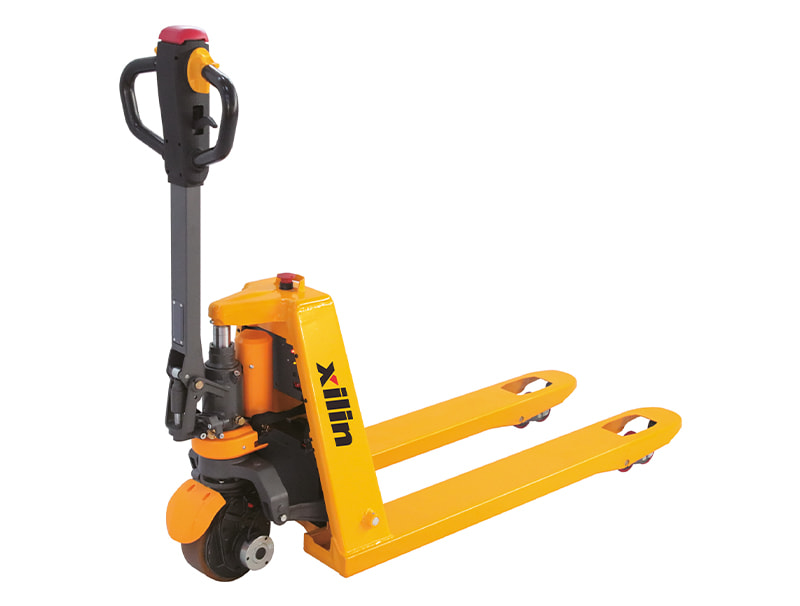
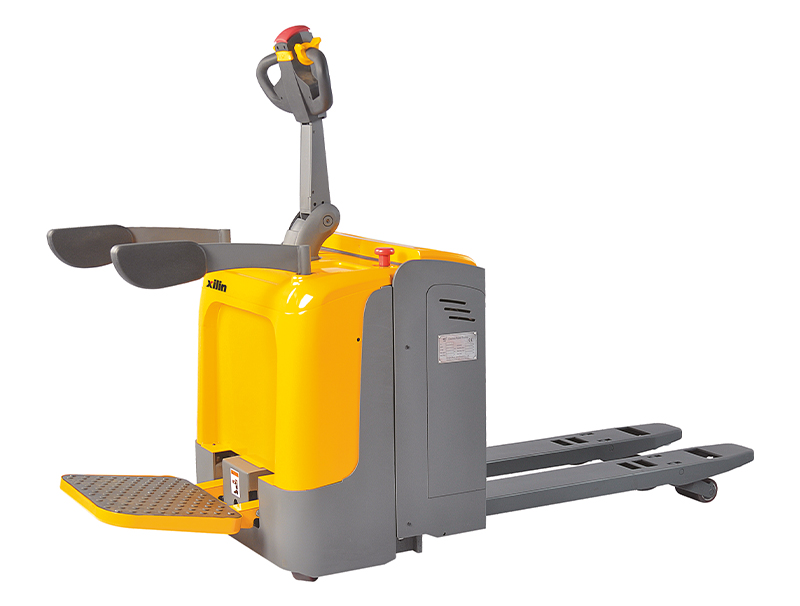
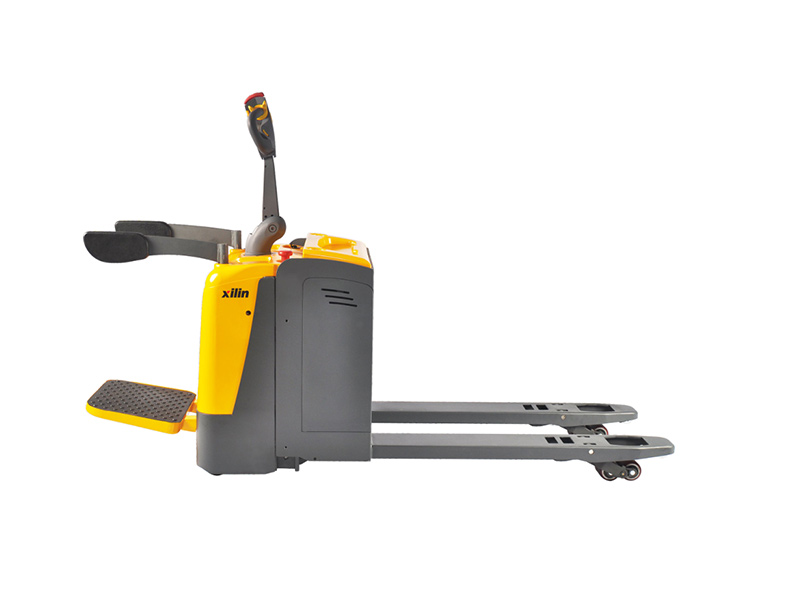
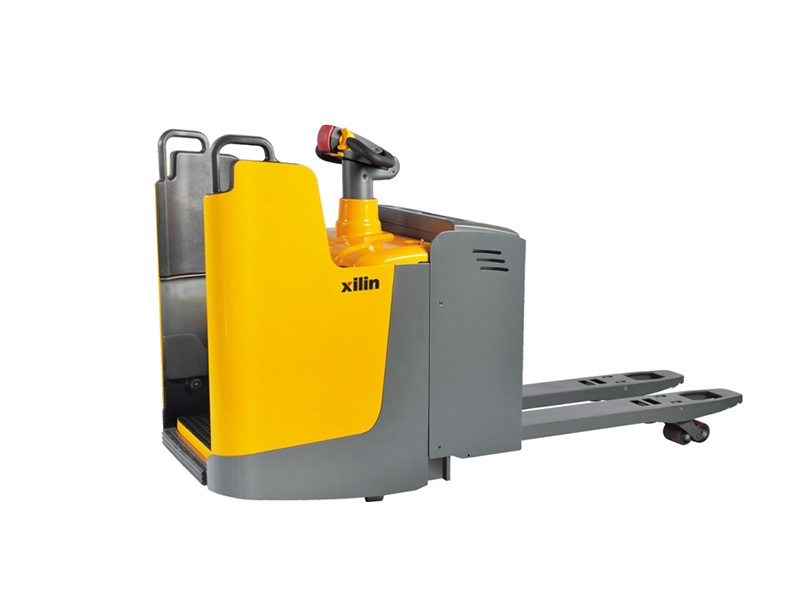 Electric Stand-on Pallet Truck with Fixed PlatformEquipped with a fixed platform and closed protection arm, this stand-on pallet truck keeps operators on board, reducing exposure and improving reaction time for long-distance transport.View Product →
Build a Safety Culture That Lasts
Policies create structure, but culture determines whether operators follow them every day. The line chart below shows how a sustained program affects the forklift incident rate per 100,000 working hours over five years.
The line chart above shows how a sustained safety program can reduce the forklift incident rate over five years. The baseline starts at eight incidents per 100,000 working hours, representative of an operation with basic compliance but no structured improvement plan. After the first year, training and inspections cut the rate to about five and a half. Each following year brings a smaller but steady reduction, down to below two by the end of year five. The curve flattens because remaining incidents are driven by rare and unpredictable events rather than routine gaps. The first year of investment delivers the biggest return, while long-term success depends on maintaining discipline.
Management visibility is one of the strongest drivers of this improvement. When supervisors walk the floor, join shift briefings, and respond quickly to near-miss reports, operators understand that safety is a genuine priority. Incident reporting should be non-punitive so near misses become learning data instead of hidden problems. Recognizing operators who demonstrate safe behavior reinforces the standard better than disciplinary procedures alone. Procurement decisions affect culture too: replacing worn machines with well-designed electric equipment signals that the organization invests in protection.
Preventing forklift accidents is not a single action but a system of interlocking controls, and meaningful improvement is possible without expensive technology. Training, inspection, load discipline, traffic separation, and the right equipment form a foundation any warehouse can implement. The order of priorities should reflect local risk: heavy pedestrian traffic calls for separation, while high stacking calls for mast stability and capacity compliance. Review incident and near-miss records quarterly, adjust the program when new equipment arrives, and involve operators in identifying weak spots. Managers who apply these measures consistently report fewer incidents, less downtime, and lower insurance costs.