 英语
英语 西班牙语
西班牙语 德语
德语 法语
法语 俄语
俄语
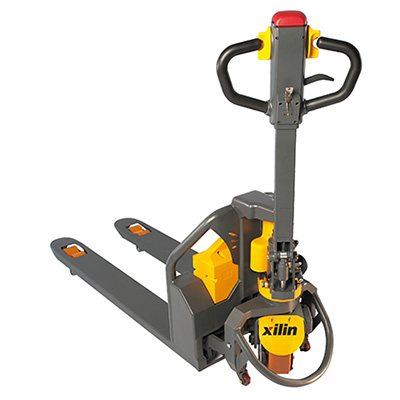 Electric Pallet Truck
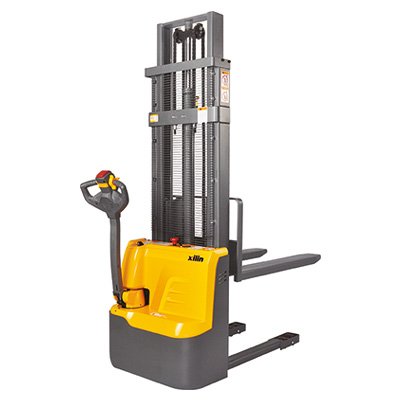 Electric Stacker
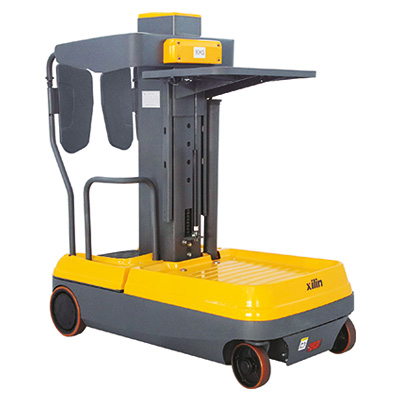 Order Picker
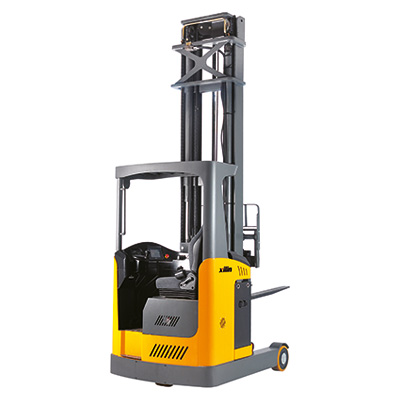 Narrow Aisle Truck
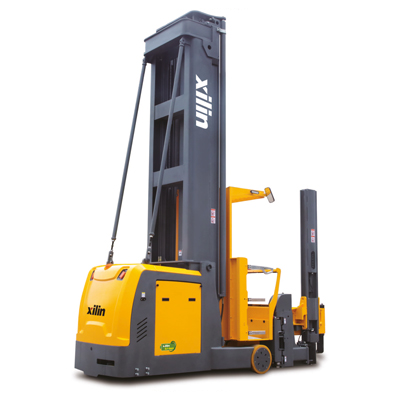 VNA Tri-Lateral Stacker
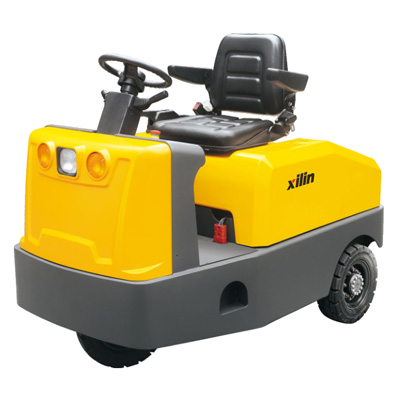 Tow Tractor
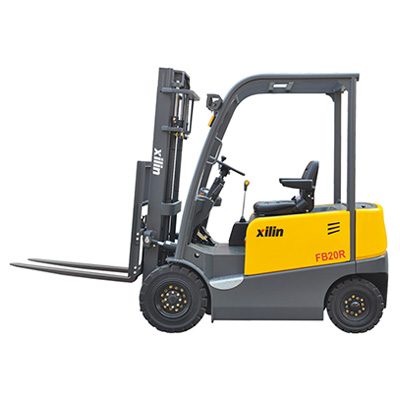 Electric Forklift
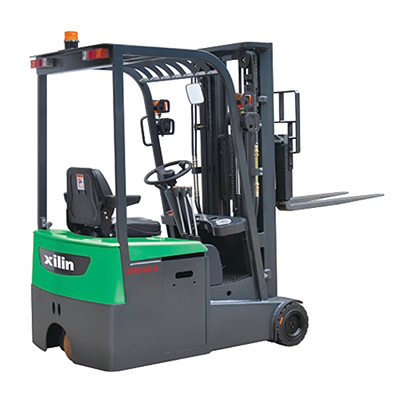 Lithium-ion Truck
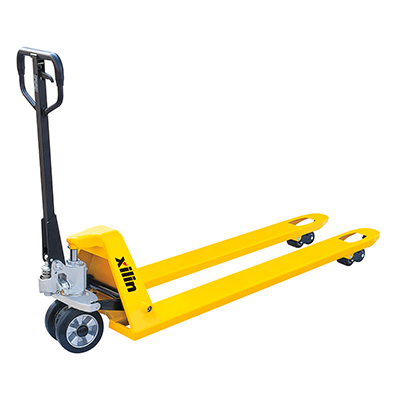 Hand Pallet Truck
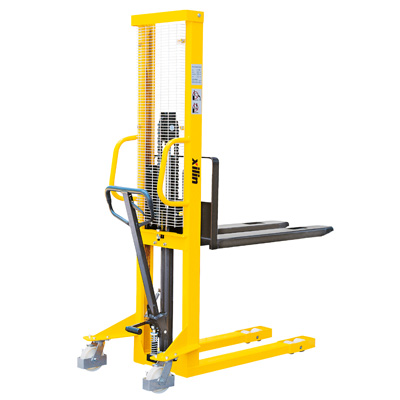 Manual Stacker
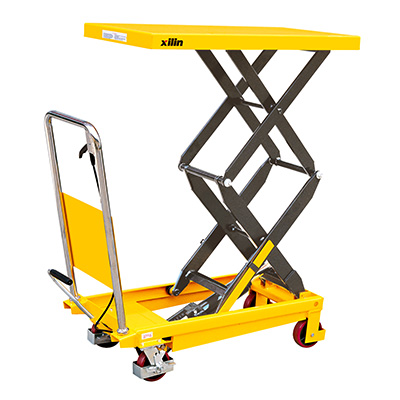 Lift Table
Content
A warehouse manager looking at a racking plan faces a fundamental tension. Wider aisles make truck movement faster and safer, while narrower aisles increase the number of pallet positions in the same footprint. The right choice depends on three things: the turning characteristics of your equipment, the dimensions of your loads, and the operating clearance your operators need. This guide explains how warehouse aisle width is defined, what width is practical for each truck type, and how to calculate the value yourself. It also shows the storage density gain you can expect when moving from wide aisles to narrow aisles or very narrow aisles.
What Defines Warehouse Aisle Width?
Aisle width is the minimum straight aisle space in which a forklift carrying a given load can turn into a rack bay and exit without touching the rack frame. European material handling standards call this the aisle width (Ast) of the truck, and manufacturers publish it for every model. The published figure already includes the truck turning radius, the carriage projection, and the load envelope for a standard pallet.
Three variables enter the calculation: right angle stacking width, load length, and operating clearance. If your pallet is larger than the pallet used in the manufacturer test, add the difference to the published value. If your floor is smooth and level, a clearance of 6 to 12 inches is usually enough. If the floor has slopes, joints, or uneven concrete, use the upper end of that range.
The formula is simple: minimum aisle width equals right angle stacking width plus load length adjustment plus clearance. In the rest of this guide we apply that formula to common warehouse truck types.
Figure 1. Typical minimum aisle widths by truck type
The horizontal bar chart in Figure 1 compares typical minimum aisle widths for eight warehouse truck families. Very narrow aisle turret trucks and order pickers work in aisles as tight as 5.5 to 6 feet, which lets racks occupy far more of the floor plate. Reach trucks require roughly 9 feet, while a conventional counterbalanced forklift needs 11 to 13 feet depending on the number of wheels and the load capacity. The difference between 6 feet and 12 feet changes the number of rack rows you can fit in a building by one full row on each side of the aisle. That is why equipment selection is the first decision in any racking project. The chart also explains why many warehouses are replacing counterbalanced fleets with reach trucks or VNA trucks before expanding their buildings.
Aisle Width Classifications: Wide, Narrow, and Very Narrow
Warehouse designers divide racking aisles into three classes: wide aisle, narrow aisle, and very narrow aisle. Each class is tied to a specific family of trucks and carries a different storage density target.
| Classification | Typical width | Common equipment | Density versus wide aisle |
|---|---|---|---|
| Wide aisle (WA) | 12 to 14 ft (3.6 to 4.3 m) | Counterbalanced forklifts | Baseline |
| Narrow aisle (NA) | 8 to 10 ft (2.4 to 3.0 m) | Reach trucks | Up to 30% more pallets |
| Very narrow aisle (VNA) | 5 to 7 ft (1.5 to 2.1 m) | VNA turret trucks, order pickers | Up to 50% more pallets |
Moving from wide aisles to narrow aisles is the easiest density improvement because reach trucks can often replace counterbalanced forklifts without changing racking depth or height. Moving to very narrow aisles brings the largest gain but demands specialized trucks, sometimes floor guidance, and more operator training. The key is to match the aisle class to your actual throughput needs rather than copying a generic layout template.
Figure 2. Storage capacity by aisle configuration
The column chart in Figure 2 compares the storage capacity of the same building footprint under three aisle configurations. Taking a wide aisle layout with 12 foot aisles as the baseline at 100 percent, a narrow aisle layout with 9 foot aisles stores roughly 28 percent more pallet positions. A very narrow aisle layout with 6 foot aisles pushes the gain to about 50 percent. These figures assume the same rack depth, bay width, and stacking height in all three cases, so the gain comes purely from reclaiming aisle floor area. In practice, the real result depends on the number of cross aisles, fire exits, and column spacing. Even with those deductions, the pattern holds: aisle width is the most powerful variable in warehouse space planning.
How to Calculate the Minimum Aisle Width
To calculate the minimum aisle width for your warehouse, start with the truck manufacturer published right angle stacking dimension. That specification already accounts for the truck turning circle and the fork carriage with a rated load. Add the difference between your pallet depth and the pallet used in the manufacturer test. Finally, add a clearance buffer of 6 to 12 inches for driving tolerance, floor variations, and rack steel tolerances.
For a typical reach truck with a published right angle stacking width of 98 inches, the calculation is 98 plus 12, which equals 110 inches, or about 9.2 feet. Many warehouses round up to 9.5 feet to give operators extra forgiveness. For a VNA turret truck with a published right angle stack of 66 inches, the same calculation gives 78 inches, or 6.5 feet. The examples show that equipment choice comes first, because the aisle width follows automatically once the truck is selected.
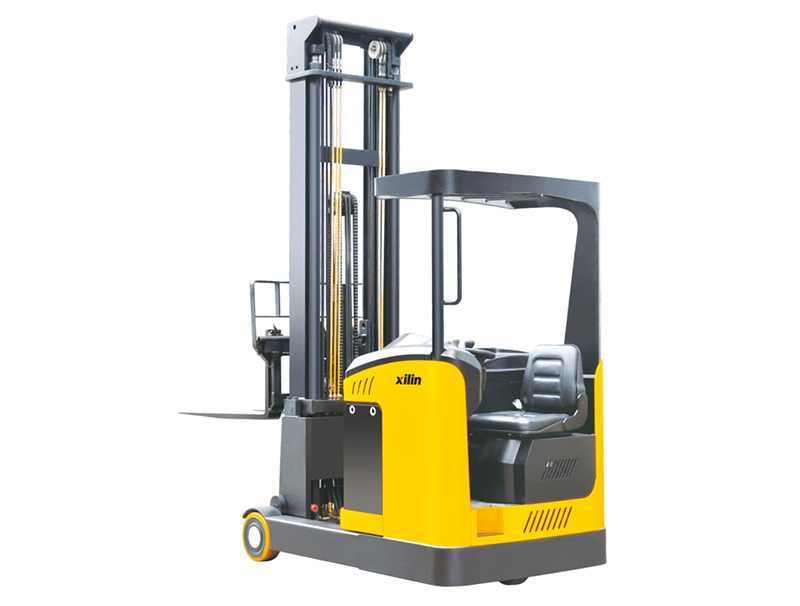 Electric Reach Truck for Narrow Aisle OperationsThis electric reach truck suits warehouses with fixed racking, offering narrow-aisle maneuverability and a published right-angle stacking width to help match aisle dimensions without reconfiguring existing storage.View Product →
Choosing the Right Truck for Your Aisle Width
Existing buildings are harder to change than truck fleets. If your racking is already fixed, the fastest route to more density is to match the truck to the aisle you have, not the other way around. Three truck families cover most modern warehouse layouts: counterbalanced forklifts for wide aisles, reach trucks for narrow aisles, and VNA turret trucks for very narrow aisles. Each family brings a different balance of aisle flexibility, lift height, load capacity, and operator speed.
Figure 3. Storage density versus aisle width
Figure 3 shows how storage density climbs as aisle width shrinks. The relationship is not linear: cutting from 14 to 10 feet delivers a modest improvement, while going from 8 to 5 feet produces a much sharper gain per foot reclaimed. At 5 foot aisles, the layout holds roughly twice as many pallet positions as a 12 foot aisle design with the same rack depth. The steepness of the curve is why very narrow aisle projects have become the most popular expansion alternative in existing warehouses. It also explains why new distribution centers are designed around 6 foot aisles rather than the 12 foot standards of older buildings. Every foot of aisle width you eliminate returns more floor area than the one before it.
Figure 4. Equipment capability comparison
The radar chart in Figure 4 compares counterbalanced forklifts, reach trucks, and VNA turret trucks across five operating criteria. Counterbalanced forklifts score highest in load capacity and operator speed, but they score lowest in aisle flexibility and storage density. Reach trucks balance all five criteria, which explains their popularity in narrow aisle facilities. The evolution of narrow aisle reach trucks has expanded the range of available configurations even further. VNA turret trucks achieve the best aisle flexibility and storage density, but require more operator training and often a wire or rail guidance system. The chart shows that there is no universal best truck, only the best match for your aisle width and throughput profile. If travel speed and lifting cycles dominate your operation, a counterbalanced truck in a wide aisle may still beat a VNA truck in a tight aisle.
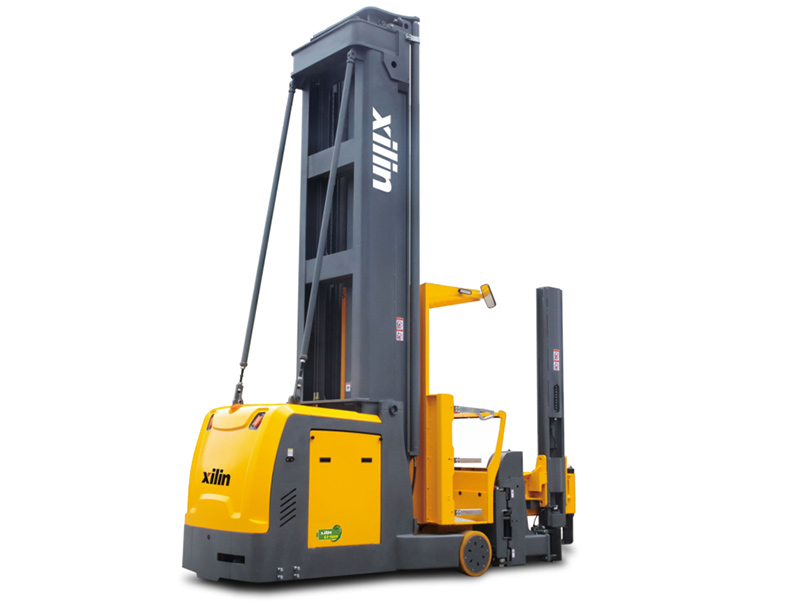 Tri-Lateral Stacker with Multi-Directional CapabilityThis tri-lateral stacker appears among reach truck variants for very narrow aisles, balancing density and flexibility. Its listed models range from 1.5 to 2.5 tons, useful when comparing configurations for tight storage layouts.View Product →
Safety, Clearance, and Regulatory Guidelines
Safety standards are not optional in aisle width planning. OSHA guidance states that aisles should be at least three feet wider than the largest equipment used in the facility. That advice applies to general travel aisles and pedestrian walkways, not necessarily to every racking aisle, but it is a conservative baseline. When two trucks share the same aisle, add the widths of both trucks plus a 12 inch gap between them. Also measure the rack frame: protruding beam ends, column bases, and sprinkler pipes all reduce effective clearance.
Before finalizing any aisle width, verify these details:
- Measure from the outermost point of the truck including the load overhang, not from the front axle.
- Add 2 to 4 inches for uneven floors, because the mast and load will sway more.
- Add extra clearance in cold storage rooms, where battery boxes shift during acceleration.
- Run a real test: tape a rectangle on the floor and drive the loaded truck through it before ordering racking.
Practical Steps to Set Your Aisle Width
Follow these five steps when designing a racking layout from scratch or converting an existing building:
- Define your pallet footprint and maximum stacking height.
- List the truck models you are willing to operate and pull the right angle stacking widths from their datasheets.
- Calculate the minimum aisle width for each truck using the formula in this guide.
- Add a realistic clearance buffer, at least 6 inches, and more in cold storage or on uneven floors.
- Run a space analysis that multiplies the number of rack rows by the aisle width saved.
The saving from one extra row can be significant. With 48 inch deep rack bays and aisles reduced from 12 to 6 feet, the reclaimed width equals about one full rack row plus a new aisle. That is the economic engine behind the shift to narrow aisle and very narrow aisle solutions. If your facility is at capacity, this calculation will tell you whether a truck replacement can postpone an expensive expansion. In mixed operations where workers also pick cases from racking, an order picker designed for very narrow aisles provides both access and efficiency.
Aisle width is not a fixed number. It is the result of a calculation that you control: define your load, choose equipment with known turning data, add honest clearance, and test the turning path before the racking contract is signed. The storage density gain from narrowing aisles is real and often exceeds 30 percent. At the same time, no density gain is worth collisions, damaged goods, or operator stress. A well-designed warehouse pairs the narrowest practical aisle with equipment matched to that aisle, verified on the floor, and supported by safety training. Our complete range of material handling equipment is a useful starting point for that process.